



 14.4°C Kathmandu
Fri, Oct 16, 2026
Columns
The price of ‘progress’: Displacement in Kathmandu, humiliation in Madhesh
It appears that revenue collection and beautification projects take precedence over people’s quality of life.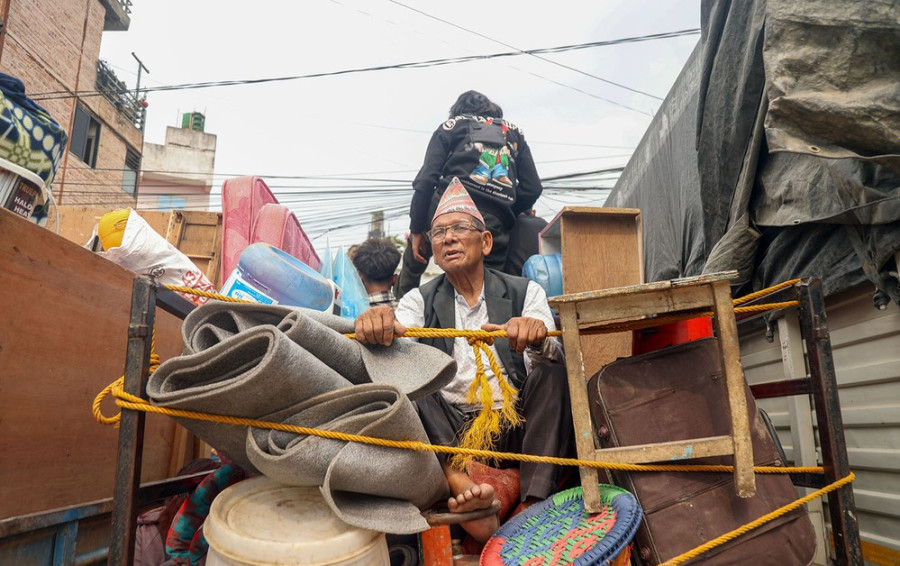
bookmark
Prachanda Adhikari
Published at : June 4, 2026
Updated at : June 5, 2026 06:53
Kathmandu is going to look beautiful. The rivers will be cleaner, the streets will be wider, and people will soon be able to enjoy life without the chaos and diseases associated with poor sanitation and hygiene. We might not hear any news of settlements being flooded this monsoon season. When Nepalis arrive from abroad, the Tribhuvan International Airport will welcome them with the fresh air of a new Nepal.
Another ‘visible’ activity of the government is strict border patrolling in the south and taxation on goods worth above Rs100. The government aims to collect more revenue and secure the border. It’s actively involved in disciplining the residents of Madhesh Pradesh.
The newly established government is seen as ruthless, both in cleaning the city and in disciplining its citizens. This raises a question: What is the price of a clean city, and who pays it?
In preparation for the 1988 Seoul Olympics, an estimated 720,000 residents were displaced from their homes to beautify the city. Throughout history, similar patterns of evictions have occurred in urban renewal projects and slum clearances across the world. The beauty persuaded from above demands sacrifice from below. Wealthy residents who benefit from rising property values don’t pay for it. Rather, the burden falls on the poor with the least political voice.
The Balendra Shah government showed no mercy while indiscriminately bulldozing squatter settlements. While a large number of security personnel were deployed as bulldozers were brought into action, journalists were restricted from entering the settlements. People were asked to vacate the settlements with only two to three days’ notice. The government didn’t care if someone had recently given birth or if someone had been on their deathbed. The Kathmandu Valley Crime Investigation Office also made some arrests to prevent any mobilisation against the government. Bulldozing the settlements in Kathmandu reflects a form of visible state control.
A similar pattern of disciplining and humiliation can be seen in the Tarai region. The southern border of Nepal divides two sovereign states, but the cultural ties shaped by the region’s geography have blurred the line. People share familial ties and economic interdependence as they cross the border for their daily routines.
The informal and unregulated flow of goods is now under government scrutiny. The pedestrians and cyclists are lined up, and their bags are searched as they cross the border. Security personnel confiscate daily essentials such as rice, sugar, salt and cooking oil if they’re valued at over Rs100. Videos shared on social media show security personnel’s aggression towards people, particularly women, crossing the border.
These policies, on one hand, are reshaping economic life for poor communities. On the other hand, they are shaping how ordinary citizens emotionally experience the state in their everyday lives. The lower-class people feel utterly helpless and humiliated by this unyielding cruelty of the government.
It is a matter of shame that the children from those families witnessed the cries of their parents. In Kathmandu, many children lost their friends and their schools. Their childhood memories collapsed with the demolition of their community. But the bulldozer will remain in their memory. It will continue to haunt them in their dreams for a long time. In Madhesh, the law enforcement agencies are embarrassing people in front of their children. Due to this trauma, those children are now bound to grow up with fear and insecurity. Their confidence is shattered, and they don’t feel any sense of belonging to the state. The government’s political actions become emotional experiences, and children internalise state behaviour.
Besides psychological trauma, the consequences of these actions disrupt the fragile economic and social foundations upon which these communities survive. In Kathmandu, squatter residents picked up odd jobs for minimum wages. Taking them completely out of the equation could be costly to the capital. Many people lived on insalubrious riverbanks because their jobs were close. Apartments nearby are far from affordable. The outskirts may be cheaper, but commuting is neither easy nor affordable for short-shift workers.
In Madhesh, the standard of living is low, and inflation is hitting people hard. The government’s policy is hurting low-income people and small businesses. Enforcing such policies without any measures to help them could render the entire community vulnerable. The country’s informal economy can be ruptured. The trauma becomes collective within the community as they share the humiliation from the government. This eventually normalises distrust towards the government. Shared political memory and relative deprivation amplify the breakdown of broader social cohesion and help to build the narrative of us versus them.
Repeated experiences of exclusion and economic insecurity raise a broader question about the priorities and moral direction of the state. It appears that revenue collection and beautification projects rank higher on the government’s priority list than ensuring the quality of life for the city’s people. The streets could be beautiful, and the government could generate more revenue by emptying the pockets of the poorest, but the seeds of resentment planted into the innocent lives will keep on growing. The government may have conducted a short-term cost-benefit analysis of avoiding harm in the upcoming electoral cycle, but that might not be enough to protect the nation’s integrity in the long run.
In the name of bringing visible change in the country, it is a shame to hurt people’s dignity. It might be a bad idea to squeeze and suffocate the poor and helpless with the pride of almost two-thirds majority. They may lack bargaining power at the moment, but political exclusion is not a solution.
The government should not run the country based on efficiency and profit maximisation. Rather, it should attend to recognition and political inclusion. In the past, when large groups of citizens felt excluded and unheard, political tensions just remained beneath the surface for years. It has not been too long after a decade-long civil war and political turbulence in Nepal. Nepalis don’t want such unfortunate events in the future. However, a pattern of political humiliation slowly weakens the relationship between citizens and the state. It may provide an opening to contentious politics in the future.
Prachanda Adhikari
Adhikari is a PhD scholar at the University of Mississippi, specialising in political conflict and institutional change.


.PNG&w=200&height=120)

Most Read from Columns
Before you take credit for Khula Manch, read its history
Shah went to the UN to speak for Nepal, then left before he could make the most of it
Bhotekoshi flood wasn’t a freak event. It’s the Himalaya doing what it does

Lesson learned after the death of Ronaldo
Why passive neutrality won’t take Nepal anywhere
Editor's Picks

Constitutional Bench caught in seniority, ‘pick and choose’ dispute

A Dom boy’s long road to becoming a doctor

From blankets to handmade dolls, two foreign women bring comfort to flood survivors

News Analysis: When institutional defence exposes institutional fault lines

It’s a bird … it’s a plane … it’s the Indian ambassador’s farewell tweets
E-PAPER | October 16, 2026

×