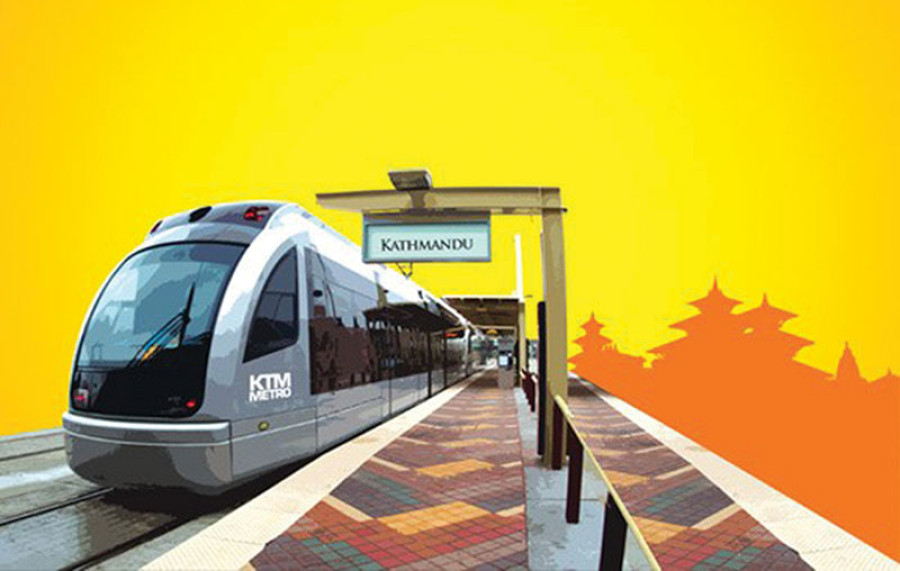
The Department of Railways has invited expressions of interest (EOI) from international consultants to prepare a detailed project report (DPR) for the construction of a rail, metro, or monorail system in the Kathmandu Valley. The exact mode of transport will be determined after a feasibility study. The railroad will connect Narayan Gopal Chowk, Chabahil, Koteshwar, Satdobato (Lalitpur), Ratnapark in a loop returning to Narayan Gopal Chowk.
The length of the proposed line would be 27.5 kilometers, according to a pre-feasibility study. The department published the EOI notice on May 18.
In order to prepare the feasibility study for the proposed rail/metro/mono rail system, the government has allocated over Rs 323.37 million for the multi-year infrastructure project, said Bodh Bhandari, information officer at the DoR.
The selected bidder will have to complete the study within 18 months, said Bhandari.
This is the part of five different railway projects being studied by the department in the Kathmandu Valley.
According to Aman Chitrakar, a former official of the department, the total length of these five electrified rails will be 77.28 km. Other proposed railway projects are Kirtipur-Kalimati-Baneshwar-Tribhuvan airport (11.15 km); Koteshwar-Chabahil-Swayambhu-Koteshwar ( 28.53 km); Swayambhu-Dillibazar-Bauddha (11.70 km); and Dhobighat-Singha Durbar-Naxal-Gongabu (13. 8 km).
Three of the railway projects will have elevated railway tracks while Swayambhu-Dillibazar-Bauddha (11.70 km) and Dhobighat-Singha Durbar-Naxal-Gongabu (13. 8 km) will be built underground.
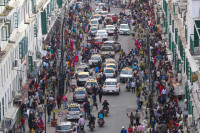
According to Chitrakar, the proposed metro rail projects in Kathmandu Valley are among the best options for meeting the transport demands of Kathmandu Valley’s current population of around four million. He said the rail network will help ease traffic congestion, encourage people to use public transportation and thereby reduce dependence on private vehicles, mainly cars and two-wheelers. As the proposed system will be fully electric, it is also expected to help to reduce air pollution and reduce fuel imports to some extent.
Chitrakar says the railway will provide a safe, reliable, economical and environmentally friendly mode of mass transportation. It will save travel time that could be used for other economic activities. He added that it would also improve the quality of life in the capital and enhance Nepal’s image among tourists.
In 2018, the government’s plan to build an $800 million monorail in Kathmandu was thrown into doubt after a prospective developer failed to deposit the performance guarantee, forcing the Investment Board Nepal (IBN) to cancel plans to sign a memorandum of understanding (MoU) with it for the preparation of a DPR.
Anil Giri is a Chief Sub Editor covering diplomacy, international relations and national politics for The Kathmandu Post. Giri has been working as a journalist for more than two decades, contributing to numerous national and international media outlets.




 15.26°C Kathmandu