Inside Nepal’s security response after Sunsari violence
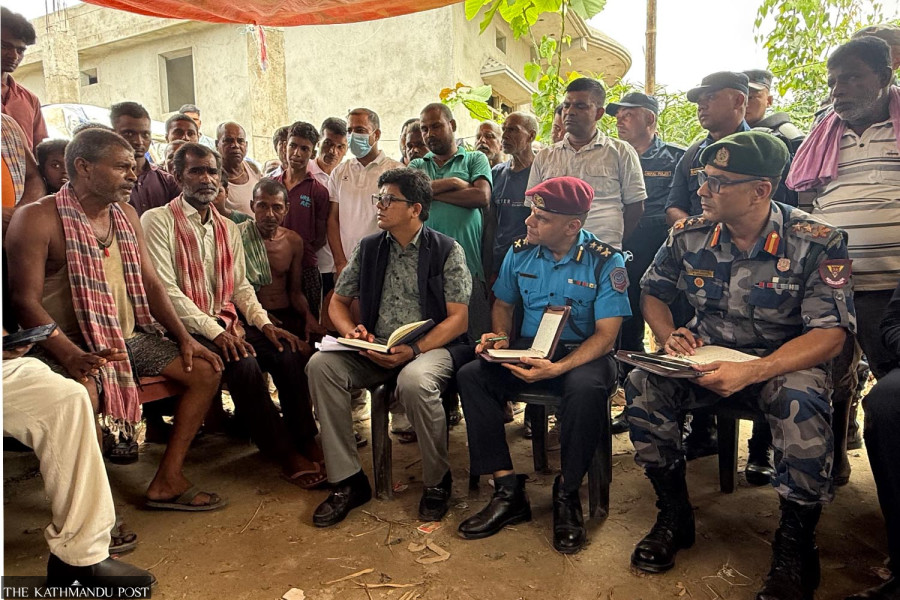
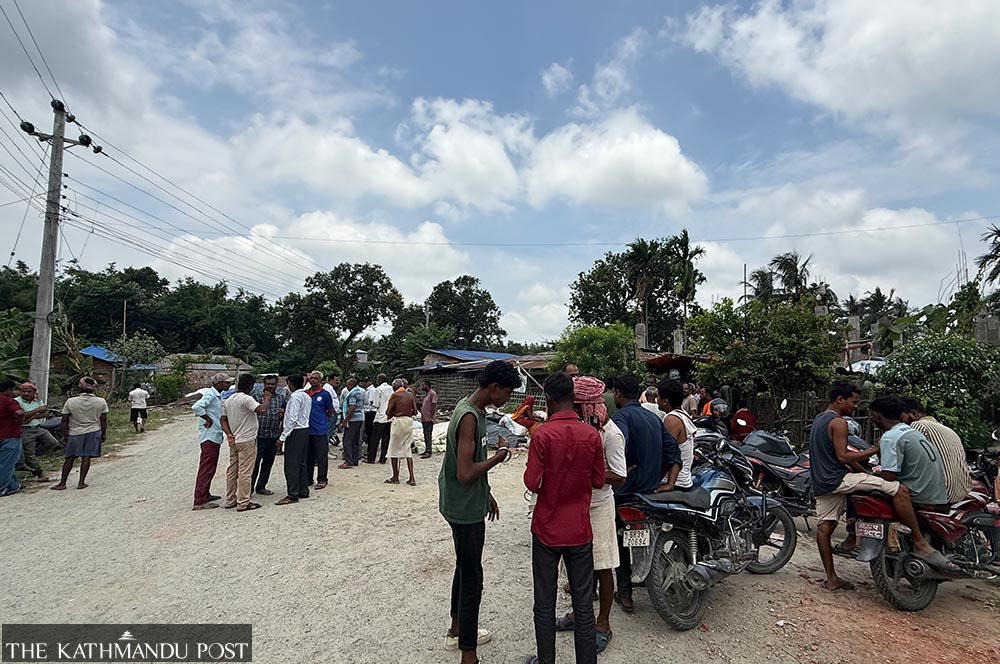
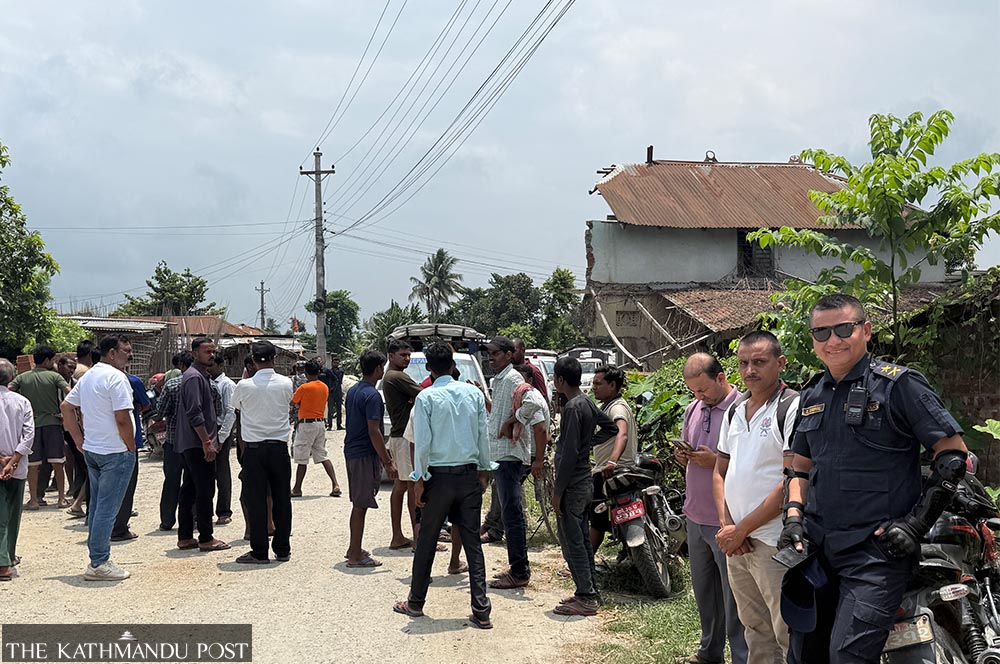
As officials debated escalation risks, the government reshuffled security leadership while questions emerged over coordination, intelligence assessment and crisis management. The five-member panel, formed by the Ministry of Home Affairs and led by joint secretary Bhupendra Thapa, began its field investigation on Tuesday. Arjun Subedi/TKP
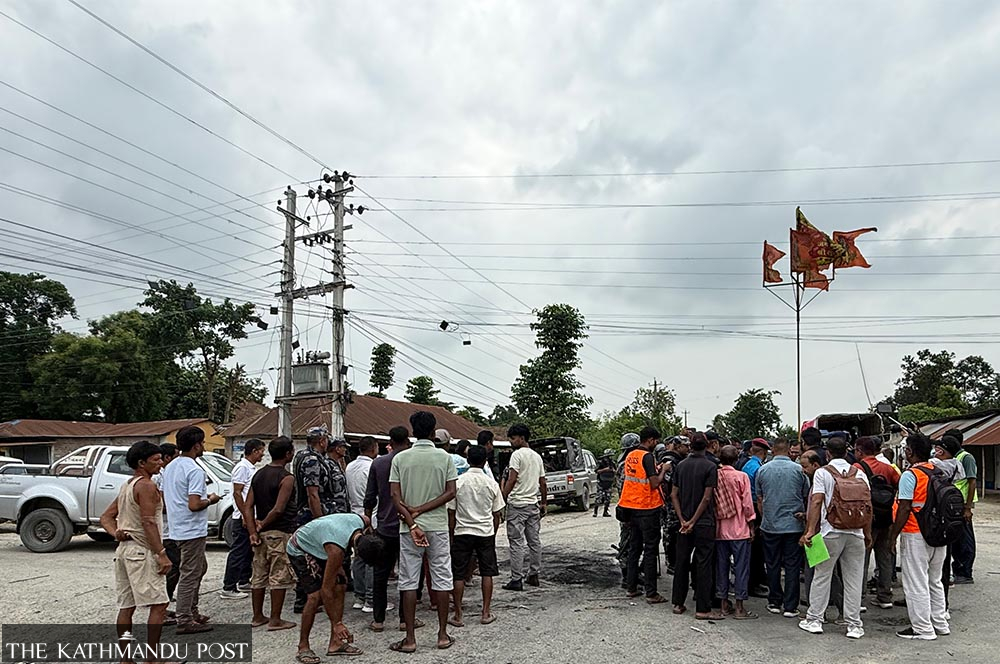
A day after communal violence in Sunsari’s Dewanganj Rural Municipality left one person dead and 22 others injured, Nepal’s top security officials gathered at the government’s central secretariat to assess the situation, discuss the risk of further escalation, and decide how the state should respond.
The Central Security Committee meeting, held at 5 pm on July 27 under the chairmanship of Home Minister Sudan Gurung, brought together senior officials from Nepal’s security and administrative establishment: Nepali Army Lieutenant General Pradeep KC, Home Ministry Secretary Raj Kumar Shrestha, Defence Ministry Secretary Kedarnath Sharma, Nepal Police Inspector General Dan Bahadur Karki, Armed Police Force Inspector General Narayan Dutta Poudel, and National Investigation Department Chief Tekendra Karki. The meeting at the Home Ministry continued until around 9 pm.
The discussion was held after authorities faced questions over the handling of the Dewanganj incident. Earlier that day, the government had begun changing key security officials responsible for the area.
Koshi Province Police Chief Binod Ghimire was recalled and was replaced by DIG Shekhar Khanal from Nepal Police Headquarters. Sunsari Chief District Officer Basudev Ghimire was transferred and replaced by Sankhuwasabha CDO Ishwari Prasad Aryal. Sunsari Police Chief SP Keshav Thebe was recalled, and SP Pushparaj Malla from Gautam Buddha International Airport was sent to Sunsari.
Arjun Subedi/TKP
The DSP of the Armed Police Force company based in Kaptanganj, Nandakishor Mahato, who was present in the area during the incident, was also recalled and replaced by DSP Madan Nath from Armed Police Force Headquarters.
At least five people — including security officials and ministry officials familiar with the meeting — told Kantipur what transpired during the July 27 discussion.
According to one official, who spoke on condition of anonymity due to the sensitivity of the matter, Home Minister Gurung appeared visibly upset with the security response. Gurung, the official said, also raised concerns over increasing smuggling activities along the border, the lack of effective action against smuggling, and what he described as mistakes by security agencies during the communal violence in Sunsari.
Gurung directed authorities to increase security deployment along the border and install drones and CCTV cameras. The official said the discussion appeared to be moving away from the immediate crisis and measures to address it.
“He was fidgety, at times extremely dissatisfied that security personnel had failed to do their work,” the official added.
Meanwhile, concerns were mounting over whether tensions could escalate further. During the Central Security Committee meeting, security chiefs raised the possibility that the violence could spread to other parts of the country.
According to officials present at the meeting, Army Lieutenant General Pradeep KC and the chiefs of Nepal Police, Armed Police Force, and the National Investigation Department — Dan Bahadur Karki, Narayan Dutta Poudel, and Tekendra Karki — emphasised the need for measures to manage the situation and prevent similar incidents elsewhere.
Another account of the meeting, from a source familiar with the discussion, described a different emphasis from the military side.
Army Lt. General KC, according to the security source, argued that field-level security agencies and officials were already aware of the operational requirements and that the role of the centre should be “to coordinate rather than direct every tactical decision.”
The source said Lt. General KC explained that decisions such as where to deploy security personnel, where to position equipment such as CCTV cameras and drones, and how to mobilise forces were matters traditionally handled at the field level.
“These are tactical and strategic issues,” the source quoted Lt. General KC as saying. “Such matters have been handled from the field rather than from above, and security personnel should be deployed effectively according to that approach.”
KC told the meeting that field-level mechanisms were aware of the situation and that coordination from the centre was necessary.
The source said the heads of other security agencies also informed the meeting that efforts were underway to bring the situation under control. However, the source claimed that the Home Minister appeared more focused on expressing anger than listening to those assessments.
“At such a time, such a temperament does not help,” the source added.
On July 28, Home Minister Gurung held another security meeting at the Home Ministry with officials from Nepal Police, Armed Police Force, and the National Investigation Department.
The meeting instructed subordinate agencies to work toward maintaining social harmony.
However, tensions continued, and violent demonstrations between the two groups resumed in the evening. The incident also triggered a political response.
On July 29, an all-party meeting was held on the initiative of Rabi Lamichhane, chairman of the ruling Rastriya Swatantra Party.
The meeting included representatives of parties represented in Parliament — RSP, Nepali Congress, UML, Nepali Communist Party, Shram Sanskriti Party and Rastriya Prajatantra Party — as well as leaders of parties outside Parliament, including Janata Samajbadi Party, Janamat Party, and JSP Nepal.
Prime Minister Balendra Shah did not attend the meeting. Nor did Home Minister Gurung.
The meeting issued a seven-point agreement, including condolences for those killed in the incident, sympathy for the victims and the injured, an appeal for social harmony and peace, calls for local-level all-party mechanisms, stronger coordination and leadership from the centre, control of rumours, and the responsible use of social media.
Arjun Subedi/TKP
Questions over Nepal’s security response model
The Sunsari incident has once again raised broader questions about how Nepal manages communal tensions and coordinates security responses across its federal structure.
Under Nepal’s federal system, provincial police chiefs legally come under the authority of provincial governments.
Provincial security committees, led by provincial home ministers, are also responsible for security management and developing strategies.
However, a security official said the transfer of the Koshi Province police chief was carried out without coordination with the provincial government.
“This reflects a wider problem in Nepal’s transition to federal governance,” the official added.
The District Administration Office (headed by the Chief District Officer) remains under the direct command and control of the federal government. Since laws related to the Nepal Police and the federal civil service have not been fully implemented, transfers and deployments of Chief District Officers and provincial police structures continue to be controlled from Kathmandu, the federal capital.
As a result, when security incidents occur in the provinces, coordination between Chief District Officers and provincial mechanisms has not yet become an established practice. Since Chief District Officers, who lead the district security committees, are direct appointees of the Home Ministry, when security incidents occur, they report to Kathmandu, not to the provincial minister for internal affairs, who heads the provincial security committee.
This has created a gap between federal institutions and provincial structures, according to officials familiar with the issue.
Incidents affecting religious and communal harmony have occurred in different parts of the country in the past as well. However, security forces are often deployed only after tensions have already escalated.
Critics argue that the current approach focuses heavily on a control mechanism — using security forces to contain situations after they become violent.
A different approach would focus on management and prevention, involving local governments, provincial governments, federal agencies, civil society groups, and representatives of different communities before tensions turn into violence.
Such an approach would require dialogue and coordination mechanisms to identify warning signs and prevent escalation.
The argument is that managing communal tensions cannot rely only on force after violence occurs; it requires sustained engagement before a crisis develops.
Pradhumna Karki, a former AIG of Nepal Police, said the situation in Devanganj, Sunsari, along with similar incidents that have occurred in different places at different times, suggests that weaknesses in crowd control and crowd management have often resulted in the loss of life and property and disrupted social harmony.
“Different religious communities have their own ways of life, customs and beliefs. They coexist by maintaining social and religious harmony,” he told Kantipur. “However, there are always elements that seek to provoke tensions between them. This is where the security apparatus and the administration must focus their attention.”
Karki also pointed to the lack of crowd-control capacity and non-lethal equipment within the security agencies.
“There is a tendency to acknowledge these shortages only after an incident has occurred — saying that this or that resource was lacking and promising that such shortages will not be allowed in the future,” he said. “This approach needs to end. The necessary resources should be made available in time.”
A prior risk assessment is key, he said, as it helps avert a crisis.
“Had the administration, local government, civil society, political parties and other stakeholders assessed the sensitivity of the issue in advance and acted accordingly, the situation would not have deteriorated.”
Questions over intelligence assessment
The role of Nepal’s National Investigation Department has also come under scrutiny following the Sunsari incident.
The National Investigation Department, which was recently brought under the Prime Minister’s Office, is the country’s main intelligence agency. It is mandated to collect information independently and assess situations, with reports expected to move through a chain of command before other security agencies develop strategies based on those assessments.
Questions have been raised about whether the department had adequately assessed the situation before the Sunsari violence.
The National Investigation Department’s Koshi Province chief is Investigation Director Indra Lama, a DIG-level officer. Its Sunsari chief is Deputy Investigation Director Bimal Ghimire, an SP-level officer.
While officials from other security agencies and the Chief District Officer were recalled or transferred after the incident, officials from the National Investigation Department continued in their positions.
Devraj Bhatta, a former Additional Chief Investigation Director at the National Investigation Department, said there were indications that warning signs had emerged well before the Sunsari incident but were ignored.
“While the local government, security agencies and the administration overlooked those warning signs, the intelligence agencies assigned to monitor the situation also do not appear to have carried out their primary responsibilities,” Bhatta told Kantipur. “Another question is this: if similar incidents had occurred in the past, why were precautionary measures and a strategy not put in place beforehand? That is the central question.”
Bhatta also believes that, after the incident occurred, intervention from the centre to prevent further escalation and restore calm either came too late or was neglected.
“All of these factors contributed to the unfortunate incident in Sunsari, which disrupted religious and social harmony,” he said. “The police, Armed Police Force, intelligence agencies and the local administration were preoccupied with their own interests. Instead of assessing the situation properly, they were focused on their own priorities.”




 14.69°C Kathmandu