Flood-hit Rani Mahal still awaits cleanup two months on
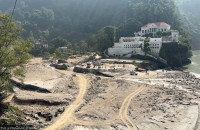
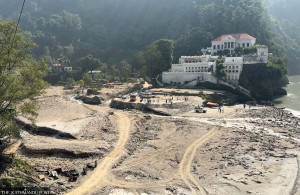
Sand, gravel and debris remain scattered across the historic palace grounds, while riverbank erosion threatens its foundations and local businesses struggle with a decline in visitors. Rani Mahal, on the banks of the Kali Gandaki river in ward 13 of Tansen Municipality, Palpa. Madhav Aryal/TKP
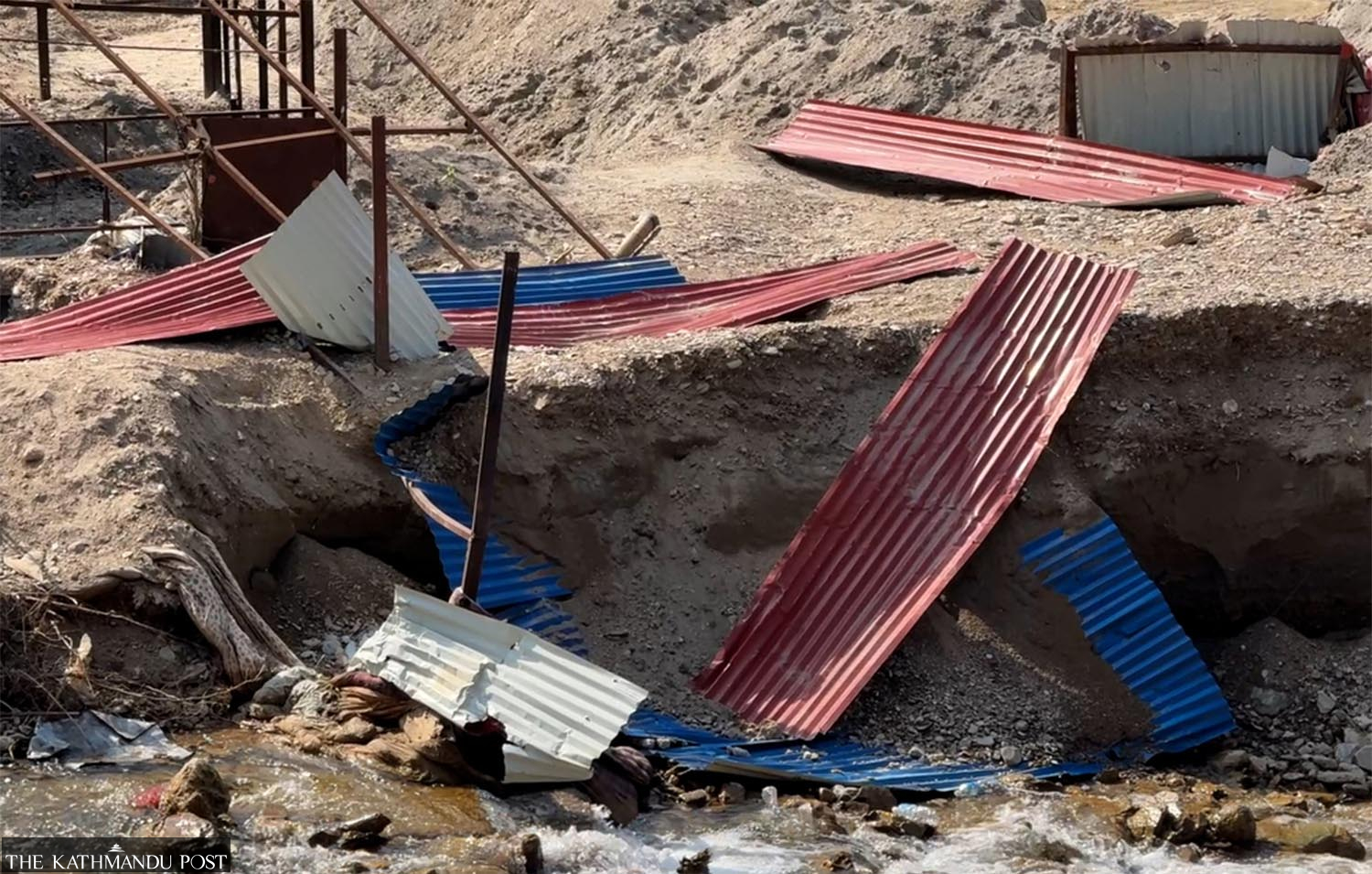
The historic Rani Mahal complex in Palpa remains in disarray two months after floods on September 27 damaged the site. The park, roads and parking area buried by the floods have yet to be cleared, and damaged structures remain unattended. Sand, gravel and rocks are scattered across the grounds, while the risks of riverbank erosion and landslides persist.
The number of visitors has also fallen since the floods, raising concerns among local business owners. According to them, more than 3,000 domestic tourists visited Rani Mahal daily during Dashain and Tihar last year. This year, the number has dropped to no more than 1,600 a day. Business owners who depend on tourists visiting the historic palace are now worried about getting their businesses back on track.
The floods damaged roads, parking areas and buildings used for commercial activities, said Arjun Pandey, a hotel operator in the area. More than a dozen hotels and other businesses around Rani Mahal were affected, he said. Some hotels and resorts have resumed operations after the flooding, but others are still carrying out repairs and cleaning.
Krishna Prasad Paudel, a visitor from Pokhara, said the floods appeared to have caused extensive damage to the Rani Mahal complex.
“The damage caused by the floods is enormous,” he said. “But I was surprised to see that the municipality, which collects entry fees from visitors, has done nothing to clean up the complex.”
Locals complain that the authorities have shown little interest in restoring the area since the floods left it in disarray. Agencies that are quick to collect revenue have failed to give sufficient attention to post-disaster cleanup and restoration, they say.
Bimal Pandey, a business owner at the complex, said no one had shown concern despite months passing since the damage.
“It would at least look better if the sand, gravel and stones were properly cleared and managed,” he said. “Visitors coming here are facing considerable inconvenience.”
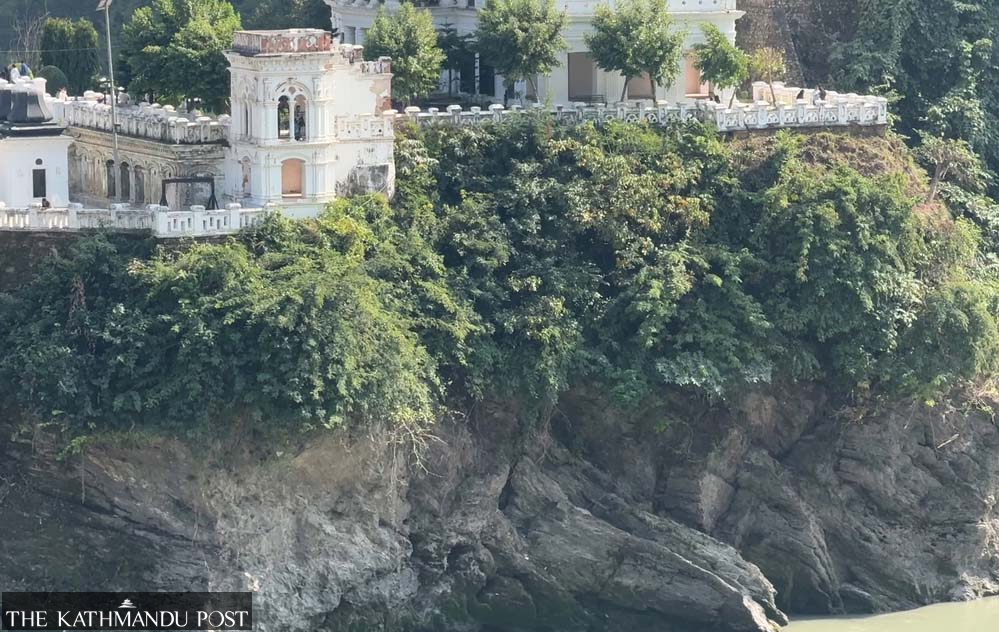
He also said erosion on both sides of the river had increased the risk to Rani Mahal itself.
Madhav Aryal/TKP
“None of the concerned agencies seems serious about protecting Rani Mahal, a source of pride for Palpa. Sand and waste are scattered all over the complex,” he said.
The revenue section of Tansen Municipality says it collects between Rs6 million and Rs7 million annually from the Rani Mahal area. Local business owners say the authorities collecting revenue should also take responsibility for protecting the heritage site and overseeing its restoration after disasters.
Tansen Municipality, which is responsible for the palace’s conservation and management, says it has already removed damaged structures within its jurisdiction. The Department of Archaeology handed over the historic palace, which has historical, archaeological and religious significance, to the municipality in July 2018 under a 10-year agreement.
Under the agreement, the federal government is responsible for providing the budget required for physical infrastructure development at the palace. The 10-year agreement also prohibits the municipality from granting third parties the right to use or lease the palace and the land it occupies.
Yadav Singh Karki, spokesperson for Tansen Municipality, said work was underway to remove damaged structures from the palace grounds. Some of the structures that remain in disrepair fall within the jurisdiction of neighbouring Bagnaskali Rural Municipality, he said.
“Workers have been hired on a daily-wage basis to carry out painting,” Karki said. “Work to manage the sand and gravel around the complex will now begin.”
Madhav Aryal/TKP
Syangja’s Kaligandaki Rural Municipality has also opened a vehicle track along the river and its banks through the Rani Mahal area to connect with its territory. Tansen Municipality said it had been unable to carry out further restoration because of continued rainfall after the floods, followed by the Dashain holiday.
Karki said the municipality would remove debris deposited by the floods and level the riverbank. The floods not only damaged the palace grounds but also increased the risk of river erosion near the palace foundations.
“The northwestern section appears to have partly subsided,” said Anil Yadav, a visitor from Rupandehi. “This is a danger, and the concerned authorities need to act in time.”
Earlier, a survey conducted by divers from the Armed Police Force found that erosion had eaten away three to seven feet of the rock formation supporting the palace’s foundations. Although the survey detected erosion, the divers said the palace was not in immediate danger of collapsing. However, they warned that long-term conservation measures were necessary because the river was flowing towards the palace foundations.
Located on the banks of the Kali Gandaki river, about 14 kilometres north of Tansen Bazar, Rani Mahal is one of Palpa’s major tourist destinations. The palace was built by Khadga Shumsher, a general during the Rana regime, between 1950 and 1954 in the Nepali calendar, in memory of his wife Tej Kumari.
Locals have called for the restoration of the flood-damaged parks, roads, parking areas and commercial structures, alongside the conservation of the historic palace.
The Department of Archaeology is repairing the ruins of several structures in the Rani Mahal complex, including the horse stable, the place where soldiers stood guard and military deployment sites.
A path with iron railings along the Kali Gandaki riverbank, where Khadga Shumsher used to go bathing, is among the site’s attractions. There is also a replica of the room where he used to worship on the eastern side of the palace.
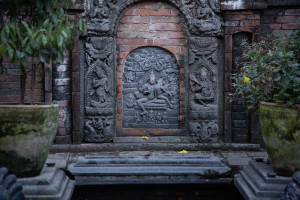
The three-storey palace reflects the art and culture of the Rana era. The upper floor served as a reception room, while the middle floor housed Khadga Shumsher’s chambers. The left side of the palace has a Shitalpati pavilion, while two stone-carved ponds in the courtyard were built for fountains. A guard’s quarters stand on the right side of the third level. Two similarly designed temples dedicated to Shiva and Ganga stand to the left of the staircase.




 17.12°C Kathmandu