



 14.81°C Kathmandu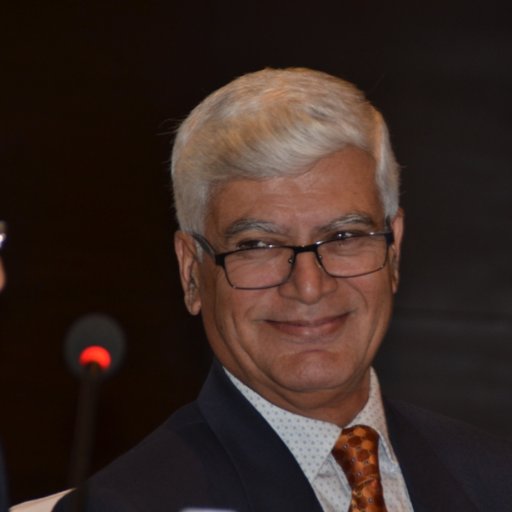

Sat, Oct 24, 2026
Columns
Balen government’s foreign policy overtures
By signalling continuity in some imperatives but rejecting business as usual, the PM has set a new tone.
bookmark
Shambhu Ram Simkhada
Published at : May 14, 2026
Updated at : May 14, 2026 21:16
Since the 1950s, Nepal has endured a cycle of political triumphs and traumas. In this chronicle of political change, the Gen Z ‘Blitzkrieg’ of September 2025 is unprecedented. It not only overwhelmed the Nepali state almost overnight, but the electoral ‘Tsunami’ of March 2026 has swept away parties and leaders active since the democratic awakening of the 1940s.
The electorate has now granted the Rastriya Swatantra Party (RSP) a near two-thirds majority. Its senior leader and prime ministerial candidate, the ‘enigmatic’ Balendra Shah, has been sworn in as Nepal’s new Prime Minister.
Foreign policy: Vital and complex
At one of the world’s most sensitive crossroads of history and geography, foreign policy has always been central to the Nepali statecraft. Today’s profound internal changes, shifting regional dynamics and the global paradigm in peril make foreign policy even more vital and complex.
The new government, born of political upheaval, faces both opportunities and challenges. Riding the wave of popularity from his transformative tenure as the Mayor of Kathmandu Metropolitan City, PM Shah now has a clear mandate to reenergise Nepal’s long-delayed journey towards independence, democracy, peace and prosperity through good governance, which has been promised several times but remains unfulfilled so far.
Hope, curiosity and uncertainty
These developments have captured global attention and stirred the imaginations of political actors worldwide. Yet they are so sudden and unprecedented that scholars may take time to grasp them and further time to explain them. Even for many Nepalis, the ‘strategists’ behind this phenomenon are unfamiliar. So, a certain sense of what to expect is natural. The international community, Nepal’s neighbours, longstanding friends and development partners are watching these developments with fascination, curiosity, interest, relief and concern.
Good ideas, clear policies, effective diplomacy
The RSP’s election manifesto, 100 Promises to the People, outlines a ‘balanced and dynamic’ foreign policy, prioritising economic diplomacy and placing Nepal’s national interest at the core. Harnessing transformations in the immediate neighbourhood for Nepal’s own progress is a top priority.
The manifesto envisions Nepal evolving from a ‘buffer state’ into a ‘vibrant bridge’ through trilateral connectivity and economic partnership. Yet, such a role requires confidence from both sides of the bridge. Resolving outstanding border issues through high-level diplomacy, upgrading border management by strengthening the Armed Police Force to combat trans-border infiltration and crime, renewing old treaties and arrangements and strengthening the national security apparatus to better protect national independence are other FP priorities.
These are essential but difficult tasks. The hardships faced by border communities due to restrictions on daily imports highlight the ‘paradox of proximity’. Proximity adds vitality but also complexity in inter-state relations, demanding extreme sensitivity in handling them. The stalled EPG report and the heightened ‘status quo ante’ following the new maps, which include some areas disputed by both sides, underscore the challenges confronting Nepal-India relations.
Meanwhile, the India-China agreement on Lipulekh, China’s ‘hands-off’ stance and reported concerns about ‘anti-China activities’ in Nepal complicate ties with both neighbours. America’s growing interest in the trans-Himalayas, one of the epicentres of its Indo-Pacific strategy, adds another layer of complexity in Nepal’s foreign policy.
Multilateralism and national power
Foreign policy is the application of national power to protect and promote national interests. National power is directly related to national interest and national sovereignty. Aware of this, Nepal’s founding father famously described Nepal as a ‘yam between two boulders’. Power is relative and dynamic, and today’s regional power configuration is not in Nepal’s favour. In such a context, a norms- and rules-based multilateralism helps moderate the unbridled use of ‘might is right’, offering smaller states the chance to ‘punch above their weight’. Nepal has done so at the UN and could do so in a stronger SAARC or BIMSTEC.
The three ‘I’s mantra
Translating good ideas, many of them in the RSP manifesto, into clear FP guidelines and effective diplomacy depends on the three ‘I’s mantra:
Issues: Identify the main issues of national interests, and inspire citizens to put nation above person and party. The Shah government’s first test is reversing the current reverse sequencing of interests, where leaders prioritise personal or partisan factional gains over national interest.
Institutions: Foreign policy involves multiple institutions, with the Ministry of Foreign Affairs as the key link. Nepal must address the crisis of politicisation and bureaucratisation of its vital state institutions, including the MOFA, by professionalising them.
Individuals: Institutions are only as strong as the individuals leading them. Appointing committed and capable individuals to lead vital state institutions, such as ambassadors, will also be important for effective diplomacy. A diplomat’s failings reflect poorly on the government, harming the national interests for years. Hence, diplomacy is not an area for experimentation.
Applause and whisper
In his address to Kathmandu-based diplomats, PM Shah outlined a balanced and pragmatic foreign policy, emphasising deeper ties with neighbours, friendly nations and development partners based on trust and respect. He highlighted peace as a shared priority and stressed the safety and well-being of Nepali workers and the diaspora abroad.
By signalling continuity in some foreign policy imperatives but rejecting business as usual, the PM has set a new tone. Stricter application of the diplomatic code of conduct, letting action speak more than words, and efforts to build national consensus on a New National Agenda, including FP, are promising steps. Of course, the realities of the Sovereign Equality of Nations, ‘one nation, one vote’ in the UN General Assembly, but veto power only for the P5 (permanent members), reflecting the continuity of the old hierarchy of power, demands a more nuanced approach to best protect and promote the national interest.
The MOFA will surely elaborate on these signals and directives of the PM into substantive FP guidelines for effective diplomacy. For now, the world greets the Balen government’s initial foreign policy overtures with much applause and some whispers.
Shambhu Ram Simkhada
Simkhada is a former permanent representative to the United Nations and ambassador to Switzerland.





Most Read from Columns




Editor's Picks





E-PAPER | October 24, 2026

×