‘Ek Mutthi Badal’ is driven by emotions. Sure, there is a plot, a wedding, a family, a house—but what persistently lies at the centre is the crude, uncomfortable emotion that drives the audience through an immersive experience rather than just distinctive storytelling.
It is rare to find a Nepali film in which a female character is written without a motif to ‘save’ her. Women remain at the centre, yet the thread connecting the audiences to the screen is somehow fragmented. Relatability disappears in the performative representation of womanhood.
‘Ek Mutthi Badal’, also known as ‘My Share of Sky’, however, resists this conventional projection. One can find oneself in its rhythm within the dialogues and the silence.
The screenwriting allows women to simply exist as they are. Writer and director Sahara Sharma always intended to bring a character much like herself onto the screen. Sharma, therefore, balances delicacy with complexity, making the film personal and intimate to its audience.
With a woman-led international co-production team, this film understands the emotional textures of domestic spaces through an intimate, observant gaze. Its feminist intent is not declared, nor is it performed as an ideology. It is naturally embedded in the architecture of its storytelling.
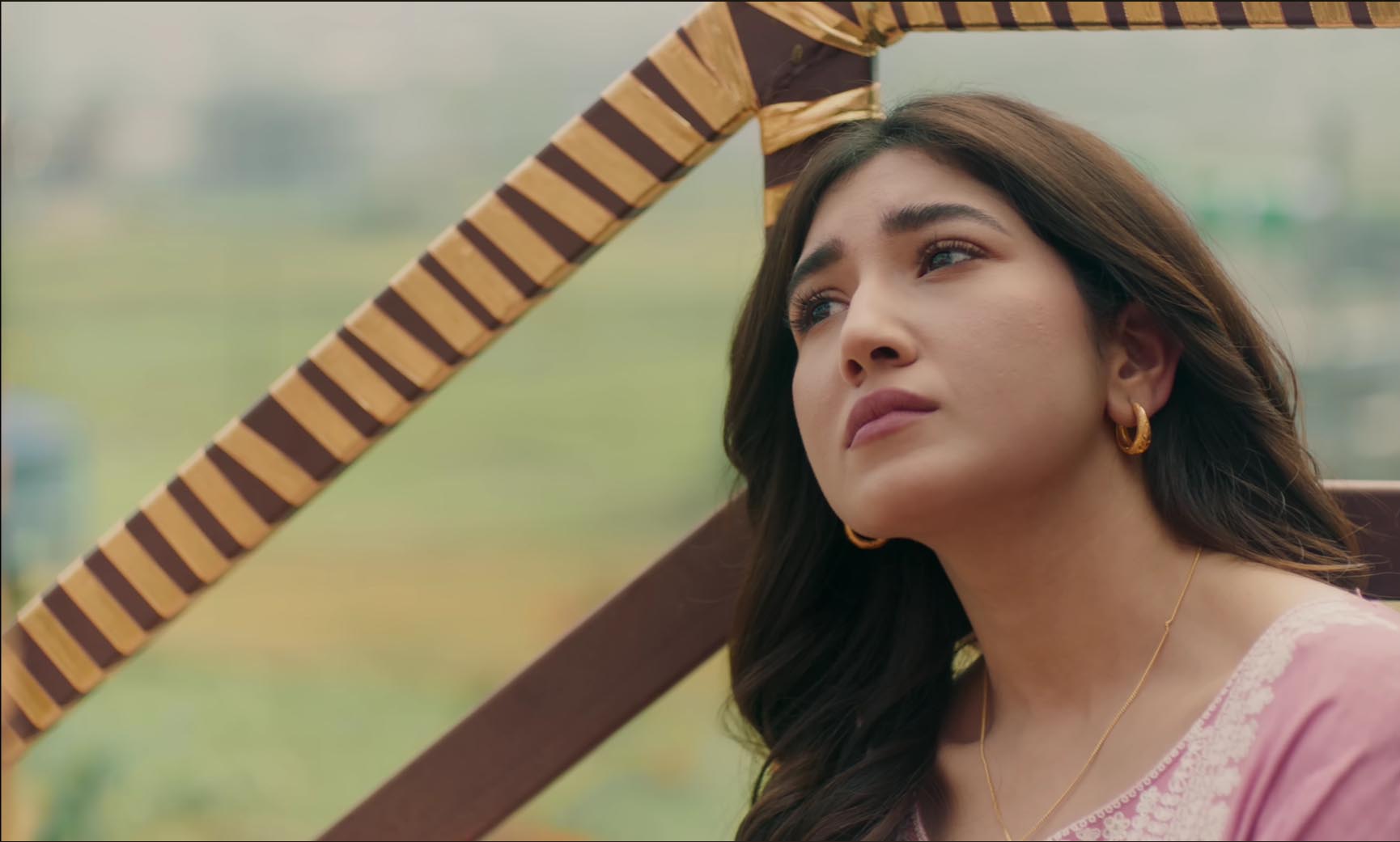
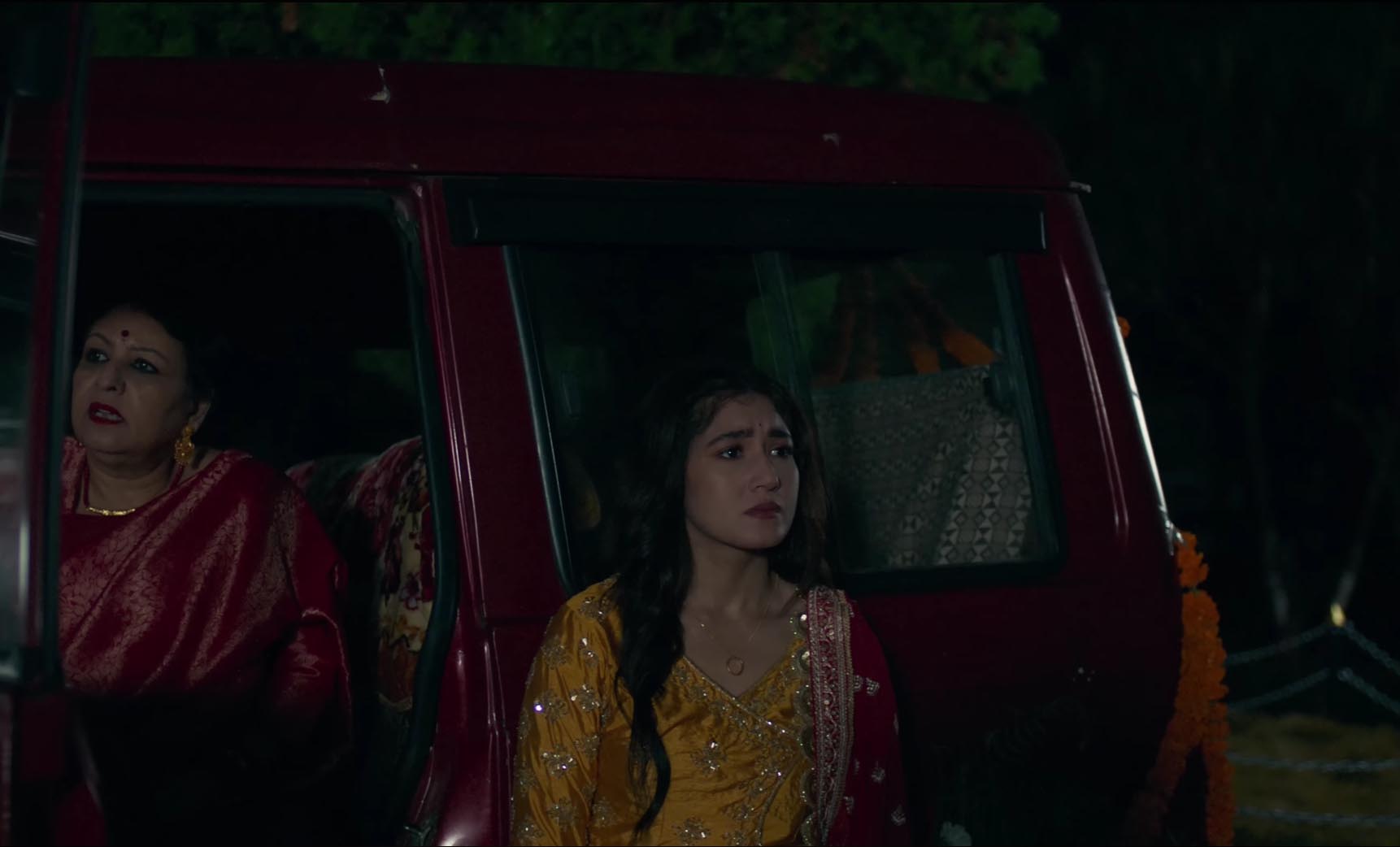
Its form too becomes an emotional language. Colour and composition illustrate meanings beyond words. Its atmosphere is further amplified with the art direction by Agrani Thakuri Jha. The vibrant decorations of the Bihe gharand the balance between the colours and contrasts create an appeal through the visual language.
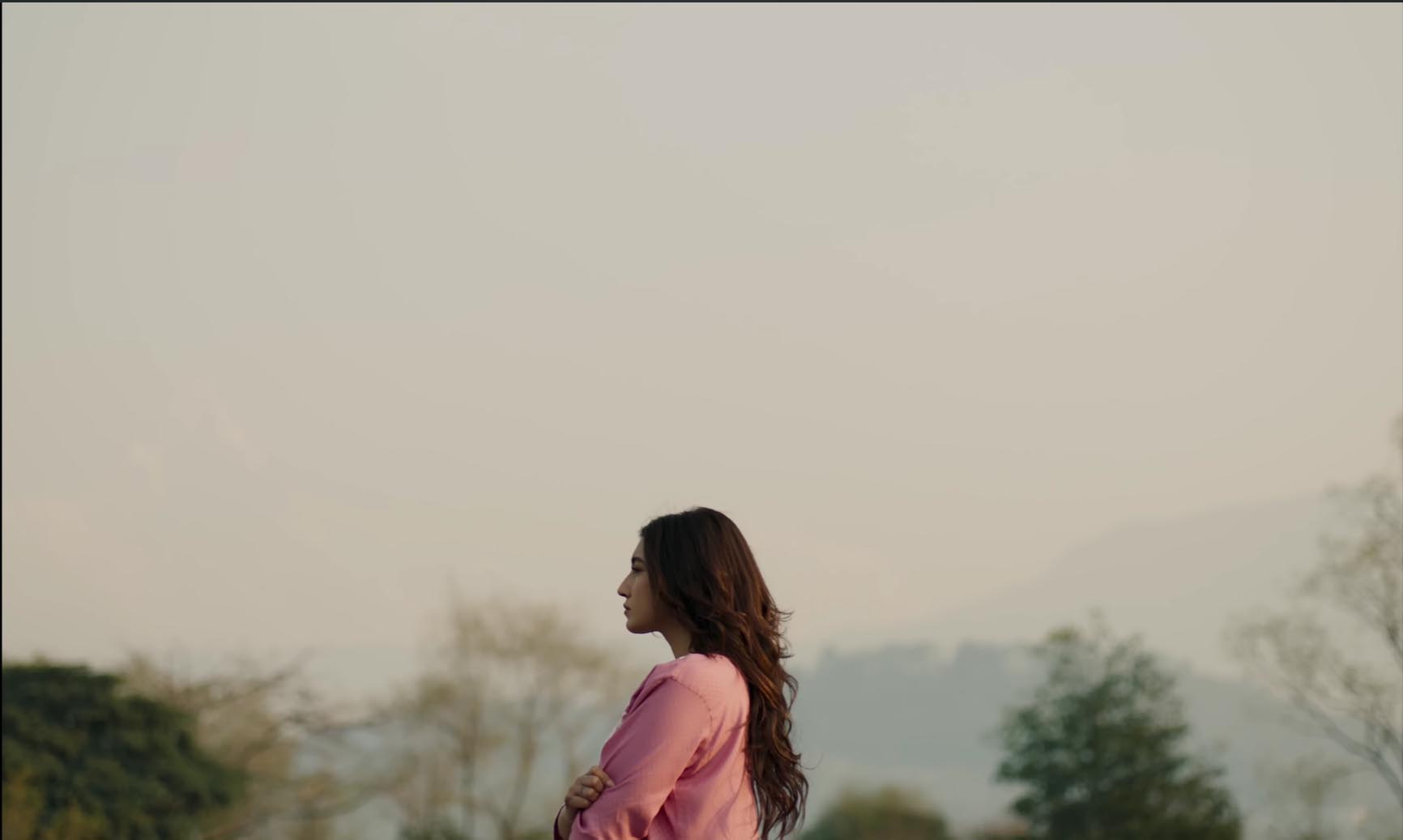
The cinematography by Linh Dan Nguyn Phan demonstrates a careful command of compositions, employing cinematic mastery of using techniques such as ‘the rule of thirds’ to guide the attention without overwhelming the emotional stillness of the frame.
The film opens with a court marriage and Maili’s (Aanchal Sharma) defiance of ‘culture’. This is an unconventional introduction. Within the premise of the court, she refuses to pierce her nose, resisting a Nepali cultural belief that all Brahmin brides must have their noses pierced. Through this, we are quickly drawn to Maili’s psyche—her discomfort and emotional distance.
Within a 24-hour span, the film flows through her wedding, bringing the family together and exposing the fractures within it.
Belonging holds power in ‘Ek Mutthi Badal’. Maili recites her grandmother’s poem, or perhaps a story about a guy asking a girl to bring a flower (Pompeii ko ful) from the middle of the ocean. She immediately becomes happy to do so. But the flower is far beyond where she imagined it to be.
With each step, she drowns deeper—yet she does not reach the flower which signifies home, comfort and belonging. Things that are always visible, but never truly attainable.
Every character in ‘Ek Mutthi Badal’ is searching for something similar. An identity and a place where they can arrive without a translation or performance.
Maili’s elder sister, played by Usha Rajak, is paralysed by the collapse of her marriage, unable to leave or stay. Their younger sister, on the contrary, cannot declare her love, keeping it hidden.
Their brother, a traditional embodiment of a Nepali son, who is unconditionally prioritised by the family, is also navigating his own vulnerability. Their father, who worked abroad, points to a plant whose branches are encased in plastic, symbolising isolation.
Their mother says one of the film's most striking lines: “If my mother, too, had sent me to America with her lifetime savings, I would not have to think of these people.” Her emotional exhaustion, rather than being loud or destructive, is silently layered by her compromises and responsibilities.
A scene where Maili and her mother smoke together briefly collapses the emotional aloofness in their relationship. Together, these characters exist in different emotional registers, yet remain bound by the same inherited language of silence, expectation and duty, constantly negotiating with endurance, resistance and concealment to build their own place in the changing world.
At times, the film’s commitment to emotional immersion comes at a cost of narrative sharpness. While its emotional alignment with Maili is compelling, certain aspects of her interiority remain withheld, leaving the audience to navigate her restraint without full access to its origins.
Alongside this emotional landscape, a collective memory is formed by the songs ‘Rel Ghumyo Ghumti Ma’ by Meena Pokhrel, Indrakala Rai, Sammy D, and Real G, and ‘Pallo Ghar’ by Shreya Rai.
Having travelled through several international platforms, including Locarno Open Doors Consultancy (Switzerland), Cannes Film Festival (France), and the West Meets Screenplay Lab (Bangladesh), ‘Ek Mutthi Badal’, a product of Gauthali Entertainment and Mana Production, arrives as a universal dialogue, yet firmly rooted in a local emotional vocabulary.
The film ends with an ending that was present at the start. With uncertainties, resistance, and rupture in the middle, it ends with residues of feeling that return the characters to the same emotional terrain they began with.




 17.79°C Kathmandu