



 14.61°C Kathmandu
Fri, Oct 9, 2026
Politics
RSP pledges to probe assets of public office holders since 1990
Party supports private-sector-led growth, startups and skill-based jobs creation.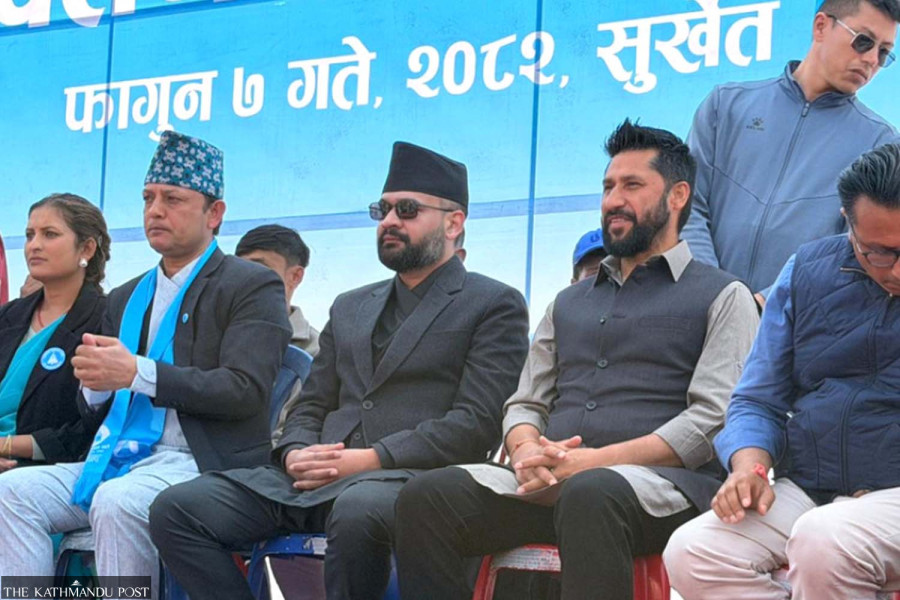
bookmark
Anil Giri
Published at : February 20, 2026
Updated at : February 20, 2026 06:44
Kathmandu
In its manifesto made public on Thursday for the March 5 elections, the Rastriya Swatantra Party pledges to probe the assets of public office holders since the political changes of 1990.
The manifesto of the party led by Rabi Lamichhane promises structural reforms of state institutions, strong anti-corruption mechanisms, and investigations of major scandals. It proposes merit-based bureaucracy, performance accountability and digitisation of public services to curb middlemen and delays.
Positioning its agenda around transformation, the RSP said its plan prioritises clean governance, efficient service delivery, economic revival and rebuilding public trust in the state.
As part of its commitment to probing assets, it has adopted the policy of opening old corruption files. According to the manifesto, the party will investigate the assets of those who have held public office since 1990 (2047 BS) and to nationalise illegal assets. It also states that a provision will be introduced requiring mandatory public disclosure of assets before assuming public office.
The RSP chooses to call its document a ‘Bacha Patra’, or promise letter, signalling what it frames as a direct assurance to voters.
RSP promises time-bound public services, integration of services through the National Identity Card and a “not in line, but online” system to expand digital governance. Administrative simplification and decentralisation are also key priorities.
The party also stated that a ‘discussion paper’ will be prepared within three months of government formation, aiming to build national consensus on proposed constitutional amendments. The initial discussions will cover topics such as a directly elected executive, a fully proportional parliament, a system where MPs do not become ministers, non-partisan local governments, and a reformed provincial structure, reads the manifesto.
The party has outlined a private-sector-led growth model, pledging regulatory reforms, support for startups and skills-based job creation. It aims to raise per capita income to $3,000 within five to seven years and build a production-oriented, self-reliant economy.
The manifesto also targets improving the investment climate, eliminating cartels and syndicates and producing 30,000 megawatts of electricity within a decade, with plans to export energy through better regional diplomacy.
The RSP has pledged an official state apology to the Dalit community for historical discrimination and promised targeted programmes for marginalised groups alongside equitable distribution of state resources.
The party proposes clarifying the powers of federal, provincial and local governments, reducing duplication, and limiting federal ministries to 18. It also plans electoral finance reforms and a discussion paper on constitutional amendments within three months of government formation.
In the judiciary, the manifesto promises merit-based appointments to higher courts and consideration of live broadcasting of hearings to enhance transparency. The RSP has pledged to bar teachers and professors from engaging in party politics and create a non-partisan student representation system. It also promises to end partisan affiliation among personnel across state institutions, including bureaucracy, security agencies and constitutional bodies.
The party says private education will be treated as complementary to public education, with stronger regulation on fees, standards and outcomes.
Key pledges include expanding health insurance, strengthening public hospitals, completing national pride projects, improving urban transport, and enhancing climate resilience and agricultural modernisation, as per the manifesto.
The manifesto recognises Nepalis abroad as a pillar of economic transformation, promising overseas voting, easier investment procedures and smoother repatriation of returns. It also supports dual citizenship in principle, with some exceptions.
On the cooperatives crisis, the RSP says its priority will be returning depositors’ money through legal settlement pathways rather than focusing solely on the imprisonment of operators.
The party has set a goal of transforming Nepal into a dignified middle-income country within 10 years, emphasising good governance, digital transformation and practical improvements in everyday public services.
The manifesto, presented as a 100-point commitment plan, underscores RSP’s attempt to position itself as a delivery-focussed reform force ahead of the polls.
The party also stated that a goal has been set to complete national pride projects within two years.
The party says digital parks will be built in all seven provinces, an IT Tourism Board will be formed, legal provisions will allow foreign companies to operate from within Nepal, and cryptocurrency regulation and consumer protection policies will be introduced. It has also set a goal of creating 500,000 jobs.
The manifesto announces plans to double both the number of tourists coming to Nepal and their spending, make GPS tracking mandatory for all public transport, and implement a system for waste segregation at source.
Programmes will be launched to establish a pension fund for athletes and to provide subsidised loans for first-time home builders or buyers, according to the manifesto.
“There is a long history of parties that rose promising to build the nation but faltered once in power. We will create strong mechanisms to stay on the right path,” the RSP said.
“Every party member must follow a code of conduct based on humility, diligence, service, accountability, and respect for all. We will practise zero tolerance against corruption and further strengthen the party’s Discipline Commission.”
Anil Giri
Anil Giri is a Chief Sub Editor covering diplomacy, international relations and national politics for The Kathmandu Post. Giri has been working as a journalist for more than two decades, contributing to numerous national and international media outlets.


Most Read from Politics
At UN, Prime Minister Balendra Shah to make Nepal’s case for climate justice
In New York, Foreign Minister Khanal introduces Nepal’s new political order
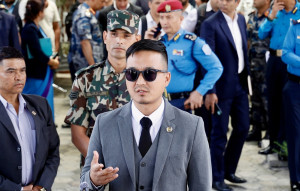
Home Minister Sudan Gurung to visit India next week
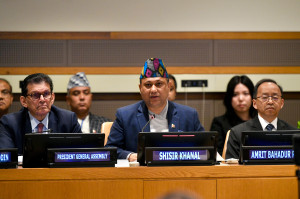
From the Himalayas to the islands, Nepal calls for a united climate response
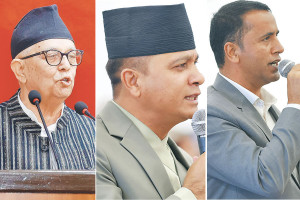
Uproar in Nepal parliament over former chief justice’s unexplained detention
Editor's Picks

What triggered the Rasuwa flood? Scientists piece together a complex chain of events

The floods keep coming. Nepal keeps starting over

In a settlement destroyed by the Bhotekoshi flood, a disabled couple offer strangers the little they have

Nepal working on detailed assessment as Bhotekoshi flood reconstruction could cost up to $5 billion

Rabindra Dhant gave Nepal a reason to smile. Now his camp wants real action behind the praise
E-PAPER | October 09, 2026

×