For more than three decades, Dadeldhura has been synonymous with one political name—Sher Bahadur Deuba. From 1991 to 2022, voters in Dadeldhura repeatedly sent Deuba to the House of Representatives, propelling him to premiership five times and twice to the helm of the Nepali Congress.
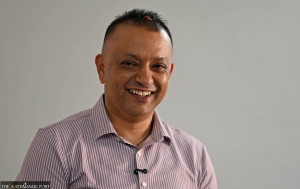
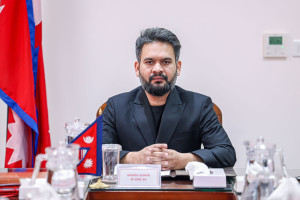
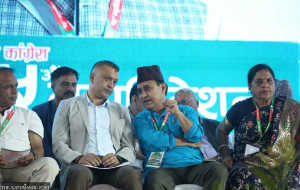
The upcoming election slated on March 5, however, marks a break from that tradition. Deuba, ousted from the party presidency through a special convention that dissolved the central committee he led, was denied a ticket by the new leadership under Gagan Thapa. In his place stands Nain Singh Mahar, a former president of Nepal Students’ Union, the student wing of Nepali Congress, carrying both Deuba’s blessing and the heavy weight of his legacy.
“Earlier we used to joke that others’ votes would make one just a parliamentarian but our votes made someone prime minister,” said a local trader in Amargadhi bazar. “This time, we are voting for someone other.”
Mahar’s candidacy has emerged at a moment of transition within the Congress. Although Deuba had repeatedly expressed his desire to contest “one final election”, the party’s new leadership, citing the mood generated by the Gen Z-led political movement, blocked his candidacy. In his place, Mahar, a central committee member under Deuba and long considered his political heir in the district, was fielded from Dadeldhura, a hill district of Sudurpaschim Province.
Born in 1974, at Lamikande in the present-day Bhageshwar Rural Municipality, Mahar is vying in a parliamentary election for the first time. “This is not just about replacing a leader. It is about completing what remained unfinished," Mahar told voters during door-to-door campaigning.
Deuba’s record in Dadeldhura is quite paradoxical. Despite being the executive head in the country at the age of 49 and remaining at the centre of state authority for decades, basic infrastructure in his home district remains weak. Large sections of the Bhimdatta Highway linking Dadeldhura to the Tarai have long fallen into disrepair. The road from the district headquarters to Deuba’s birthplace at Ruwakhola in ward 1 of Ganyapdhura Rural Municipality is still in poor condition, forcing residents to take longer detours via Ganyapdhura and Bhatkanda.
Unemployment remains another striking problem in Dadeldhura. “No matter how many times Deuba becomes prime minister, our children still have to go to India for work. Politics brought him power, but it did not bring jobs here,” said Ganesh Rawal, a farmer from Ajaymeru.
Health infrastructure tells an equally bleak story. Dadeldhura Hospital, upgraded to a 300-bed federal hospital, has 19 sanctioned posts for specialist doctors. None are filled permanently. “We only have one medical superintendent on a permanent position,” said hospital information officer Tanka Panta. “ENT and mental health specialists are absent, and when cases are serious, patients must be taken to Dhangadhi, a journey of over four hours.”
Patient load adds pressure. Panta said 250 to 300 patients visit the hospital on a daily basis, rising up to 600 in summer. A major X-ray machine has remained out of order for six months, forcing the hospital to initiate procurement of a new one. Patients from Bajhang, Bajura, Baitadi, Darchula, Achham and Doti district also rely on the facility.
Dadeldhura’s development gap is reflected in national statistics. According to the National Statistics Office, Sudurpaschim has the highest provincial poverty rate among Nepal’s seven provinces. In Dadeldhura, 33.26 percent of the population—46,083 out of 138,538 people—live below the poverty line. The local people complain that Deuba failed to address the issues despite being head of the executive several times.
This is the challenge any candidate from Dadeldhura must confront. “Deuba created the base in roads, education and health,” said Professor Ramesh Kumar Joshi, central president of the Nepal Professors’ Association. “Mahar must now complete that foundation and make it sustainable.”
Joshi, who has known Mahar since 1991, described him as one of the district’s strongest political profiles after Deuba. “From Deuba, NP Saud, Keshav Singh to Mahar, Dadeldhura has produced four NSU presidents. Deuba, Saud and Mahar were elected to Parliament, while Singh was nominated. Mahar’s rise has been gradual but consistent,” he asserted.
Mahar began his political journey at 16 as a unit president of the NSU while studying at Asigram Secondary School in Ruwakhola. In his biography, he recalls a defining moment in November 1990, when Deuba and NP Saud attended a school event. “My speech that day caught everyone’s attention. The encouragement from senior leaders became the turning point of my political life,” Mahar wrote.
He later served as acting district president of the NSU in 1995, was elected central president in 2016, and became a Nepali Congress central committee member in 2021. Mahar holds an MA and MPhil in political science, an LLB, and is pursuing a PhD in political economy.
Yet even supporters acknowledge the shadow he faces. “Because of Deuba’s stature, Mahar remained in the background for years. In another district, he would have received an election ticket much earlier,” said Joshi.
Local party leaders echo this sentiment. Former district treasurer of the Congress Gunakar Chataut said the election should be a moment of honest evaluation. “Deuba won seven elections. How much was achieved and how much was missed is a matter of review. Mahar comes from a modest background and has risen through hardship. He represents the youth sentiment,” he said.
Chataut argued that with Nepal’s political landscape shifting towards younger leadership, Mahar’s candidacy had come at the right time. “He is not in his eighties like Deuba. At 45 to 50, he must work beyond old limitations and deliver,” he said, pointing to long-stalled projects such as West Seti Hydropower, Pancheshwar Multipurpose Project and a medical college for Sudurpaschim.
Numerical advantage also shapes Mahar’s confidence for the electoral victory.
In the 2022 election, Deuba retained Dadeldhura amid a fractured contest. Independent candidate Sagar Dhakal and Karna Malla from BP Congress split votes, yet Deuba secured 25,534 votes, defeating Dhakal’s 13,042 and Malla’s 7,535. Congress won five of the district’s seven local units, losing only Alital and Ajaymeru to then CPN (Maoist Centre).
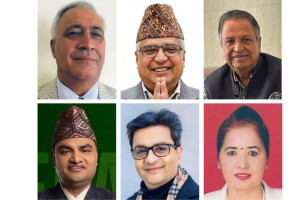
A total of 13 candidates, including three independents, are in the election fray this time. Mahar faces CPN-UML’s Chakra Snehi, a former National Assembly member with strong Dalit support; Nepali Communist Party’s central member Man Singh Mal; and Rastriya Swatantra Party’s Tara Prasad Joshi, a former Sudurpaschim provincial assembly member. Tara previously finished third against Deuba in the 2013 Constituent Assembly election.
With 93,403 registered voters—46,446 women and 46,957 men—Dadeldhura is watching closely. With an anti-incumbency sentiment running high nationwide after the Gen Z-led anti-corruption movement that toppled the old guard, it remains uncertain how Mahar, a Deuba loyalist, will fare.




 14.81°C Kathmandu