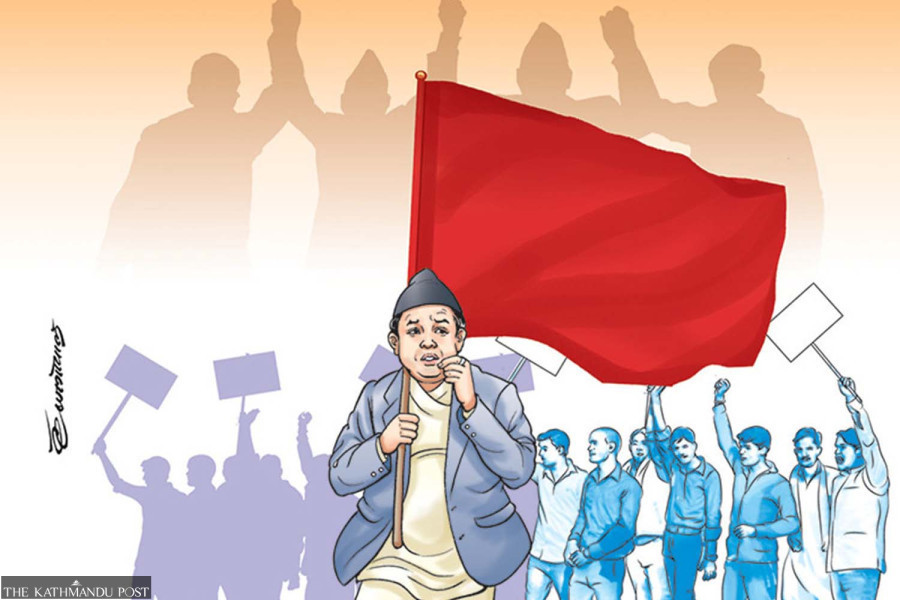
Campaigning for the March 5 parliamentary polls has begun following the filing of nominations on Tuesday, but Nepal’s major political parties have yet to find clear electoral planks.
For the 165 first-past-the-post seats, 3,484 candidates, representing around 68 political parties as well as independents, have registered their candidacies.
Yet, unlike in past elections, no major political force has articulated a distinct political agenda that defines what it stands for.
Political observers note that parties in the past rallied voters around specific, overarching issues. This election, coming after the September Gen Z uprising that demanded good governance, accountability and employment guarantees, should address these glaring issues, they say.
The youth revolt overthrew the government led by KP Sharma Oli, which had the backing of the two largest parties in the dissolved House of Representatives. Replacing it was an interim government, led by Sushila Karki, which was chiefly tasked with holding fresh elections.
However, as the election date draws closer, both established and emerging political forces appear to be struggling to articulate compelling political discourse.
The absence of clear agendas has raised questions about whether parties are prepared to address the aspirations of people in the changed context, analysts say.
In the past, election planks played a decisive role in shaping outcomes. In 2017, the UML rode on an ultranationalist agenda, bolstered by its alliance with the Maoist Centre, under the slogan of “stability for prosperity”. The strategy proved effective, delivering the UML 121 seats—80 under the direct system and 41 through proportional representation. The alliance also helped revive the Maoist Centre, which won 36 direct seats and 17 proportional seats, at a time when its very relevance was being questioned.
Earlier elections were similarly defined by strong themes. In the 2008 Constituent Assembly election, parties campaigned on the promise of federalism and a constitution written by the people. When the first Assembly failed to deliver, the second election centred on the assurance that a constitution would finally be promulgated.
By the 2022 election, however, public dissatisfaction with traditional parties had grown, creating space for the newly formed Rastriya Swatantra Party (RSP), which capitalised on the anti-incumbency sentiment.
For a long time, political parties, such as Oli’s CPN-UML doubted that the elections would indeed happen on the announced dates. After Tuesday’s enthusiastic participation of parties and candidates, there are few doubters.
Now with only around six weeks to go before polling, there is little likelihood of substantive political agendas being discussed, says political analyst Keshav Dahal. “I see a slim chance of a political agenda being discussed this election,” Dahal told the Post. “That means there is a complete lack of an election plank this time.”
According to Dahal, new political forces claim they will develop the country, but their visions are abstract, and more populist than programmatic. He adds that polarisation has replaced policy, with parties drawing a vertical line between ‘bad and good’ and ‘old and new’ candidates—an approach that erases the political agenda. Although parties may outline plans in their manifestos, Dahal says time constraints will not permit meaningful discussion of those agendas.
Nepali Congress spokesperson Devraj Chalise, however, rejects the notion that parties lack an agenda. He argues that the spirit of change expected after the Gen Z movement itself constitutes the party’s core agenda.
According to Chalise, the movement rejected a political culture in which leaders saw themselves as masters and citizens as subjects. “Change must be felt in behaviour, in speech, and in the delivery of public services,” Chalise said. “That is the slogan and the spirit of our campaign this time.”
UML publicity department head Min Bahadur Shahi said the party stresses long-term development and reconstruction over destruction, discipline and creative action over disorder, and the rule of law over impunity. Referring to the Gen Z movement, Shahi said the UML’s campaign would oppose what he described as attempts to plunge the country into chaos.
“Our election slogan is directed precisely against those forces that tried to set the country on fire,” Shahi said.
Yet another political analyst Chandradev Bhatta argues that the election discourse has largely failed to engage with concrete agendas. He says the debate has become binary—framed as new versus old, good versus bad—without addressing substantive policy issues.
“This is not an electoral agenda,” Bhatta said, referring to attempts by new forces to portray themselves as inherently ‘good’ by disparaging established parties and all things related to them.
As the old parties head into the election primarily to safeguard their own existence following the Gen Z uprising, the public expects new parties to come up with innovative programmes that address day-to-day concerns. However, analysts fear such expectations could be dashed.
Bhatta also notes that pressing national concerns are likely to disappear from the campaign narrative. Issues such as the state of the economy, rising unemployment and Nepal’s heavy reliance on foreign employment have received little attention.
Despite the social and economic strain caused by labour migration, parties have not articulated alternative plans, he says. Even themes like democracy and federalism, once central electoral planks, have been put on the backburner in the ‘new versus old’ contest.
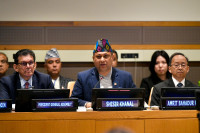
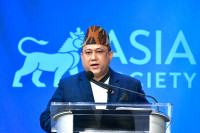
RSP leader Shishir Khanal says his party’s agenda is to transform Nepal into a respectable middle-income country within the next decade through deep policy, institutional and structural reforms aimed at prosperity and social justice.
“Our party envisions economic and social advancement built on the foundations of good governance and a more civilised political culture,” Khanal said.
Critics argue that such claims are vague. As campaigning picks up, the absence of clearly articulated and issue-based goals continues to cast doubt over whether political parties can meaningfully appeal to the masses.




 28.33°C Kathmandu