A changed post-Gen Z political landscape, unification of alternative forces and parallel preparations for polls and possible House revival make upcoming election highly unpredictable. Post file photo
With the submission of closed lists under the Proportional Representation system, the election scheduled for March 5 now appears almost certain, provided no untoward incident occurs before polling day.
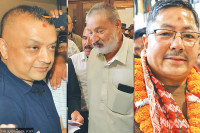
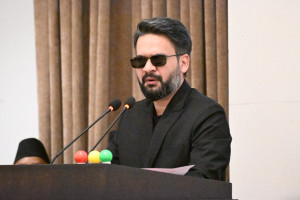
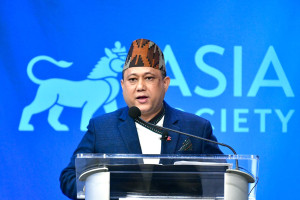
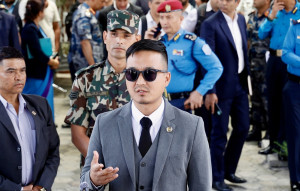
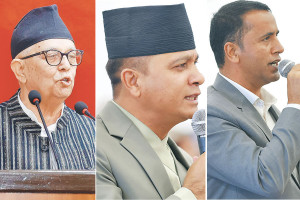
The coming together of three prominent forces—Rabi Lamichhane of the Rastriya Swatantra Party, Kathmandu Metropolitan City Mayor Balendra Shah, and Kulman Ghising of Ujyalo Nepal—has added a new twist to Nepali politics, further complicating an already fluid electoral landscape.
And as such, the outcome of the March election has become increasingly difficult to predict. Political analysts say the tie-up among new and “alternative” forces has sent ripples across the political spectrum, forcing other parties to reassess their strategies.
In this context, new alignments and intense political manoeuvrings are taking place, with like-minded parties and forces exploring unification and cooperation.
Such alignments among different parties and political forces will make electoral forecasting harder and more uncertain, party leaders say, as traditional vote banks appear increasingly fragmented.
During a recent series of meetings convened by President Ramchandra Paudel and Prime Minister Sushila Karki, top leaders of major political parties expressed readiness to take part in the March election, provided adequate security guarantees are ensured.
Senior security officials, however, acknowledge that while elections in Nepal are always challenging from a security standpoint, the current situation presents a different set of risks compared to previous polls.
“This time, we are facing new challenges and obstacles,” says a senior security official.
According to officials, those who escaped from prisons during the Gen Z movement and remain at large pose a significant security challenge. Weapons looted by protesters during demonstrations are also major security concerns. Then there are the usual suspects: the possibility of clashes among rival political parties and groups.
The security official, who spoke to the Post under the condition of anonymity, said that fears of clashes between party cadres and Gen Z groups are gradually diminishing. “Earlier, we had sensed that possible clashes between party cadres and Gen Z groups might pose serious security threats around election time,” the official said. “The belligerence seen among some party leaders, cadres and Gen Z groups appears to be ebbing away, which is a positive sign. But it still remains one of the top security challenges, along with others that Nepal typically faces during elections.”
The government has already approved an integrated security plan to ensure law and order during the election period.
The home ministry has instructed authorities in all districts to implement the plan. Officials say preparations are also underway to recruit temporary police personnel for election security.
Back-to-back engagements between the government and major political parties, the decision to enforce an integrated security plan, commitments by parties to participate in the polls, and a gradually improving political environment are seen as key indicators that the country is moving firmly towards elections.
The Election Commission, for its part, has introduced a code of conduct, added nearly one million new voters to the rolls, and expedited procurement needed for conducting the polls. These steps, officials say, demonstrate that both the government and the commission are operating at full speed to ensure elections are held on time.
From the parties’ perspective, the timely submission of PR closed lists for the House of Representatives suggests a clear shift toward election preparedness.
At the same time, parties have not stopped raising the issue of reinstating the House, dissolved by Prime Minister Karki on September 12.
While major parties still see a narrow window for House restoration, they have already geared up for the March election by seeking names of aspirant candidates from all 77 districts.
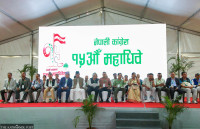
Nepali Congress, the largest party of the dissolved House, has completed the process of collecting names of aspirants from all 165 electoral constituencies, according to party joint general secretary Jeevan Pariyar.
The recommended names have been forwarded to the party headquarters, and the parliamentary board will decide on candidates based on the recommendations.
“We have yet to form the parliamentary board, the committee to draft the election manifesto, and the election mobilisation committee,” Pariyar says.
According to some Congress leaders, general secretary Bishwa Prakash Sharma may lead the central election mobilisation committee.
One of the major points of contention within the Congress is the timing of the party’s general convention.
General secretaries Gagan Thapa and Sharma favour holding it before the March election, while the Sher Bahadur Deuba faction prefers postponing it until after the polls.
Party chief Deuba has also stated that the outcome of the general convention would have a direct impact on election results, arguing that it should therefore be held only after the elections.
Amid the unification of new and alternative forces, speculation has also emerged about a possible electoral understanding between the Congress and the CPN-UML.
Pariyar dismissed such talk as rumours but said Congress may need to align with either the UML or the Nepali Communist Party to secure a victory in the upper house.
Due to delays in holding the party convention, Congress leaders acknowledge there is confusion inside the party. Still, they insist the party is prepared to go to the polls under any circumstances.
The UML, which has been consistently calling for the restoration of the dissolved House, is also making preparations for elections.
“We are in favour of House restoration,” says UML leader Bishnu Rimal.
“We are still in a wait-and-see mode, but that does not mean we are indifferent to elections.”
Following the Gen Z movement, the UML adopted a hard line against the Karki government, calling it unconstitutional and illegal, a position it continues to maintain.
Tensions escalated after an inquiry commission imposed restrictions on party chair KP Sharma Oli, froze his passport, and took action against four other officials for their alleged roles in suppressing the Gen Z protests.
The decision by the Gauri Bahadur Karki-led commission forced the UML to adopt a tougher stance against the government. Oli has repeatedly stated that he will not appear before the commission to record his statement regarding the suppression of protests in which 77 people were killed.
Calling the House dissolution unconstitutional, the UML filed a petition at the Supreme Court, a move later followed by the Congress. While the UML made the decision institutionally, individual former members of Parliament from the Congress have also filed petitions, hearings for which are yet to begin.
“There is a 50-50 chance of elections and House restoration, so we are preparing for both,” Rimal says. According to UML leaders, the party has already begun groundwork for elections quietly, assessing ground realities, the strength of competitors, and potential candidates who could make a difference.
In the aftermath of the Gen Z movement, some political parties faced what leaders describe as an existential crisis, prompting them to seek unity with like-minded groups.
This process began with the coming together of CPN (Maoist Centre), the CPN (Unified Socialist), and various communist and socialist parties to form the Nepali Communist Party under the coordination of Pushpa Kamal Dahal, who led the decade-long Maoist insurgency.
Senior party leader Narayan Kaji Shrestha says district committees have already recommended possible candidates, although final decisions are yet to be made.
“We have already started groundwork for the election,” Shrestha says. “We are analysing the ground situation and the likely positions of both new and old parties.”
Many leaders say there is urgency in preparations because elections to the House of Representatives are being held two years ahead of schedule.
Due to the Gen Z movement, polls originally slated for 2027 are now set for March 2026, forcing parties to head into elections with limited preparation amid a rapidly changing political environment.
In order to secure their prospects, beyond new and alternative forces, communist parties, Madhesh-based parties, the Rastriya Prajatantra Party and others are also exploring partnerships.
Political analysts say this new polarisation in Nepali politics, rarely seen in the past, is likely to make the March election—and its outcome—a major surprise.
Anil Giri is a Chief Sub Editor covering diplomacy, international relations and national politics for The Kathmandu Post. Giri has been working as a journalist for more than two decades, contributing to numerous national and international media outlets.




 20.79°C Kathmandu