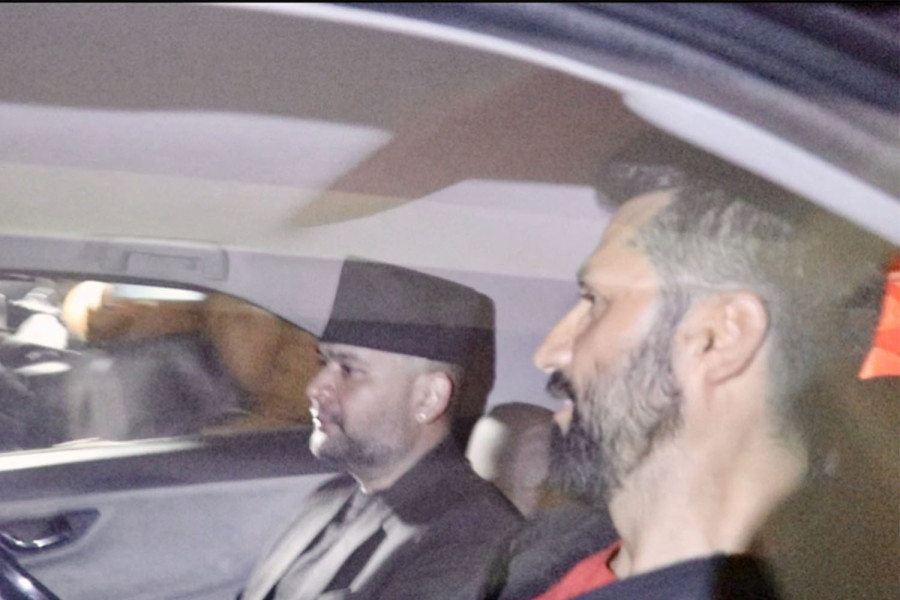
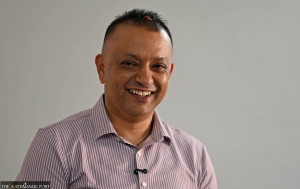
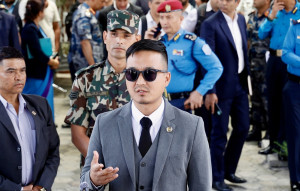
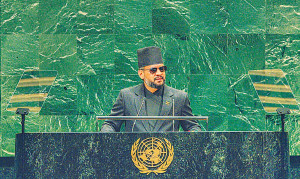
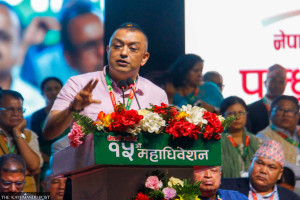
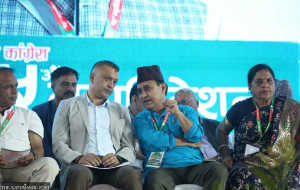
A late-night meeting between Rastriya Swatantra Party chair Rabi Lamichhane and Kathmandu mayor Balenendra (Balen) Shah on Monday has stirred a fresh debate in Nepal’s political circles, amid growing speculation about possible cooperation between emerging alternative political forces for the March 5 elections.
While lawmakers from major political forces such as the Nepali Congress and the CPN-UML have filed writ petitions at the Supreme Court seeking the reinstatement of the dissolved House of Representatives, alternative forces leaders including Lamichhane and Shah, who was elected mayor in the 2022 local elections as an independent, seek polarisation ahead of the snap parliamentary elections.
The RSP leader and a close aide to Shah too had met earlier, multiple times, to explore the possibility of cooperation between them. The meeting between Lamichhane and Shah came only after Lamichhane was released on bail from judicial custody. Lamichhane had been in custody for nine months for his alleged involvement in the cooperative scam. Lamichhane was released on Friday.
The meeting was more about the compatibility test between Lamichhane and Balen Shah, said Asim Shah, a former lawmaker and central committee member of RSP. Asim Shah, who was present during the meeting he hosted at his own residence in Kamalpokhari, said the discussion lasted more than six hours—first in a group and then between Lamichhane and mayor Shah separately.
“We are optimistic after the first formal meeting between Lamichhane and Balen Shah. It could give national politics a new direction,” Asim Shah told the Post.
Meanwhile, RSP Vice-president DP Aryal, who also was present at the meeting, said the meeting was notable for three things. First, it was personal, in a situation in which Balen Shah had lost his father and Lamichhane was released from custody.
Second, the meeting discussed the post-Gen Z movement scenario. Third, it explored cooperation between RSP and Balen Shah on the scheduled March 5 elections.
The discussion is headed in a positive direction, Aryal told the Post.
Some people privy to the meeting claimed that during the one-on-one between Lamichhane and Balen, Lamichhane proposed Balen as the future prime minister candidate—if they go to the polls together. However, Aryal categorically denied such an agreement.
“This was the first meeting between Lamichhane and Balen Shah and no issue other than the three I mentioned were discussed at the meeting,” Aryal emphasised.
Asim Shah acknowledged having heard from Mayor Shah’s team that Lamichhane proposed Balen Shah as the future prime minister candidate during the closed-door meeting.
Lamichhane on Tuesday said he had not entered any discussion that involved making Balen Shah prime minister. Speaking to journalists in Chitwan, while he had gone to appear before the district court, Lamichhane said their meeting focused solely on building rapport.
Lamichhane has legal cases in five districts about his alleged involvement in the cooperative fund scam.
The meeting comes at a time when Lamichhane has been increasingly visible in politics following his release from custody. While Aryal and Shah represented the RSP in the meeting, Balen Shah was represented by his chief adviser, Kumar Ben, and film director Nischal Basnet. Asim Shah too was a filmmaker before he joined the politics of RSP to become a lawmaker from the proportional representation category.
The meeting is seen as politically significant, particularly amid growing public interest in alternative political forces and in the country’s leadership coming from outside the traditional party structures. While both Lamichhane and mayor Shah have been silent on the substance of their discussions, its timing and symbolism are hard to mistake.
In Chitwan, Lamichhane said he would soon hold talks with Sudan Gurung and Kulman Ghising as well. Around two weeks ago, while Lamichhane was still in Nakhhu prison, Gurung, a youth leader who emerged from the Gen Z movement, visited him.
After the meeting with Lamichhane, speaking to the Post, Gurung had also said that there was no alternative but for alternative forces to come together.
Meanwhile, Pukar Bam, the coordinator of the committee formed by the RSP to hold dialogue with various political parties, has also said that talks are underway for unification with parties that have similar political ideologies.
Earlier, the RSP was in talks with Ghising before the Ujyalo Nepal Party (UNP), where Ghising acts as a patron, was formally registered with the election commission.
Intensive discussion between RSP leaders and Ghising did not yield any understanding. Ghising, who is the minister for energy, water resources and irrigation management in the interim government, also leads two other ministries. Due to his ministerial responsibilities, he is yet to formally join the party.
In the earlier discussion, they even talked about changing the name of Rastriya Swatantra Party to either Ujyalo Rastriya Swatantra Party or Rastriya Ujyalo Party. However, neither Lamichhane nor Ghising was ready to accept the other as the main leader.
After his meeting with Mayor Shah, Lamichhane said on Tuesday that he would also hold talks with Ghising soon. However, Anup Kumar Upadhyay, chair of the Ujyalo Nepal Party and former energy secretary, said he was unaware of any discussions on party unification or an electoral alliance with the RSP. He said such cooperation is unlikely.
Echoing Upadhyay’s view, Raju Thapa, a member of the UNP committee formed to reach out to various political parties, said the possibility of the UNP, the RSP and Balen Shah coming together for the March 5 elections was diminishing.
One reason is that the deadline for submitting the closed list of proportional representation candidates is fast approaching. With only a week to go, Thapa argues that Ghising, Lamichhane and Balen Shah sitting together alone will not bring together alternative forces.
Their insistence on talking even as they can’t reach any conclusion fuels suspicion that they are buying time, possibly because they are convinced that the elections won’t happen on time, according to Thapa.




 14.89°C Kathmandu