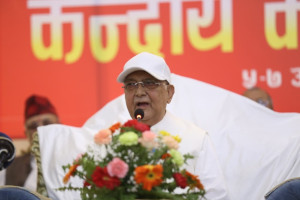
Is Oli’s victory over Ishwar Pokhrel also a final defeat for Bidya Bhandari?
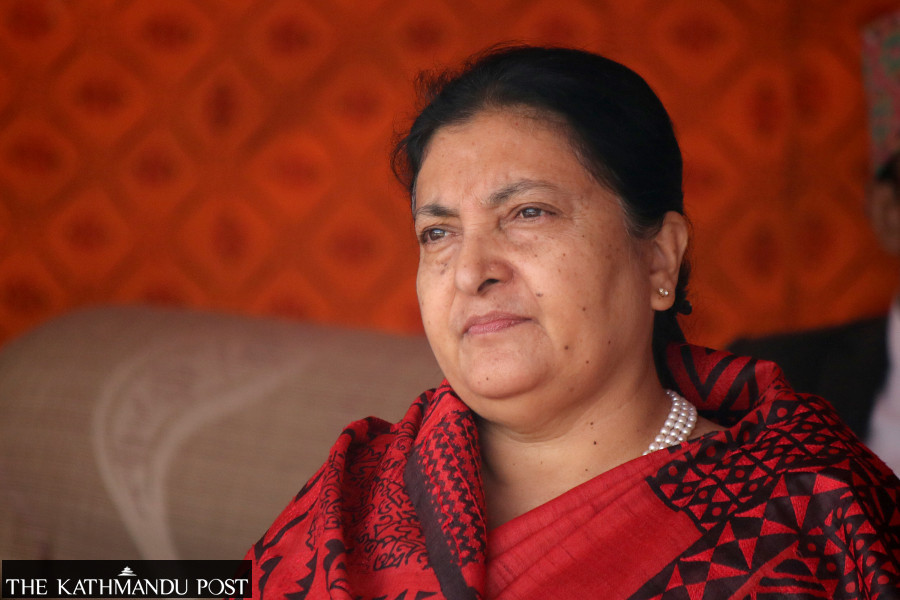
Bhandari’s planned re-entry created rift in the UML, leading to Pokhrel’s candidacy. Bidya Bhandari backed KP Oli’s rival Ishwar Pokhrel, who lost the UML leadership contest. Post file photo
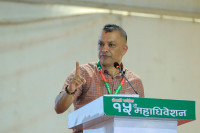
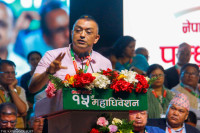
CPN-UML chief KP Sharma Oli defeated the party’s senior vice-chair Ishwar Pokhrel with a huge margin to get elected party chairman for a third term.
The backing of former President Bidya Devi Bhandari was considered among Pokhrel’s strengths. But in the final analysis, it does not seem to have mattered much.
In the lead-up to the convention, the contest between Oli and Pokhrel was widely seen as a proxy fight between Oli and Bhandari.
In the third week of November, Pokhrel announced he would challenge Oli after the party committees decided to deny Bhandari party membership as she had supposedly planned on contesting the party’s top post against Oli.
After returning from an official visit to China in early June, former President Bhandari officially revealed her plan to return to active UML politics. Before becoming the President of the country from 2015-2023, Bhandari had served the party as a vice-chairperson.
She had renounced party membership after becoming the head of state. But she visited China in her capacity as a UML leader. After Bhandari’s announcement about re-entering active politics, Oli and other leaders loyal to him strongly objected to her plan. They argued that allowing a former President to join active party politics would invite political anomalies.
However, some senior leaders, including Pokhrel, welcomed her decision and lobbied in favour of her plan to be the UML chief.
But at a central committee meeting held in July, almost 90 percent of the members rejected Bhandari’s bid, arguing that the return to active politics of a person who has already served as the country’s President would set a wrong precedent.
Bhandari’s desire to return to active politics was further curtailed by the party’s second National Statute Convention, held in the first week of September.
Then, the party’s dissident group came up with the proposal to field Pokhrel for the top post and formed a panel. Influential leaders such as Surendra Pandey, Gokarna Bista, Yogesh Bhattarai, Karna Thapa, and Gokul Baskota, who had earlier lobbied in favour of Bhandari, joined the Pokhrel-led panel.
The panel fielded candidates for office bearers and central committee members. However, only Bista and Bhattarai from the panel won the elections for the post of office bearers: Bista was elected vice-chair and Bhattarai deputy general secretary.
Former UML leader Radhakrishna Mainali said that after being barred from rejoining the party, Bhandari helped Pokhrel form the panel comprising the leaders who were in favour of making her the party chief. Therefore, Mainali argues, “Pokhrel’s defeat should also be seen as a defeat for Bhandari.”
Aware of her ambitions, the Oli faction in 2024 conferred upon her the ‘Republican Honour’, as a strategy to discourage her from returning to party politics. Bhandari, however, further intensified her interactions with UML members, visiting various districts, meeting local leaders and party workers.
In some districts, candidates believed to be close to Bhandari even defeated the Oli panel in intra-party elections. Particularly after the party’s 10th general convention, Oli, who had been exercising unchallenged leadership in the party, faced an internal challenge as a result of Bhandari’s activities.
In that period, Oli publicly criticised influential party leaders and cadres for their proximity to Bhandari.
In the concept paper made public by the Pokhrel group ahead of the general convention, it was explicitly stated that Bhandari should be given space in active party politics.
At times, leaders from the Oli camp had even accused Bhandari herself of trying to influence the party’s general convention.
During the Gen Z movement in September, the government was led by UML Chairman Oli and voices have been raised to hold him responsible for the killings during the youth uprising.
Leaders from the Oli faction were irked by Bhandari’s public remarks stating that the country had suffered significant damage due to the failure of the Oli government and that the then prime minister should take responsibility for that. Some UML leaders and cadres construed it as an attempt to influence the general convention.
Moreover, just days before the convention, Bhandari visited premises of government offices that came under attack during the Gen Z movement. She also met Prime Minister Sushila Karki.
Mahesh Basnet, a trusted Oli lieutenant, alleged that Bhandari and Prime Minister Karki discussed the issue of sending chair Oli to jail.
“There has been a revelation that in the talks between former President Bidya Bhandari and Prime Minister Sushila Karki, the issue of arresting KP Oli was discussed,” Basnet had said.
Left-wing political analyst Hari Roka argues that Oli’s victory is bigger than Pokhrel’s or Bhandari’s defeat.
“His win is less about Pokhrel’s or Bhandari’s defeat and more about the fact that a person who was head of the government during the Gen Z movement and failed to take responsibility for it has again been elected to the top position in a major political party,” Roka said. “This is a warning sign for Nepali democracy.”




 20.85°C Kathmandu