Government, Gen Z leaders sign pending blueprint for reforms
The September Gen Z movement is recognised as ‘jana andolan’, a third after 1990 and 2006 movements. Officials, ministers and youth representatives observe silence in memory of Gen Z martyrs in the presence of Prime Minister Sushila Karki at Baluwatar prior to signing an accord on Wednesday. RSS
After a months-long exercise, the government and Gen Z leaders signed an accord on Wednesday to give legitimacy to the September youth uprising that ousted the government of the Nepali Congress and the CPN-UML.
Prime Minister Sushila Karki, on behalf of the interim government formed after the Gen Z movement, signed the agreement while Bhoj Bikram Thapa, a Gen Z martyr’s family representative, also inked the 10-point agreement.
Yet a section of Gen Z activists protested the agreement at the Prime Minister’s Office after the signing ceremony.
They rejected the agreement arguing it does not capture the spirit and sentiment of the Gen Z movement. Ajay Soraadi of ‘Gen Z Movement Nepal’ tore up the agreement after the event where Prime Minister Karki, several ministers, Gen Z leaders and senior officials were present. The situation turned tense after Karki left the hall following the signing.
Another Gen Z leader, Miraj Dhungana, also disowned the government-Gen Z agreement later on Wednesday evening.
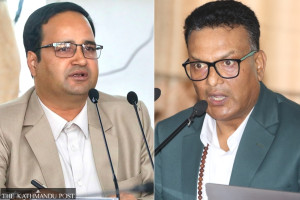
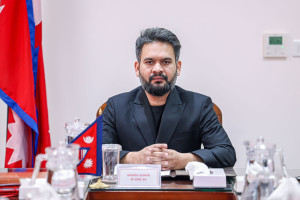
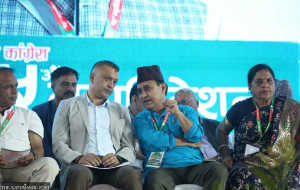
But other leading Gen Z faces like Sudan Gurung, Purushottam Yadav, Rakshya Bam, Tashi Lhazom and Bhawana Raut were present during the signing ceremony accompanied by other campaigners and leaders. Prime Minister Karki called Gurung her “son” during her address, which also irked some Gen-Z activists.
The broader agreement emphasised the formation of a commission to recommend changes in the constitution, reforms in the electoral system as well as in the judiciary and public administration, justice for the victims of the Gen Z movement, and issue of corruption control, among others.
The agreement recognises the September Gen Z movement as a “Jana andolan”. Two people’s movements, of 1990 and 2006, are known as the first and second “jana andolan”.
For the first time in Nepal, digital-led movements and cultural, social, and technology-based resistance have been recognised as legitimate forms of civic expression.
The agreement states that the nature of the current interim government is non-partisan, one that was born out of extraordinary circumstances.
The text of the agreement was prepared by representatives from both sides. The negotiators included Surya Dhungel on behalf of the government, while representing Gen Z was senior advocate Raju Chapagain.
The two sides have also agreed to broaden the mandate of the Gauri Bahadur Karki-led commission investigating the scenario, officials and individuals responsible for the dozens of deaths and widespread destruction of public and private property during the September 8–9 uprising.
“We want youths to lead this country,” Prime Minister Sushila Karki said at the signing ceremony.
“Nepal has become a leading country for Gen Z movements [around the world]. Other countries are following in our footsteps,” she said. “We tried our best to make this document exemplary so that other countries can translate and follow it.”
The agreement’s preamble calls for internalising the relevance and validity of the Constitution of Nepal and stresses the need for state policies and programmes to prioritise areas of education, health, employment, housing, land, language, culture, gender, and collective rights.
Entrepreneurship, innovation, and exploration through the strengthening of federalism, local autonomy, and decentralisation based on the principles of good governance, inclusion and public participation are other issues the document spells out.
The agreement also seeks the release of individuals arrested by police for being involved in the Gen Z movement. Police have arrested individuals accused of involvement in the looting, vandalism, and arson of government, private and public property, as well as the murder of police and security personnel. The agreement says the arrested individuals must be immediately released.
“If an activist or someone on their behalf files a complaint—online, in writing, or via a hotline—stating that an individual has been subjected to investigation or prosecution solely for participating in the movement, the commission shall request details from the relevant body and conduct a screening and investigation based on those details within 15 days of this agreement,” said the paper.
The government has already formed the Karki commission to look into various aspects of the Gen Z movement. A Gen Z Council has been proposed to provide various kinds of support and assistance to the government.
If the commission’s screening shows that an accused person was not involved in murder or serious crimes that may have been committed by a premeditated/organised criminal gang, the commission shall recommend to the government of Nepal an immediate release of the person from custody/detention. In such an event, cases filed against them should be withdrawn, subject to further action based on the report of a yet-to-be-formed inquiry commission, reads the text.
The draft agreement also calls for the Gen Z movement to be declared a ‘People’s Movement’ (jana andolan).
The preamble states, “This agreement has been concluded between the government of Nepal and the Gen Z groups, internalising the mandate received from the People’s Movement led by Gen Z, which was inspired by the intense aspirations of the general Nepali public for good governance, and the values of the constitution. Both parties to the agreement express their firm commitment to the honest and effective implementation of the aforementioned provisions.”
The agreement also stipulates that a high-level task force will be formed immediately to address the urgent and long-term needs of the families of those martyred and injured in the Gen Z movement, in consultation and coordination with the respective families and injured individuals. It further mentions ensuring comprehensive reparations, including interim relief, compensation, free health treatment, free education, employment, social security, and meaningful commemoration of the injured and the families of the deceased.
The issue of the use of force by security personnel during protests is also addressed. It states: “A separate mechanism shall be formed to investigate the unjust and unlawful use of force by security agencies during various movements in Nepal, including the Gen Z movement, and to prevent the recurrence of such incidents. This mechanism will identify the causes, including Nepal’s prevailing laws, weaknesses within the security agencies, the lack of social and mental security for security personnel, and other factors.”
The mechanism will study and recommend necessary institutional reforms of the relevant laws and security agencies, and will submit its report within 90 days. The report will be made public, and the recommendations contained within it shall be implemented immediately, as per the agreement.
The agreement also talks about anti-corruption and institutional reforms, and an end to political and policy-level corruption and appointments based on political party quotas and partisan division in public institutions.
Regarding the scope of investigation, the agreement states: “A high-level commission shall be formed to conduct impartial investigation and make recommendations on the following matters, including ending political, policy-level, and institutional corruption, politicisation of public institutions, and appointments based on political quotas and partisan division. Action shall be taken according to the law against those found guilty regarding the lifestyle, sources of income, and acquisition of illegal wealth. This concerns all persons appointed, elected, or nominated to public offices.”
The agreement identifies that reforms in policy and law are necessary to end the practice of politicisation and appointment based on quotas in public institutions, and the effective implementation of existing laws.
It also states that investigation will be carried out on the functions and financial activities of bodies such as foundations, funds, trusts, councils, and centres established across the country by individuals holding various public positions and political parties in the names of their leaders, using public land, property, and budget.
These bodies have engaged in activities contrary to public interest and objectives or are illegal, and they shall be abolished and their assets nationalised, said the agreement.
The agreement states that a separate mechanism shall be formed to conduct detailed study and research and recommend reform measures concerning issues such as corruption in Nepal’s administrative bodies, restructuring of the administrative system, and the effectiveness and accessibility of the administrative service delivery process.
It further specifies: “This mechanism shall be required to submit its report within 90 days. The report will be made public, and its recommendations shall be implemented immediately.”
The agreement also calls for holding free, fair and peaceful elections on March 5 and to introduce legal provisions on reforming the electoral process.
The agreement proposes reforming the structure and appointment process of officials in the Judiciary, Constitutional Council, constitutional commissions, and Judicial Council—as provisioned by the Constitution of Nepal—to free them from political and partisan interference, enable them to function autonomously and independently, and ensure youth representation.
The agreement outlines various options for electoral reforms, including the provision for ‘NOTA’ (None of the Above), which is currently not in practice in Nepal.
Anil Giri is a Chief Sub Editor covering diplomacy, international relations and national politics for The Kathmandu Post. Giri has been working as a journalist for more than two decades, contributing to numerous national and international media outlets.




 13.74°C Kathmandu