



 16.62°C Kathmandu
Sat, Oct 24, 2026
Money
Nepal court orders more free electricity from Phukot Karnali as developer says provision will make project unviable
Government directed to revisit deal with India’s state-owned NHPC under which Nepal was to receive 21.9 percent free electricity from the 480 MW project.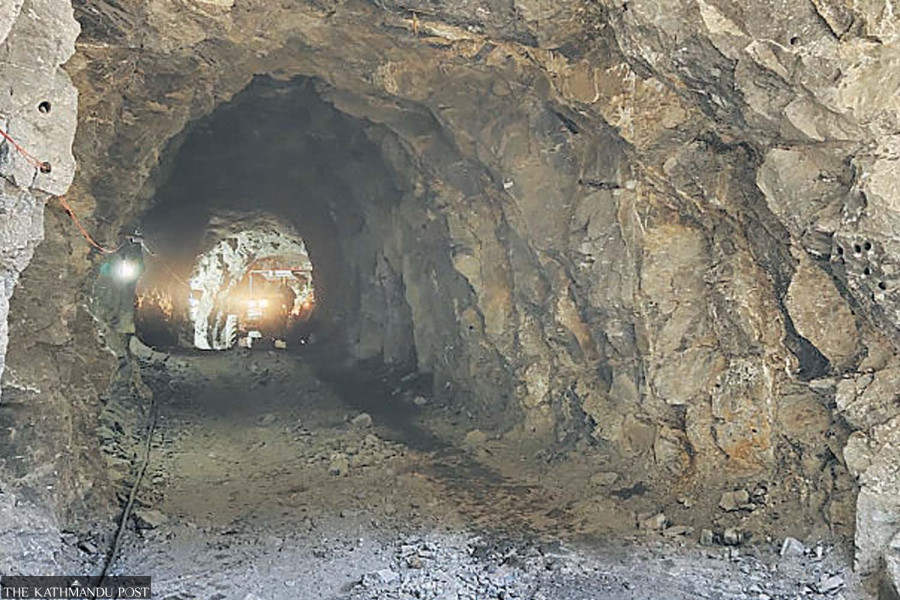
bookmark
Seema Tamang
Published at : May 18, 2026
Updated at : May 18, 2026 06:38
Kathmandu
Nepal’s Supreme Court has directed the government to increase the proportion of free electricity Nepal would receive from the 480 MW Phukot Karnali Hydropower Project in Kalikot, a mountain district in the Karnali province.
In May 2023, a memorandum of understanding (MoU) was signed between the government-owned Vidhyut Utpadan Company Limited and India’s state-owned National Hydroelectric Power Corporation.
Clause 5, sub-clause 5.1 of the agreement states that Nepal would receive 21.9 percent of the electricity generated free of cost once commercial production begins.
“The government should renegotiate the agreement under which Nepal is entitled to receive only 21.9 percent free electricity from a high-return project for which Nepal had already completed preparations for construction,” the court order states.
The court further directed the authorities to amend the MoU as necessary so that Nepal’s share of free electricity is increased as much as possible in a fair manner.
Hiraman Waiba, acting chief executive officer of the VUCL, said the company’s board meeting, chaired by Energy Secretary Chiranjibi Chataut, has already decided to implement the court order.
“We have sent a letter to the NHPC inviting them for discussions to implement the court’s directive,” he said.
The Phukot Karnali project is estimated to cost around Rs92 billion.
On November 29, 2023, Ashuda Kumari Baral and Ajaya Bahadur Shahi of Kalikot filed a writ petition against the Office of the Prime Minister and Council of Ministers, among others.
The court issued its order on August 31, 2025, though the full text was released only recently.
The court also directed the authorities to publish a mutually agreed revised work schedule ensuring project implementation within 12 months from the date the order is entered into the court’s case management system, excluding the period from the MoU signing to the petition filing date.
According to the VUCL, six months will be added to compensate for delays caused by the court case.
The MoU signed between the NHPC and the VUCL was valid for two years and expired in May 2025. The agreement has not been renewed since.
Sub-clause 5.2 of Clause 5 of the MoU states that if the project is found to be commercially unviable, both parties may discuss alternative modalities, including revisiting the free energy provision under sub-clause 5.1, “in good faith” to make the project feasible.
Citing this clause, NHPC has informally argued that providing 21.9 percent free electricity would make the project financially unviable.
However, the court has now ordered the government to increase the free electricity share beyond that level.
Former energy secretary Dinesh Ghimire said both VUCL and NHPC would now need to settle the matter through negotiations to implement the court order.
“Both parties should negotiate and determine the amount of free electricity in line with the court’s directive,” he said. “VUCL must present its bottom line and negotiate whether the company can provide additional free electricity.”
Ghimire noted that the issue of increasing free electricity is closely tied to the project’s financial viability.
“In the case of the 900 MW Arun III, the project was considered feasible even after allocating 21.9 percent free electricity, so that arrangement was adopted,” he said. “Similarly, the understanding for Phukot Karnali was made to ensure that the free electricity share would not fall below 21.9 percent.”
The court also directed that, to ensure project completion, the joint venture submit progress reports every six months to the Judgment Execution Directorate, a specialised central institution under Nepal’s Supreme Court.
According to VUCL, the detailed feasibility study for Phukot Karnali has been completed, while the environmental impact assessment is in its final stage. The company said the land acquisition required for the project has also been completed.
As of mid-July 2025, VUCL had spent Rs1.53 billion on studies and pre-construction work for the project.
Locals hope the project will be a game-changer for Karnali Province, which has one of the country’s lowest Human Development Index rankings, by creating jobs and boosting business activity.
Water from the Karnali river will power the turbines, generating electricity to be fed into the national integrated power system through the nearest proposed grid substation at Raku. The plant is expected to generate 2,455 gigawatt-hours of electricity annually.
The main dam will be constructed by diverting water from the Karnali through a 1.5-kilometre-long and 11-metre-wide diversion tunnel. A six-kilometre main tunnel will also be built, affecting areas of Raskot Municipality, Sannitriveni, Pachaljharna Rural Municipality and parts of Khadachakra Municipality.
Residents of Kalikot expect the project to help lift the region out of poverty, with 25 percent of the project’s shares reserved for locals.
Seema Tamang
Seema covers business and economy for Kantipur Publications.





Most Read from Money

Why does an hour long flight to Dhangadhi cost more than a flight to New Delhi?

Nepal travel agents threaten to stop selling Thailand trips over visa rules
Malaysia rejects Nepal’s demand to open recruitment to all manpower agencies

No school, but a graduation cap for women dairy farmers
Nepal arrests four medical service providers as Malaysia recruitment row deepens
Editor's Picks




E-PAPER | October 24, 2026

×