



 14.7°C Kathmandu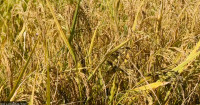
Fri, Oct 23, 2026
Money
Karnali youth leaders seek Israeli support for agricultural modernisation
Delegation urges technology transfer, investment and revival of “Learn and Earn” programme to boost value addition and global market access for indigenous crops.
bookmark
Post Report
Published at : May 17, 2026
Updated at : May 17, 2026 16:52
Kathmandu
Youth leaders from Karnali, one of Nepal’s impoverished regions, have urged the Israeli government to support the province through technology transfer, technical cooperation and investment opportunities to improve agricultural processing and value addition.
They stressed that the modernisation and mechanisation of agriculture are essential to transform Karnali’s traditional farming system and accelerate regional development.
“We held discussions with the Israeli ambassador in Kathmandu on agricultural modernisation and the global promotion of indigenous crops,” said Ashish Devkota, a Nepali Congress-affiliated student leader and former central committee member.
According to Devkota, the discussions focused on agricultural modernisation in Karnali Province, international marketing of indigenous crops, conservation and export promotion of medicinal herbs, and other development-related issues.
During the meeting, Devkota emphasised the need to promote and export indigenous crops produced in Karnali Province—including foxtail millet, proso millet, Marsi rice, finger millet, Ranalo and various pulses—to international markets such as Israel.
He also highlighted that valuable medicinal herbs such as Yarsagumba, Shilajit, Panchaule, Satuwa and Guchhi mushrooms are currently being exported to neighbouring countries like India and China as raw materials at very low prices.
Devkota underlined the importance of continuing the “Learn and Earn” programme previously operated in Nepali universities.
According to him, providing agricultural students and youths from Karnali Province, especially from Mugu district, opportunities to study and work in Israel’s advanced agricultural sector would help them acquire skills and experience that could significantly contribute to the agricultural development of Karnali upon their return to Nepal.
In response, the Israeli ambassador said that the government of Israel has consistently supported agricultural modernisation and mechanisation efforts in Nepal, particularly in Karnali Province, and expressed commitment to further strengthening cooperation in the coming days.
The ambassador also shared that Israel has decided to recruit around 2,300 workers, farmers and women from Nepal for domestic sector employment this year.



Most Read from Money

Nepal travel agents threaten to stop selling Thailand trips over visa rules

Why does an hour long flight to Dhangadhi cost more than a flight to New Delhi?
Malaysia rejects Nepal’s demand to open recruitment to all manpower agencies

No school, but a graduation cap for women dairy farmers
Nepal arrests four medical service providers as Malaysia recruitment row deepens
Editor's Picks




E-PAPER | October 23, 2026

×