



 21.9°C Kathmandu

Thu, Oct 22, 2026
Money
Nepal enters global top 20 in outsourcing competitiveness index
Strong English skills and low labour costs help Nepal outperform 174 countries, though experts warn policy uncertainty and weak digital infrastructure could limit growth.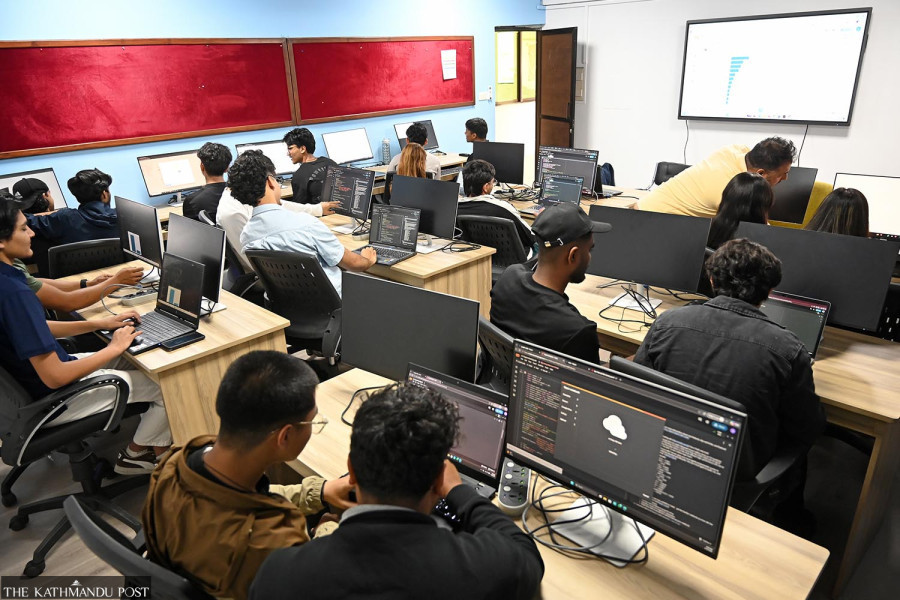
bookmark![]()
Photo: Courtesy of Ataraxis Management
Krishana Prasain
Published at : May 12, 2026
Updated at : May 12, 2026 06:52
Kathmandu
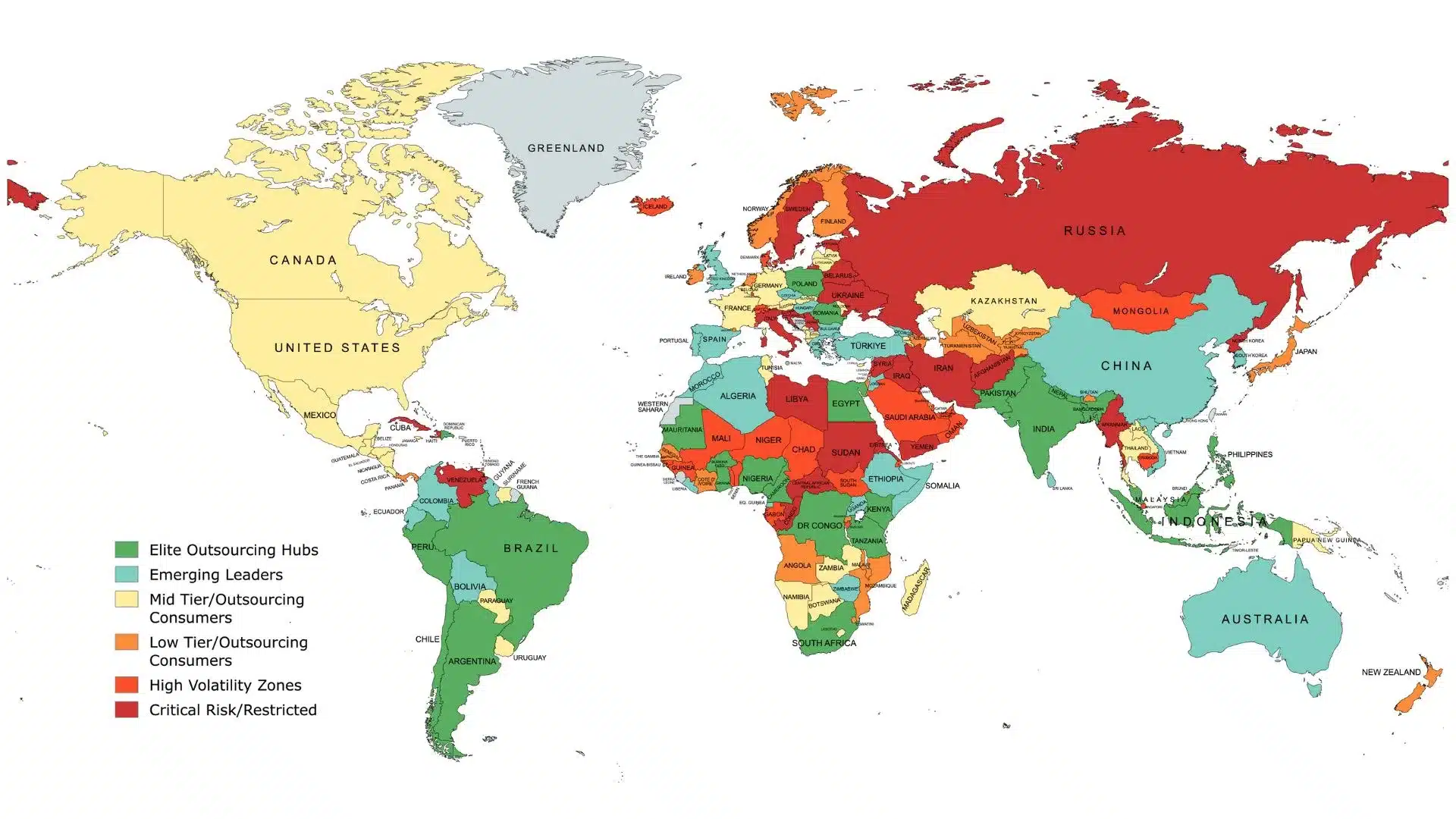
Nepal has ranked 19th globally in outsourcing competitiveness, driven largely by low labour costs and strong English proficiency, according to the Global Outsourcing Talent Index 2026 report published by Ataraxis Management.
The report places Nepal ahead of 174 out of 193 countries surveyed, positioning the Himalayan nation within the top 10 percent globally for outsourcing potential.
Ataraxis Management specialises in hiring AI-powered virtual assistants for businesses and provides recruitment, onboarding and compliance services for offshore staff.
The Global Outsourcing Talent Index evaluates countries across five key indicators influencing global hiring decisions: labour cost (52.5 percent), English proficiency (20 percent), talent availability (17.5 percent), digital infrastructure (5 percent), and business, legal and political stability (5 percent). Countries receive weighted scores on a 100-point scale.
Nepal scored 79.65 points overall.
Its labour cost competitiveness stood out particularly strongly, with Nepal receiving 96 out of 100 points and ranking 54th globally in that category. According to the report, Nepal offers labour costs “structurally incomparable to any Western economy.”
Nepal’s labour score exceeded those of several advanced economies, including the United States, Germany, the United Kingdom, France, Japan, Canada and Australia.
Nepal and India shared an identical labour cost score of 96, although India ranked 16 places higher overall due to its stronger talent availability.
The report also noted that Nepal outperformed 25 of the 27 member states of the European Union, with only Romania and Poland ranking above it.
Nepal scored 80 points for English proficiency, 50 for talent availability, 40 for digital infrastructure and 50 for business stability.
“If Nepal’s digital infrastructure score improved from 40 to 70, Nepal would rank 17 globally,” the report said.
The index draws on publicly available data and expert analysis from sources including LinkedIn, UNESCO, the TOEFL and EF English Proficiency Index, the World Bank, the World Economic Forum and the Heritage Foundation.
“Most people jump straight to the Philippines or India, but Nepal is becoming a hidden gem for business owners who want to keep their costs low,” the report stated.
Industry representatives in Nepal, however, warned that policy instability and unclear regulations continue to hamper the country’s ambitions to expand its information technology sector.
Deepen Chapagain, vice-president of the Nepal Association for Software and IT Services Companies, said tax instability remained one of the biggest obstacles.
“To grow the IT industry and increase exports, there is less clarity in many things and instability too,” Chapagain said. “Other countries that want to grow the IT industry provide tax facilities.”
Chapagain, who also serves as country director at Logpoint, a European cybersecurity company headquartered in Copenhagen, said Nepal lacked a dedicated institutional mechanism to facilitate IT outsourcing.
“We lose competitive advantage to countries that provide massive tax facilities in the IT sector,” he said.
He added that Nepal still lacked updated legislation to support and regulate the rapidly growing IT industry, particularly in areas such as data protection, which remains a major concern for international businesses outsourcing work.
According to a report by the Institute for Integrated Development Studies, Nepal exported IT services worth 515 million dollars in 2023.
The outsourcing index highlighted Nepal’s youthful workforce as another major advantage. The country has an estimated workforce of 8.4 million people, many of them young and increasingly tech-savvy.
The report said technical subjects such as engineering and information technology are taught largely in English, enabling graduates to integrate easily into global teams. It also noted that workers in Nepal tend to remain in jobs longer than employees in more saturated outsourcing markets such as India.
Nepal ranked 58th globally and among the top 15 in Asia for English-language capability, maintaining a “moderate proficiency” classification.
The report further noted that 82 percent of Nepali households have internet access and 85.1 percent own smartphones, although urban areas — especially Bagmati Province — demonstrate much higher levels of computer literacy and professional digital connectivity.
Nepal’s unusual time zone, set at a 45-minute offset from standard global time zones, was also identified as a strategic advantage for businesses operating between Southeast Asia and the Middle East.
The report concluded that Nepal’s workforce shows particular strengths in creative, technical and administrative roles.
Krishana Prasain
Krishana Prasain is a business reporter for The Kathmandu Post covering markets. Before joining The Kathmandu Post in 2018, she spent 3 years in New Business Age magazine covering business.





Most Read from Money

Nepal travel agents threaten to stop selling Thailand trips over visa rules

Why does an hour long flight to Dhangadhi cost more than a flight to New Delhi?
Malaysia rejects Nepal’s demand to open recruitment to all manpower agencies

No school, but a graduation cap for women dairy farmers
Nepal arrests four medical service providers as Malaysia recruitment row deepens
Editor's Picks




E-PAPER | October 22, 2026

×