



 14.68°C Kathmandu

Mon, Oct 19, 2026
Money
Capital market reforms draw mixed response as investors flag tax inequities
While investors welcome the long-awaited tax finality and NRN entry, analysts and traders criticise the higher rates and lack of a net portfolio loss-adjustment mechanism.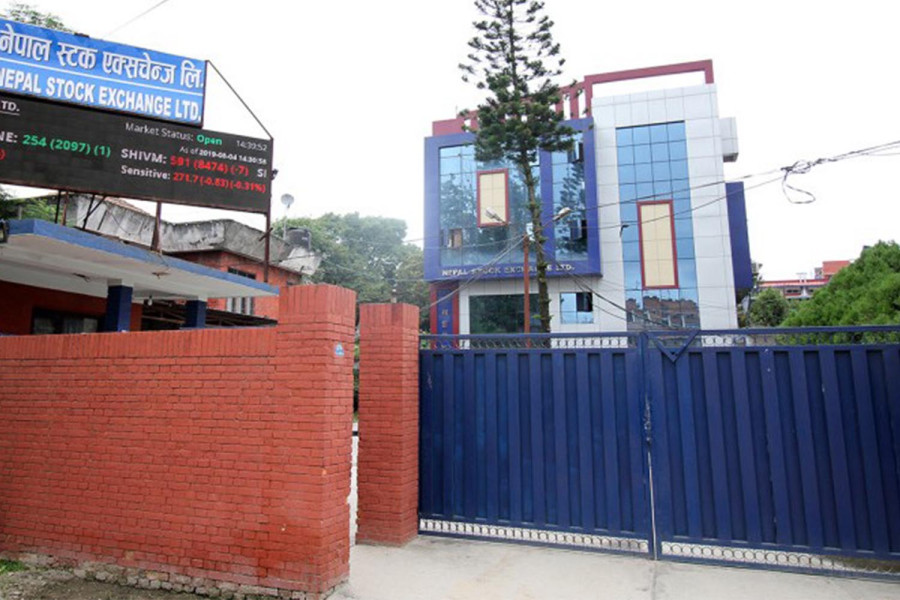
bookmark
Pritam Bhattarai
Published at : May 31, 2026
Updated at : May 31, 2026 15:49
Kathmandu
The government, through the budget for the upcoming fiscal year 2026-27, has introduced crucial provisions directly impacting the capital market. Most notable is the move applying the Capital Gains Tax (CGT) on listed securities as a final tax, a reform long awaited by the trading community.
Presenting the fiscal blueprint in a joint session of Parliament on Friday, Finance Minister Swarnim Wagle announced the provision that individual investors will no longer be subjected to additional personal tax liabilities or higher tax bracket adjustments on these market profits.
However, despite granting tax finality to natural persons, the accompanying Finance Bill, 2026, revealed that this policy clarity comes at a higher cost for market participants, triggering mixed reactions across the sector.
The CGT rate for short-term traders—defined as those holding shares for one year or less—has been hiked to 10 percent, up from the existing 7.5 percent. Similarly, long-term investors holding listed securities for more than a year will now face a 7.5 percent tax rate, an increase from the previous 5 percent.
Beyond the tax adjustments, the budget outlines major structural changes aimed at modernising the Nepal Stock Exchange (NEPSE) and stimulating foreign capital inflows. The government has pledged crucial legal amendments regarding investment approvals, profit repatriation, and capital gains procedures to make way for Non-Resident Nepalis (NRNs) to enter the secondary securities market. Furthermore, NEPSE will gradually roll out advanced trading instruments, including intraday trading, short selling, and derivatives.
Market experts and veteran investors have offered diverse views on the long-term implications of fiscal policy.
Chartered accountant and market analyst Manish Aryal noted that despite the hikes, Nepal’s tax cap on capital gains remains among the lowest in South Asia, signalling a stable and predictable policy environment. Aryal added that indirect fiscal support would come from the budget’s revision of the personal income tax exemption threshold to a flat Rs1 million, alongside a 10 percentage point drop in the peak personal income tax rate to 29 percent. This exemption will free up significant disposable income for public investment.
Hydropower entrepreneur Gyanendra Lal Pradhan also hailed the tax clarity and the NRN inclusion as positive long-term structural drivers. He cautioned, however, that short-term market growth might remain slow because corporate performance across sectors is currently weak and investors remain hesitant to take out business loans.
Meanwhile, veteran investor Rabin Kandel commended the final tax provision for resolving years of confusion over tax ceilings for individual traders. However, Kandel argued that the wider taxation policy should be more uniform. He highlighted the existing sectoral disparities, pointing out that normal businesses and industries are taxed at 25 percent, while financial and specialised sectors face a 30 percent rate.
Kandel also pointed out how other countries structure their system, taking India for example. There, the government sets a clear gap between short-term and long-term investments, charging a 20 percent tax on shares sold within a year and dropping it to 12.5 percent for long-term holdings. He argued that adopting a similarly organised, systematic approach would yield better results in the long run.
He urged the government to properly utilise the excess liquidity currently available in the banking channel and direct it toward productive sectors, which would ultimately boost industrial revenue and support the stocks market as a whole.
Taking a more critical stance, investor and technical analyst Bishnu Prasad Basyal described the budget as “headline positive but structurally incomplete” in a social media commentary, arguing that it fundamentally fails to address longstanding concerns over equity and fairness in Nepal’s capital market.
Basyal pointed out that the core flaw lies in the structure of the tax system itself, as Nepal continues to apply capital gains tax on individual transaction profits rather than on an investor’s overall portfolio performance. Under this transactional mechanism, tax is deducted immediately when an investor realises a profit on a share sale, but losses incurred on other transactions in the same fiscal year cannot be used to offset those gains.
He argued that capital gains should be calculated based on an investor’s net annual portfolio performance. The complete absence of official mechanisms to adjust losses, carry them forward to future fiscal years, or claim refunds when overall investments result in a net loss undermines the basic principles of fair taxation, according to Basyal.
Market participants have also sharply criticised the continued taxation of bonus shares. Investors argue that bonus shares do not generate immediate cash income because they are issued through the simple capitalisation of a company’s retained earnings.
Basyal noted that treating bonus shares as cash dividend is difficult to justify since shareholders receive additional scrip rather than liquid cash. A more equitable approach, he suggested, would be to tax these bonus shares under the standard capital gains tax regime only when they are eventually sold and the investor realises an actual cash gain.
The latest measures come at a time when the market has struggled to respond to a range of supportive policies introduced by regulators and the central bank over the past few years.
Despite abundant liquidity and a series of supportive policy measures, the market has struggled to regain momentum.
The banking system is currently sitting on more than Rs 1.4 trillion in excess liquidity, while interest rates on margin loans have fallen to single digits, averaging between 5.5 percent and 7.5 percent.
Regulators have also introduced several market-friendly measures. The previous margin lending cap—which restricted investors to borrowing a maximum of Rs 40 million from a single bank and Rs 120 million across the banking system—has been scrapped. The risk weight assigned to margin loans has been reduced from 150 percent to 100 percent, lowering capital requirements for banks.
Likewise, the loan-to-value (LTV) ratio has been raised to 70 percent, allowing investors to borrow up to 70 percent of the value of pledged shares.
Nepal Rastra Bank has also revised its Unified Directives, reducing the mandatory holding period for shares purchased by banks and financial institutions from one year to six months. Investors believe the move could help boost market demand.
Yet the market has remained largely range-bound. NEPSE reached an all-time high of 3,198.60 points on August 18, 2021. Since then, it has repeatedly failed to surpass that level. The benchmark index has largely fluctuated between 2,700 and 2,900 points, although it briefly climbed to 3,002.07 points on July 29, 2025.
Market analyst Ajaya Singh Thapa said the weak performance of listed companies is one of the main reasons the market has failed to sustain stronger growth.
"Many listed companies are struggling to provide attractive dividends because business activity across the economy remains sluggish," he said. "At the same time, rising non-performing loans have weakened the performance of banks and financial institutions, limiting their ability to deliver returns to investors."
Thapa noted that several companies traditionally regarded as blue-chip stocks have failed to provide meaningful returns over the past two to three years.
"If leading companies are not generating returns for shareholders, it is difficult to justify sustained increases in share prices," he said.
According to him, broader economic weakness continues to affect corporate earnings. Government spending remains low, contractors are not being paid on time, and the property market remains illiquid, all of which have dampened economic activity.
Aryal said a combination of weak corporate performance, low investor confidence and insufficient demand has kept the market sluggish.
"There is ample liquidity within banks and financial institutions, but it has not been effectively channelled into productive sectors of the economy, including the stock market," Aryal said. "As a result, demand for shares has remained weak."
He suggested reviewing the regulatory provision that limits margin lending to 40 percent of a bank's core capital. Many leading commercial banks have already reached this threshold, restricting their ability to issue new margin loans and limiting fresh inflows into the market.
Aryal also pointed to a growing trend of investors buying stakes in companies before they launch initial public offerings (IPOs). With the secondary market generating limited returns, many investors are increasingly seeking opportunities in the pre-IPO market in the hope of securing higher gains once those companies are listed.
However, he cautioned investors against assuming such investments are risk-free.
"There is no guarantee that these companies will generate strong returns or even be listed on NEPSE in the future," he said.



Most Read from Money

Nepal travel agents threaten to stop selling Thailand trips over visa rules

Why does an hour long flight to Dhangadhi cost more than a flight to New Delhi?
Malaysia rejects Nepal’s demand to open recruitment to all manpower agencies

No school, but a graduation cap for women dairy farmers

Nepal arrests four medical service providers as Malaysia recruitment row deepens
Editor's Picks




E-PAPER | October 19, 2026

×