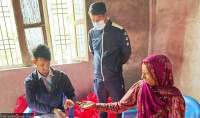
Budgets focus on upgrading hospitals, expanding rural healthcare, strengthening maternal and specialist services, and improving access for vulnerable groups. Karnali Provincial Hospital in Surkhet
Provincial governments have prioritised the health sector in their budgets for the upcoming fiscal year 2026-27, unveiled on June 15. Most provinces have focused on upgrading provincial hospitals in urban areas to provide modern health services while expanding health infrastructure in rural areas.
Budgets also emphasise specialist services in remote regions, maternal and child health, and financial assistance for the poor and chronically ill people. Provinces have also earmarked funds for free medicines, equipment and awareness programmes for patients with sickle cell anaemia, thalassemia and haemophilia, particularly in the Tarai region.
Karnali Province’s budget targets access and staffing gaps
Karnali Province has proposed transforming the provincial hospital in Surkhet into a health science academy, allocating Rs236.5 million for the project.
The incentive allowance for female community health volunteers has been doubled to Rs24,000 annually.
The province has allocated Rs250 million for treatment support for cancer, heart, kidney and Alzheimer’s patients. Free blood supply for poor citizens has also been included.
According to Minister for Economic Affairs and Planning Rajeev Bikram Shah, Rs43.9 million has been allocated for telemedicine, e-health and health camps in remote areas. Likewise, Rs73 million has been set aside for the infrastructure development of health institutions, while Rs64.1 million has been allocated for alternative medicine services. A further Rs65.9 million has been allocated for maternal nutrition programmes.
According to the provincial planning commission’s second five-year plan, Karnali records an infant mortality rate of 29 per thousand, a neonatal mortality rate of 47, and an under-five mortality rate of 58. In the current fiscal year alone, 36 pregnant and postpartum women were airlifted for emergency care.
Except for the Surkhet Provincial Hospital and the Karnali Academy of Health Sciences, there is no well-equipped treatment facility in other hospitals, resulting in heavy patient pressure on these two hospitals.
Across the province, health services have not been effective due to a shortage of necessary human resources and equipment. According to the Karnali Province Health Services Directorate, only 31 of the province’s 79 local units have basic hospitals in operation.
The province has 25 municipalities, 54 rural municipalities, and 718 wards. Health posts are still unavailable in 117 wards.
In terms of health staffing, out of the 908 sanctioned positions, only 463 have been filled. Although there are 184 sanctioned doctor posts in Karnali, only 32 positions are filled, excluding contract workers. As many as sixty specialist doctor posts remain vacant across eight districts of the province. Out of 157 sanctioned posts for medical officers, only 33 are currently occupied, according to Dr Rabin Khadka, the director.
Lumbini’s health spending targets rural access
Lumbini Province has allocated Rs5.65 billion for health sector development, accounting for 15.15 percent of its total budget.
A total of Rs2.12 billion has been allocated for the infrastructure development of Lumbini Provincial Hospital and other facilities. The province has prioritised the construction of well-equipped hospital buildings and equipment management.
The government aims to expand access to health services in rural areas, improve maternal and child health, manage chronic diseases and strengthen emergency care. Telemedicine services will be introduced at Lumbini Provincial Hospital, as per the budget pledges.
Rapti Provincial Hospital in Tulsipur will be expanded to 200 beds with an allocation of Rs40 million. A ‘mobile medical van’ programme has been launched to provide specialist services in remote areas with an allocation of Rs35 million.
To reduce maternal mortality, Rs53 million has been allocated for free laboratory tests for high-risk pregnancies.
Provincial government spokesperson and Health Minister Ramji Ghimire said the budget prioritises remote health services and records the highest allocation in health infrastructure so far.
The province has continued subsidies of up to Rs200,000 for heart valve transplant surgery, kidney transplants and cancer treatment. Free blood transfusion services will also continue.
Free medicines, screening and awareness programmes for patients with sickle cell anaemia, thalassaemia and haemophilia among the Tharu community have also been continued.
The budget has also included plans to expand specialised services such as dialysis services, neonatal intensive care units, burn units and infertility management services.
All hospitals in the province will be ensured with a regular supply of rabies vaccines and essential medicines at snakebite treatment centres. The programme has been given special priority, considering that snakebite cases are more common in the Tarai districts.
Snakebite treatment has become more challenging during the monsoon season, when cases usually rise. Although snakebite patients are treated at the Nepali Army-operated centre in Gorusinghe of Kapilvastu, the facility has often faced shortages of anti-venom medicines.
The government has said the upcoming budget will ensure adequate supply and proper management of medicines for snakebite treatment.
Sudurpaschim Province prioritises healthcare upgrades
Sudurpaschim Province has announced a range of health sector reforms in its budget for the upcoming fiscal year. Finance Minister Bikram Singh Dhami said the ‘Chief Minister Health Sector Improvement Programme’ will upgrade laboratories, emergency services, surgical units, ICU, pharmacy and radiology departments in provincial hospitals.
The province has also prioritised expanding dialysis services at Seti Provincial Hospital and other facilities, including Lamkichuha, Mahakali, Tikapur, Bayalpata and Jogbuda hospitals. Seti, Mahakali and Tikapur provincial hospitals will be upgraded to 100-bed hospitals, while district hospitals in Achham, Bajhang, Bajura, Baitadi, Doti and Darchula will be expanded to 25–50 beds, the government said in the budget pledges.
Treatment programmes for sickle cell anaemia, thalassaemia and haemophilia targeting the Tharu community will continue in Kailali and Kanchanpur. The Chhattivan health post in Doti will be upgraded into a pre-trauma care centre.
The province has also announced the expansion of the Provincial Ayurveda Hospital and Research Centre, Surkhet, to 50 beds. The plan includes continued focus on maternal health, child health and rural outreach services.
Gandaki’s health budget prioritises infrastructure and diagnostics
Gandaki Province has allocated Rs3.31 billion to the health sector, prioritising improvements in public health, infrastructure development and expanded access to basic healthcare services. Finance Minister Jit Bahadur Sherchan said the budget aims to strengthen provincial public health systems and widen access to essential services.
The budget places particular emphasis on expanding health infrastructure and technology. Rs60 million has been allocated for constructing well-equipped buildings for the Provincial General and Communicable Disease Hospital and the Gandaki Ayurvedic Hospital in Kaski.
To ensure reliable healthcare services, Rs100 million has been allocated for the purchase of CT scan machines for Madhyabindu Provincial Hospital in Nawalpur and Gorkha Hospital. The move is expected to reduce the need for patients to travel to Pokhara or Kathmandu for basic diagnostic services. An additional Rs35 million has been set aside for ambulance procurement for hospitals under the provincial government.
Beyond infrastructure, the budget also attempts to address emerging public health challenges. Under the campaign ‘Current Health Concerns, Identification and Treatment of Non-Communicable Diseases’ and the slogan ‘Yoga and Meditation Every Morning’, funds have been allocated for early detection of non-communicable diseases, mental health awareness and promotion of healthy lifestyles.
To reduce the rising risk of rheumatic heart disease among children, a ‘Healthy Heart, Bright Future’ initiative has been launched, along with a screening programme for rheumatic heart disease.
A total of Rs20 million has been allocated for strengthening preparedness against epidemics and public health risks, and for expanding community-based integrated surveillance systems.
Focusing on maternal, child and vulnerable groups, the government has prioritised expansion of maternal and neonatal health services under the campaign ‘Improving Maternal and Newborn Health, the Foundation of a Prosperous Future’.
Incentive payments for female community health volunteers will continue. The budget also includes Rs66 million for free blood and blood product-related services, financial support for cancer treatment, health insurance, and air evacuation for high-risk pregnant and postpartum women.
In addition, provisions have been made for deploying medical officers in basic hospitals, launching community nursing programmes, and conducting training to enhance the capacity of health workers.
Wellness and digital healthcare in focus in Bagmati
Bagmati Province has placed yoga and meditation at the centre of its health and social development budget for the upcoming fiscal year, saying it aims to support citizens’ aspirations for healthier and more self-reliant lifestyles. To that end, the province plans to construct an Arogya Bhawan (Wellness Centre) at Shaktidanda in ward 16 of Hetauda Sub-metropolitan City.
Presenting the budget on Monday, Minister for Economic Affairs and Planning Prabhat Tamang said funds have been allocated to equip provincial hospitals with advanced medical facilities, including CT scanners, MRI machines, cath labs and haemodialysis units, to improve the quality of healthcare services.
The budget also provides for strengthening the physical infrastructure of Ayurvedic and alternative medicine hospitals. It aims to make health services more effective and patient-friendly by expanding the use of information technology through electronic health records (EHR), electronic medical records (EMR), telemedicine and health profile systems.
To improve access to safe motherhood services for women from endangered and marginalised communities, the province will provide an incentive of Rs5,000 to mothers who deliver at health institutions and ensure their children receive the full course of immunisation.
The budget also provides for free air evacuation of pregnant women and new mothers facing life-threatening complications and allocates funding for maternal nutrition programmes.
A total of Rs515.6 million has been allocated to the Madan Bhandari Academy of Health Sciences to support MBBS, MD and other academic programmes, as well as educational and technical development. The budget also proposes introducing Proficiency Certificate Level nursing programmes at provincial hospitals.
Funds have been allocated to implement the Chief Minister Public Health Programme in all 13 districts of Bagmati Province. The government has also announced a ‘One District, One Healthy City’ initiative and plans to establish an Ayurvedic medicine production centre in Chitwan.
Bagmati Province has allocated Rs9.06 billion to the Ministry of Health and Social Development for the upcoming fiscal year.
Madhesh province’s health budget prioritises access and insurance
Madhesh Province has allocated Rs5.95 billion to the health sector, making it the province’s second-largest area of spending after infrastructure development.
Under the slogan ‘My health, my responsibility’, the provincial government plans to establish Citizen Wellness Service Centres in every ward in partnership with local governments and procure the necessary medical equipment for the facilities.
To end the need for residents to travel outside the province for specialised treatment, the government has adopted a policy to upgrade Janakpurdham Provincial Hospital to a fully equipped teaching hospital offering cardiac, kidney and cancer treatment services.
Recognising snakebite as a major public health challenge in the Tarai-Madhesh region, the budget allocates funds to expand snakebite treatment centres equipped with anti-snake venom at primary healthcare centres, making treatment more accessible.
To improve access to quality healthcare for poor, Dalit and marginalised communities, the province has announced plans to launch a universal health insurance coverage campaign in partnership with local governments, under which the provincial government will bear the cost of health insurance premiums.
To reduce maternal and infant mortality, the government will launch the ‘Madhesh Nutrition Mission’ campaign, targeting the period from pregnancy until a child reaches the age of two. The programme includes the distribution of nutrition packs to expecting mothers and the expansion of the Chief Minister Nutrition Gift initiative.
The province also plans to integrate school meal programmes with local agricultural production by requiring schools to use nutritious flour produced by local industries under the ‘farm-to-plate’ concept. To support the initiative, it plans to establish one nutrition production centre in each local unit through public-private partnerships.
To address rising drug abuse and mental health problems, yoga and meditation campaigns will be introduced in schools and public places.
The provincial government has also adopted a strategy to expand telemedicine services while prioritising affordable and specialised healthcare across Madhesh Province.




 15.66°C Kathmandu
.jpg)