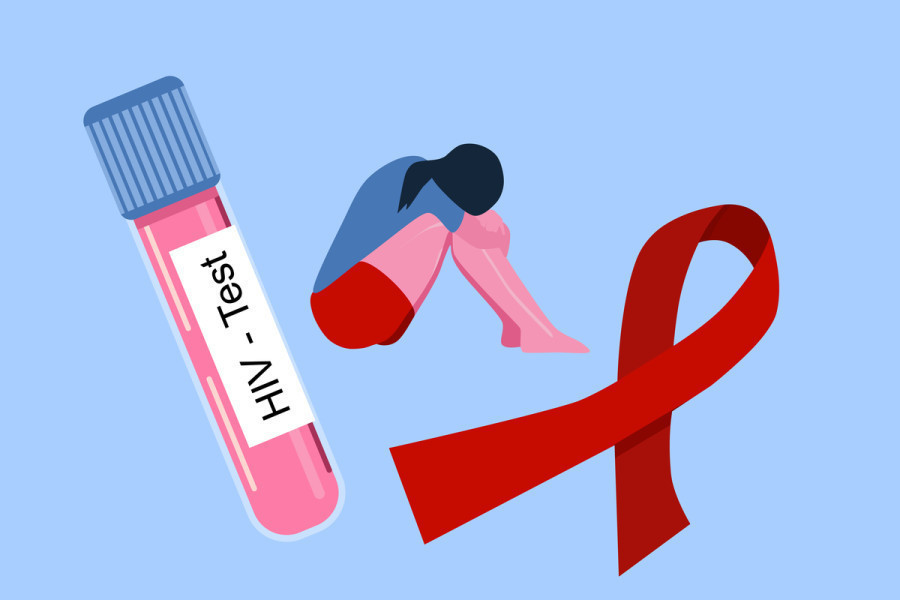
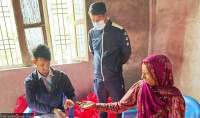
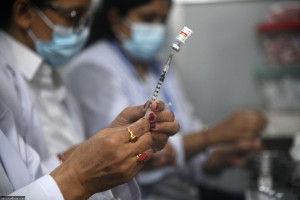
Thousands of female sex workers, gay men and people who inject drugs have been without access to pre-exposure prophylaxis for the past 19 months after the medication was discontinued since the US government halted USAID-funded programmes worldwide.
Pre-exposure prophylaxis is a highly effective HIV prevention medicine taken by people at higher risk of infection to reduce chances of contracting HIV through unprotected sex or injectable drug use.
The suspension of the USAID-funded programme has left hundreds of at-risk populations, including pregnant women whose husbands are HIV-positive, without access to the medicine.
“We don’t have our own programme to provide pre-exposure prophylaxis medication to the at-risk populations,” said Dr Sarbesh Sharma, director at the National Centre for AIDS and STD Control.
Along with pre-exposure prophylaxis medication, several other USAID-funded programmes, including awareness campaigns, counselling services, behavioural-change initiatives and other targeted interventions targeting female sex workers, homosexual men, and those taking injectable drugs and others have also been stopped due to the abrupt suspension of US funding.
As a result, the risk of a rise in HIV and other sexually transmitted diseases has increased, threatening achievements made over the years through huge investments, warns a new report, published in BMJ Public Health, the UK-based medical journal.
Disruptions to antiretroviral treatment (ART) distribution, community-based outreach and follow-up care have left people living with HIV without consistent access to lifesaving treatment.
“Since our clinics are shut, we have lost contact with several of our clients,” the report quoted a service provider as saying. “Our community volunteers have also stopped home-delivery of ART to those who are unable to visit the clinics.”
The ART centres run by the government cannot reach them since they do not have outreach workers for such activities, and the situation will be worse now on, the report warns.
Community health workers programmes, which had bridged the gap between government health services and communities by connecting people living with HIV to care, were described by some respondents as the first services to be defunded. Without the services, respondents feared delayed diagnoses, loss to follow-up and increases in preventable deaths.
“If we cannot give service, the number of HIV cases will soar,” the report quoted another respondent as saying. “In our district, only 50 percent of the HIV survivors seek care regularly by themselves. Those who fail to seek treatment fall vulnerable to tuberculosis and other life-threatening diseases, which contribute to a high mortality rate.”
The abrupt cessation of US foreign aid in 2025 has had potentially far-reaching consequences for Nepal’s health care sector, according to the report. For health workers, the economic and psychological strain was acute. Layoffs, as well as prolonged uncertainty about long-term employment and heavier workloads for remaining staff, contributed to widespread distress.
“Everyone is suffering from mental health issues. They are saying things like ‘where will we get a job now?’ and ‘what should we do now?,” the report quoted.
The researchers interviewed 18 key informants in Nepal, including NGO directors, programme managers, clinicians implementing US-funded health programmes and senior officials at the Ministry of Health and Food Safety, to assess the immediate consequences of the funding freeze on health services.
“We used to run community-based organisations in 33 districts before the suspension of USAID funding,” said Manju Adhikari, an activist working with Jagriti Mahila Sangh, a national network of female sex workers. “At present, none of our organisations are active due to the funding crunch. Our staff used to make close contact with the people infected with HIV, visit their homes, counsel them, encourage them to get tested and take medications. The halt in funding has not only affected our organisations but also increased the risk of spread of infections.”
Officials at the National Association of People Living with HIV/AIDS in Nepal said that the impacts of funding cuts could have been several times worse than what is seen at present.
“It will take some time for the full impact to emerge,” said Khagendra Khadka, president of the association. “Currently, one may just see service closures and job losses, but this will have long-term consequences.’
According to the report, the 2025 funding freeze was considerably more damaging than previous US policy changes affecting global health.
The authors said earlier restrictions, including the reinstatement of the Global Gag Rule in 2017, primarily disrupted sexual and reproductive health programmes. In contrast, the 2025 funding freeze affected almost every component of health and humanitarian response, including HIV services, reproductive healthcare, mental health, disease prevention, humanitarian assistance and emergency preparedness.
The report warned that the funding crisis exposed the fragility of health systems heavily dependent on a single bilateral donor and highlighted the absence of contingency mechanisms to maintain essential services when external funding suddenly stops.
“Due to fear of stigma and discrimination, many HIV infected people cannot reveal their disease conditions,” said Dr Anand Tamang, one of the researchers of the report. “Finding such cases is one of the key challenges in the fight against HIV in our country. But many community-based services have been disrupted due to a funding crunch, which is unfortunate in itself.”
Meanwhile, officials at the Health Ministry said that even if community-based programmes have halted due to the suspension of USAID funding, HIV testing and treatment are available at state-run health facilities.
“Infected people can undergo free testing from state-run health facilities and take free antiretroviral medications,” said Sharma, director at the National Centre for AIDS and STD Control. “Only some services provided by USAID-funded NGOs have been suspended.”
Arjun Poudel is a health reporter for The Kathmandu Post. Before joining the Post, he worked for Sagarmatha Television, Naya Patrika, Republica and The Himalayan Times.




 23.14°C Kathmandu