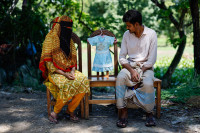
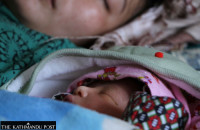
Laxmi Chaudhary from Dhangadhi Sub-metropolitan City in Kailali district has been living in Kathmandu for the past one year for treatment of gland TB, medically known as tuberculous lymphadenitis.
The 54-year-old was referred to Bir Hospital by doctors at Seti Provincial Hospital in Dhangadhi after her condition did not improve even after a year of medication.
“In the initial stage, she used to come to Kathmandu every month,” said Dr Prajowl Shrestha, senior chest physician and associate professor at the National Academy of Medical Sciences. “But when she ran out of money, she decided to rent a room in Kathmandu. Expenses were huge, as she had to bring her family members also.”
Although tuberculosis medicines are provided free of charge in Nepal, a new study shows that 51 percent of households with a TB patient face catastrophic costs due to the disease.
According to a report titled ‘Catastrophic Costs and Impoverishment Among Tuberculosis-Affected Households in Nepal: Results from a National Patient Cost Survey,’ free medicines and clinical services alone are not enough to protect TB-affected families from financial hardship.
These costs include spending on medical tests, transportation, food and accommodation, as well income lost due to illness.
“One in two TB-affected households in Nepal face catastrophic costs despite free diagnosis and treatment,” the report published recently in Health Policy and Planning, a peer-reviewed international scientific journal published by Oxford University Press, stated. “Drug-resistant TB leaves three in four affected households facing catastrophic costs in Nepal.”
Tuberculosis, or TB, is caused by Mycobacterium tuberculosis, which most commonly affects the lungs. When people with pulmonary TB cough, sneeze, or spit, they release TB bacteria into the air, and people who inhale them can become infected.
Along with medicines, the government provides sputum testing and chest x-rays free of charge for TB diagnosis, but patients must pay out of pocket for other investigations, including CT scans, MRI scans, and some laboratory tests, which can be costly.
“Some TB patients also have to undergo cerebrospinal fluid analysis, tissue biopsies and pleural fluid tests,” said Dr Shrestha, who is a principal investigator of the study. “These and other tests do not come under the free scheme.”
Besides the lungs, TB can affect other parts of the body, including the lymph nodes, bones and joints, brain, kidneys, urinary tract, abdomen, intestines, liver, spleen, reproductive organs, skin and eyes, and multiple tests are required to diagnose the ailments, Shrestha said.
The study, which included 1,000 patients enrolled in the National Tuberculosis Programme, found that the financial burden was primarily driven by direct non-medical costs, which accounted for 44 percent of the total costs.
Direct medical costs included out-of-pocket payments for consultations, laboratory tests, and medications. Direct nonmedical costs comprised expenditures for transportation, food, accommodation, and nutritional supplements or additional food.
Indirect costs, mainly income lost due to illness and treatment, accounted for another 39 percent. Indirect costs represented the economic value of time lost due to illness and care-seeking and were estimated using the human-capital approach.
Total costs for the entire TB episode were estimated by aggregating three components: pretreatment costs, intensive-phase costs, and continuation-phase costs, according to the report.
Of the total participants, over one-third (36 percent) were the primary income earner in their households.
“TB-related costs pushed 13 percent of households below the poverty line, increasing to 31 percent among DR-TB households,” reads the report.
Overall, 35 percent of participants reported borrowing money to cover treatment-related expenses, including 42percent of those with drug-resistant TB (DR-TB) and 31 percent of those with drug-susceptible TB (DS-TB).
A smaller proportion had to sell assets such as land, livestock or gold jewellery to meet these expenses—5.7 percent of DS-TB patients and 7.7 percent of DR-TB patients.
Nepal continues to face a substantial TB burden. According to the latest WHO estimates, around 67,000 people developed TB in Nepal in 2024, equivalent to an incidence rate of 227 cases per 100,000 population. TB also caused an estimated 16,000 deaths in the country that year— 44 people every day.
Of the estimated 67,000 people who developed TB in 2024, only 38,606 were diagnosed and received treatment, leaving a substantial number of people with the disease undetected and untreated. Health officials say these missing cases pose a serious challenge to controlling the further spread of TB.
“Finding hidden cases in communities is the main challenge for us in controlling tuberculosis,” said Dr Bhuwan Paudel, director of the National Tuberculosis Control Centre. “Despite various efforts, we have not been able to detect all the estimated TB patients.”
Nepal has committed to ending TB through the WHO End TB Strategy by 2035. But the National Prevalence Survey carried out in 2018-19 with the technical and financial support from the WHO showed that the country is “not on track’ to meet the target.
The survey estimated that 117,000 people were living with TB at the time.
Nepal started providing TB treatment some 93 years ago, but it continues to remain one of the major public health burdens.
Dr Shrestha said Chaudhary needs extended treatment, which could last several months, and he must remain under close supervision by medical personnel.
“I have already spent all I could in my treatment,” Shrestha quoted Chaudhary as complaining. “Now, there is no one in my village to provide additional loans either.”
Arjun Poudel is a health reporter for The Kathmandu Post. Before joining the Post, he worked for Sagarmatha Television, Naya Patrika, Republica and The Himalayan Times.




 17.29°C Kathmandu