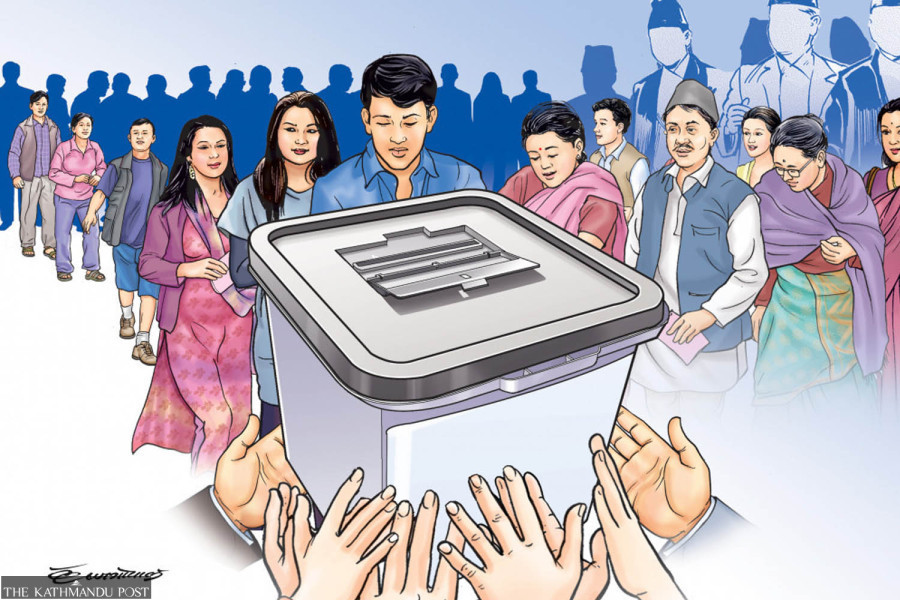
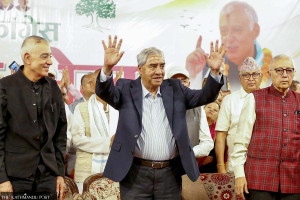
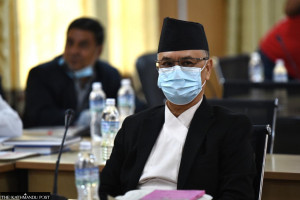
Dozens of political parties, including many new ones, submitted their closed lists of Proportional Representation (PR) candidates for the House of Representatives (HoR) to the Election Commission on Monday, the final day for the submission of the lists. Even the CPN-UML—which has been reluctant to openly declare its participation in the elections, and has instead advocated for the reinstatement of the HoR—has submitted a list of 110 PR candidates. With this, all the political parties, including the mainstream ones, now appear invested in the March 5 elections.
The interim government has played a big role in bringing together the parties, old and new, and to forge broad political consensus for the elections. Prime Minister Sushila Karki has been relentless in ensuring the right political climate for it. She has held multiple rounds of discussions with leaders from mainstream and alternative political parties as well as Gen Z representatives. The most recent meeting, and perhaps the most significant one, took place on Saturday, where she urged the chiefs of all three mainstream parties to make sure elections take place at any cost. For months now, the entire country has been flung into uncertainty over whether the interim government will be able to hold the snap polls on time. The political future of Nepal appeared bleak otherwise. Again, there really is no alternative to timely elections. Therefore, the tireless effort of the interim government to ensure timely elections must be lauded.
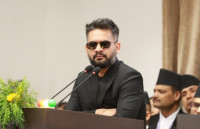
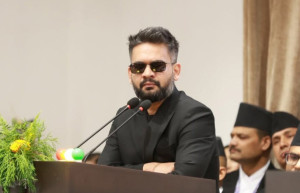
The parties also contributed significantly to creating the right political environment. There has been a series of party unifications and electoral alliance formations in the past few months, with the Maoist Centre, the Unified Socialists and seven other fringe communist parties merging first in early November. Since then, Madhesh-based parties have grown closer with some mergers completed and others still on the cards. The royalist Rastriya Prajantra Party (RPP) and RPP-Nepal, which had split in 2022, have also agreed to reunify. A Congress-UML electoral alliance is said to be in the offing. And the most significant of them all, three alternative forces, the Rastriya Swatantra Party, the Ujyalo Nepal Party and Kathmandu mayor Balendra Shah, also merged in the past few days, offering the voters a strong alternative to the old faces. Each of these mergers and alliances suggest the seriousness of parties to contest elections.
These mergers and the recent submission of lists of candidates for PR sets the country on track for timely polls. This is why the political parties need to stop making petty excuses not to take part in the elections. For instance, the call for a secure electoral environment is a genuine concern. But the UML’s demand for a complete repatriation of looted weapons and escaped prisoners before the elections is an overstretch. The exaggerated demand is unreasonable as many jailbirds who broke free have reportedly escaped to India and third countries. Moreover, if most of the country is in election-mode and people eager to vote, as is the case right now, it would be nigh impossible for a handful of miscreants to derail the polls. The UML or any other political outfit that might try to disrupt the polls, under any pretext, will be fighting a losing battle. Not just that. They might only end up attracting more public ire—and rightly so.




 15.26°C Kathmandu