A country might be undemocratic and repressive, like Iran under Khamenei, but only its people have the right to change the regime. Smoke rises following an explosion, after Israel and the U.S. launched strikes on Iran, in Tehran, Iran, February 28, 2026. Reuters
US President Donald Trump has done it again. This time, he has attacked Iran. ‘Operation Epic Fury’ targeted not only Iranian supreme leader, Ayatollah Ali Khamenei and his kingpins, but also struck schools and public buildings. More than 100 children were killed in a school dormitory in the city of Minav, while other civilians, too, have reportedly died. During his 2024 campaign for a second presidential term, he “guaranteed” that his rival, Kamala Harris, would instigate World War III, claiming that his victory was a must to end wars and restore peace. For months after taking charge, he pitched himself as the only deserving candidate for the Nobel Peace Prize, claiming himself to be a peacemaker—he is rather proving to be a war-monger.
The US under Trump has bombed some countries (Syria, Somalia, Iraq, Yemen and Nigeria) while forcing leadership change in others: Venezuela at the start of this year, and now Iran, whose supreme leader has been killed. Khamenei, a conservative cleric, had long opposed reforms and freedoms that Iran’s people deserved. Those asking for these rights were brutally gunned down. This is perhaps the reason some in Iran are cheering the coordinated US-Israel bombing. Yet while their spontaneous emotions are understandable, there can be no excuse for killing leaders and trying to change regimes of sovereign countries. Otherwise, the Westphalian system based on inviolable state sovereignty comes into question, and with it the current world order.
A country might be undemocratic and repressive, like Iran under Khamenei, but it is the people there who have the sole authority to change their regime, not any external agency. Offering moral or diplomatic support to dissident voices within a sovereign state is one thing. Killing political leaders in missile strikes crosses a dangerous line. Such acts have no place in the civilised world.
No nation, including the world’s most powerful and wealthy, the US, has the right to dictate how other countries should be governed. The war Trump ignited has far-reaching consequences. In retaliation against the killings on its soil, Iran has showered missiles on Gulf states that host American military bases, significantly escalating tensions across the region.
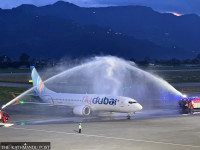
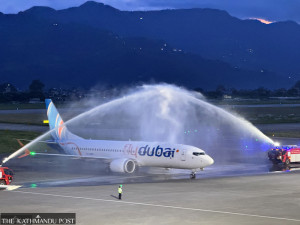
Its ripples are being felt everywhere, including here in Nepal. Around two dozen flights have been cancelled, leaving hundreds stranded. More importantly, around 1.7 million Nepali are working and living in different Gulf nations, where the war has stretched. These countries have been among the biggest sources of remittances to Nepal and have helped improve the lives of millions of its people. The war’s further escalation will thus have grave economic consequences for Nepal.
In the end, if the biggest advocate of the post-World War II international order is intent on taking a wrecking ball to the system it helped put in place, other rogue powers too would be inclined to embark on similar adventurism abroad—and the US will have no moral right to condemn their action. Following this year’s American interventions in Venezuela and Iraq, the world has just entered a very dangerous phase where the strong do what they like and the weak bear the consequences.




 27.61°C Kathmandu