Report details abuse and unsafe conditions faced by Nepali workers on Saudi Aramco projects
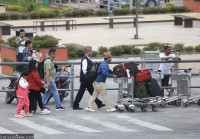
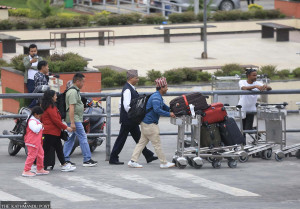
Study by London-based rights group finds workers toiling up to 14 hours in over 50 degrees heat. Aramco employs more than 75,000 people directly, while millions of low-wage migrant workers are engaged in associated projects through subsidiaries, partnerships and joint ventures operating in more than 50 countries. File Photo
Nepali migrant workers employed in projects linked to Saudi Aramco, Saudi Arabia’s state-owned oil giant, are facing extreme heat, unsafe working and living conditions, excessive working hours and inadequate compensation for workplace injuries and deaths, according to a report published by FairSquare.
The report, released by the London-based migrant rights organisation, says foreign workers employed in Aramco-linked projects are forced to work long hours in extreme temperatures, housed in unsafe accommodation, denied adequate rest and food, and often deprived of compensation in cases of injury or death.
Saudi Aramco is among the world’s four largest companies by revenue. It holds the world’s second-largest proven crude oil reserves and remains the world’s largest oil exporter. Around 98 percent of the company is owned by the Saudi government and the Public Investment Fund. Oil revenues generated by Aramco account for nearly two-thirds of the Saudi government income.
According to The Wall Street Journal, Aramco has more than 10,000 supplier companies operating within Saudi Arabia. Workers are recruited through layers of subcontractors under these firms. The report says the complex structure makes it difficult to establish accountability in cases of labour exploitation. Around 20 percent of Nepali workers employed in Saudi Arabia’s construction sector are estimated to work on such projects.
Workers interviewed for the report said they were made to work between 12 and 14 hours a day in temperatures exceeding 50 degrees Celsius. Many reportedly fainted at worksites because of the heat.
Kamal (name changed), a 27-year-old Nepali worker who arrived in Saudi Arabia in 2023, said he had been promised hotel work after paying Rs150,000 to secure the job. Instead, he was deployed to a construction project linked to an Aramco gas plant.
“We thought we would get decent jobs after going abroad, but the reality was completely different,” he said. “Our passports were confiscated as soon as we arrived. We were forced to work up to 12 hours a day under the scorching sun.”
“I saw many co-workers collapse at the worksite because of the heat. Working outdoors became unbearable. I left Saudi Arabia after 10 months,” he added.
Temperatures exceed 50 degrees
Workers involved in Aramco’s $21 billion Marjan Increment project told researchers that temperatures in June and July regularly exceed 50 degrees Celsius. They said extreme heat and water shortages frequently caused workers to faint.
“Many people collapsed because of the heat. Their bodies simply stopped functioning,” one worker said.
Another Nepali worker who worked on a project in Jizan said one of his colleagues collapsed while walking.
“A vehicle arrived, water was splashed on him, and he was taken to an air-conditioned room,” he said. “When workers faint, they are left unattended in their rooms.”
According to him, work stops only when temperatures rise above 50 degrees. Otherwise, workers are expected to continue working, even from shaded areas.
Prasad (name changed), a 40-year-old worker from Gorkha, said he spent 13 years working on a pipeline project linked to a gas plant in Dammam. Although safety officers advised workers to rest after every hour of labour, supervisors pressured them to continue working, he said.
“Safety officers told us to take a 15-minute break after an hour of work, but the foremen forced us to keep going,” he said. “After years of working in extreme heat, my health deteriorated. I developed kidney disease.”
He said his employer never contacted him after he returned home and never discussed compensation.
“At that point, my condition was so serious that saving my life became the only priority,” he said. “Aramco became rich because of workers like us. But when I fell ill, it did nothing.”
Bishal, a worker from Siraha employed as a driver for a fuel transport company linked to Aramco, said driving fuel tankers for 18 to 19 hours a day had become routine.
“No one cared whether we had eaten, whether we were stuck in traffic, or whether we were exhausted,” he said. “We worked continuously for 30 days without weekly leave or public holidays.”
He described the work as highly dangerous.
“Driving a fuel tanker is like carrying a bomb,” he said.
The report also describes workers’ living conditions as poor. Many reportedly live in cramped containers, face electric shocks during rainfall, use unclean toilets and receive low-quality food.
The report says the most serious issue concerns the lack of justice for families of workers who die or become seriously ill while employed. Of the six cases examined, only one family reportedly received adequate compensation.
“The company provided no support. We don’t have money for treatment,” said the wife of a worker who became paralysed while working.
Another widow said the company never clearly explained the cause of her husband’s death.
Although Saudi labour law requires compensation in cases of workplace death or permanent disability, the report says the process is so complex that many families fail to obtain justice.
FairSquare also questioned international sports organisations linked to Aramco. FairSquare director Nick McGeehan said FIFA’s growing relationship with Saudi Arabia had again raised concerns over labour protections.
“Aramco is the commercial engine of Saudi Arabia and has both the responsibility and influence to protect the workers upon whom it depends,” he said. “These findings raise serious concerns not only about Aramco, but also about FIFA’s increasingly close relationship with Saudi Arabia more broadly.”
FairSquare said it sought a response from Aramco but had not received one.
Aramco employs more than 75,000 people directly, while millions of low-wage migrant workers are engaged in associated projects through subsidiaries, partnerships and joint ventures operating in more than 50 countries.
By mid-2025, Saudi Arabia had around 18.2 million workers, including 14.1 million foreign labourers, accounting for 77 percent of the workforce. In 2019, the number of migrant workers stood at 9.4 million.
Most are low-paid South Asian workers. In 2024 alone, around 2.47 million foreign male workers were employed in Saudi Arabia’s construction sector. Around 400,000 Nepalis currently work in the country.
Hom Karki is a reporter with two decades experience covering migrant workers issues and the Nepali diaspora. He was previously based in the Gulf for Kantipur Daily.




 15.67°C Kathmandu