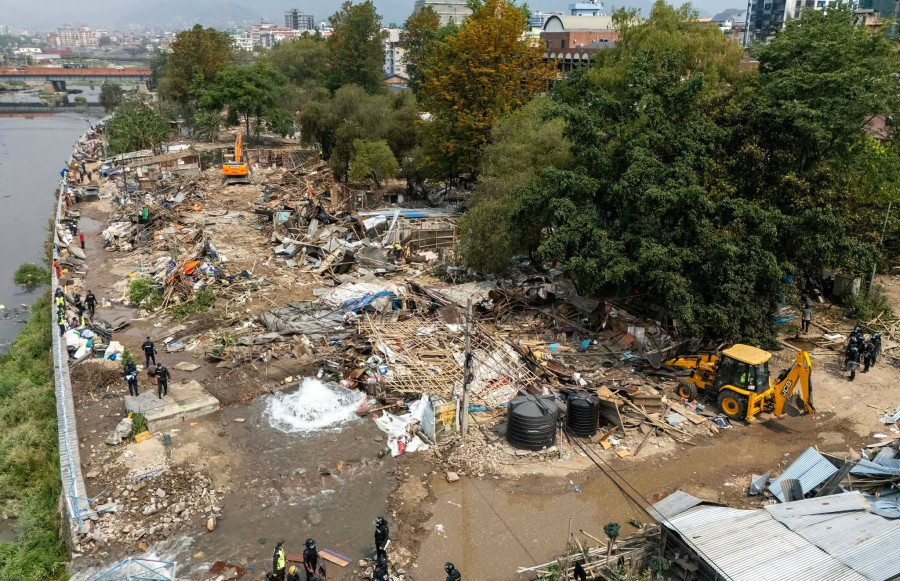
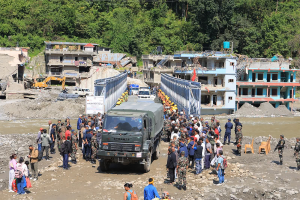
Less than a month after the formation of the government, the Balendra Shah administration, on April 25, launched a drive to evict squatters living on encroached riverbank land. The campaign, which continued for more than two weeks before the Supreme Court intervened and ordered a halt, received mixed reactions. The government defended the move, saying it was intended to reclaim the encroached land, provide proper housing to genuine landless people, and convert the reclaimed areas into parks. Inside the Kathmandu valley, a total of 2,687 structures along the Bagmati, Manohara and Dhobikhola river corridors were demolished, reclaiming acres of land. However, weeks after the illegal structures were reduced to rubble by bulldozers and excavators, no steps have been taken to utilise the reclaimed land.
Although officials have repeatedly spoken of developing parks and public spaces, there is little clarity on how this will be done. Before the riverbank areas can be turned into green spaces, a comprehensive debris management plan is essential. Experts estimate that the demolition could generate tens of thousands of tonnes of waste. The Ministry of Urban Development and the High-Powered Committee for Integrated Development of the Bagmati Civilisation say the plan is to turn the demolition sites into gardens by covering the debris with soil and planting greenery on top of it. But they appear to have made the statement without a clear strategy or feasibility assessment. This could, in fact, lead to further environmental hazards.
Experts say developing parks above piles of debris is not a sustainable solution. A proper reuse, recycling and disposal plan should have been prepared before carrying out such a massive demolition campaign. Ragpickers collecting metal scraps from the debris have become a common sight in the demolished areas. The deserted landscape is already an eyesore. If the land is not put to proper use soon, there is a risk of re-encroachment, as seen after the 2012 eviction drive under the Baburam Bhattarai government, which proceeded without a clear reuse plan.
Kathmandu Valley already lacks parks and open spaces, making the idea of converting these reclaimed areas into greenery a welcome step. Core Kathmandu, in particular, suffers from a severe shortage of green cover and, as one of the most polluted cities in the region, urgently needs more green spaces to offer some respite to its residents. At present, there are only a few properly maintained public gardens where children can play or elderly people can spend time, underscoring the need for more accessible and well-planned open spaces in the federal capital.
The need for open spaces was acutely felt after the 2015 earthquake. Although successive governments made attempts in the aftermath of the disaster to identify and preserve such land, those efforts soon stopped. The recent eviction drive, carried out amid serious reservations from different quarters and without adequate planning for the areas’ future use, risks becoming counter-productive. The longer the cleared areas are left unused, the greater will be the risk of re-encroachment. Alternatively, they could become breeding grounds for various water-borne diseases.




 14.69°C Kathmandu