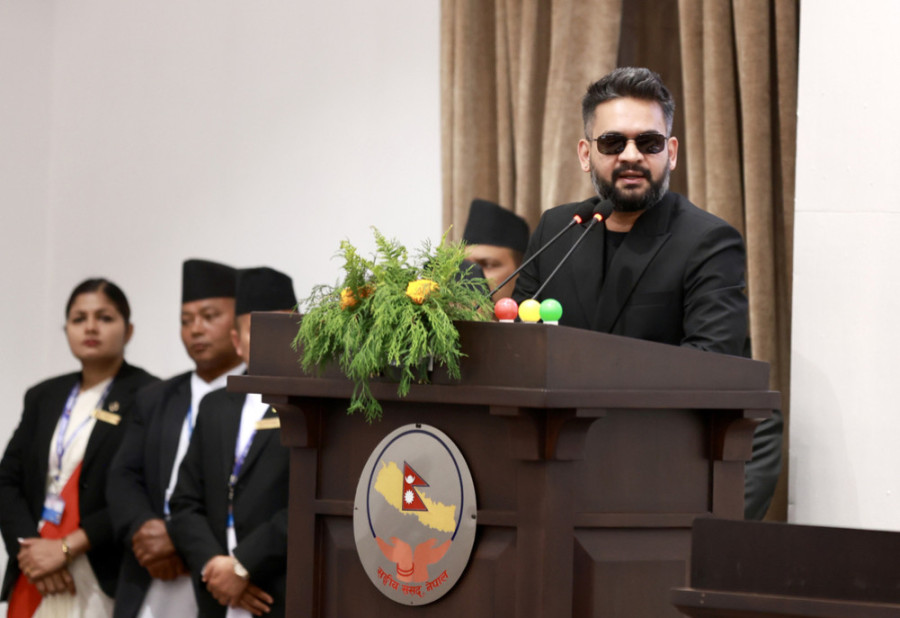
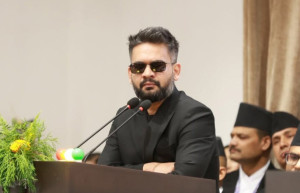
Following his assumption of office on March 27, not once had Prime Minister Balendra Shah addressed the federal parliament—not even during the mandatory weekly Q&A sessions. Pressure on him to break the silence and show accountability to the legislature had been steadily building. Yet when Shah did exactly that on Sunday, instead of allying his critics, he let loose a swarm of stinging bees. Addressing two separate questions in parliament, Shah first said that efforts were on with India to resolve the old dispute over the territories of Kalapani, Limpiyadhura and Lipulekh. Fair enough. But then he added that not only had India encroached on Nepali territories, Nepal had also encroached on India’s land in many places. He also said that as many of the current boundary disputes with India originate with the Sugauli Treaty signed with British India in 1816, his government was trying to bring in the British in India-Nepal boundary discussions. Both these statements were problematic. According to border experts, as well as senior ex-state officials who have sat down with their Indian counterparts, there is no official record of India ever bringing up the issue of ‘Nepali encroachment’. The prime minister’s statement, therefore, strengthens India’s hand in future boundary talks.
Prime Minister Shah’s desire to involve the British in a bilateral issue between Nepal and India is misplaced as well. First of all, India has repeatedly said that it will reject the entry of a third party in all its boundary talks—be it with Pakistan, China, Bangladesh or Nepal. India won’t look at Nepal’s offer of British involvement kindly, and any such effort will only spoil the climate of bilateral negotiations over the boundary. What is strange about both these statements is that there was no need for the prime minister to speak off the cuff on such a sensitive topic—that too from the rostrum of the sovereign parliament. Perhaps, as a foreign ministry press release later on Sunday put it, Shah’s statement was primarily related to “encroachment in the Dasgaja area [no-man’s land] and ‘cross-border occupation’... Because Nepal and India adopted the Fixed Boundary Principle in river-border areas during boundary demarcation, situations have arisen where citizens of one country cultivate land or reside on land that falls within the territory of the other country.” In other words, he did not speak with bad intent.
But when the head of government speaks on such a sensitive topic that has a direct impact on Nepal’s sovereignty and national interest, such excuses don’t hold any water. Had he used the term ‘cross-border holdings’ instead of the word ‘encroachment’, there would have been no controversy. Such nuances often make or break inter-state negotiations. Prime Minister Shah also appears unaware (or uncaring) of the sensitivities of Nepal’s closest neighbour. India’s dislike of third-party mediation in bilateral disputes with its neighbours is well established. The executive head of a country that must maintain a difficult geopolitical balancing act just to preserve its sovereignty cannot be so frivolous in his choice of words while speaking on Nepal’s relations with major powers, especially India. We hope Prime Minister Shah exercises more caution on this score in the future. But the geopolitical genie he has let loose with his statements on Sunday will also be hard to cajole back into the bottle.




 23.63°C Kathmandu