In recent months, the Prime Minister Balendra Shah-led government has increasingly substituted policy engagement with a digital-first approach that prioritises viral engagement over the rigours of statecraft. While the adept use of technology is a hallmark of modern leadership, a worrying pattern has emerged where social media serves as a tool for deflection, trivialising serious state affairs and obscuring critical national crises.
The recent controversy involving a late-night social media post, in which the prime minister jokingly requested the ‘prime minister’s number’ to apply for an ambassadorship, exemplifies a growing disconnect between the gravity of high office and the levity of online personas. To dismiss such interactions as harmless digital engagement is to ignore the sensitivity of statecraft. The selection of diplomats to represent the nation is a solemn responsibility, not a subject for satirical exchanges with Cabinet ministers and parliamentarians on public forums. Such actions risk degrading the executive office, transforming a space reserved for governance into a theatre of ‘clout culture’—a phenomenon where public attention is manufactured through performative antics to manipulate digital algorithms.
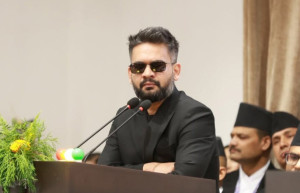
This penchant for digital spectacle appears to be part of a broader strategy. On April 27, the federal parliament was abruptly prorogued to bypass the legislature and introduce ordinances concerning the Constitutional Council and cooperative fraud. As public indignation mounted over this evasion of parliamentary oversight, the narrative was swiftly redirected. A photograph of the prime minister, posted on May 9, shifted the national discourse from legislative integrity to the aesthetics of a viral portrait.
The human cost of this distraction is perhaps the most concerning element of the administration’s communication strategy. In mid-May, while the nation was confronted with the harrowing reality of displaced landless squatter families living in squalid conditions, the prime minister published light-hearted content promoting local cheese. This juxtaposition—of a postpartum mother in a state holding centre lacking basic nutrition while the head of government posts playful ‘say cheese’ captions—highlights a lack of empathy and priority.
Furthermore, the administration has demonstrated a troubling tendency to use the machinery of the state to enforce the personal whims of the executive. The arrest of a government secretary, Krishna Hari Pushkar, for allegedly sending a direct message to the prime minister to advance personal interests, sets a precarious precedent. By deploying law enforcement agencies over an electronic communication, bypassing established civil service regulations and administrative procedures, the government has shown authoritarian overreach. Governance must be dictated by codified law and institutional stability, not by the shifting moods or digital grievances of an individual leader.
The digital conversation surrounding the national budget for FY 2026-27 followed a similar pattern of obfuscation. Rather than addressing the structural gaps, economic policies, or the pressing issues of youth unemployment and macroeconomic stability, the prime minister issued a cryptic ‘rest assured’ status. This brevity, while effective in capturing public attention, stifles the detailed public debate required for sound fiscal management. While the current leadership claims to represent a new political era, these tactics of using wit and sarcasm to disarm critics are reminiscent of previous administrations. The danger lies in the public becoming so consumed by the personality of the leader that critical issues vanish from the collective consciousness.
Popularity on social media is a fleeting commodity and an insufficient substitute for institutional governance. While the prime minister may have an expert understanding of digital algorithms and the ability to introduce populist themes that ensure no single controversy lingers, this approach prioritises temporary entertainment over durable solutions. The focus must return to the floor of the parliament and the corridors of the ministries where policy is debated and implemented. A nation cannot be governed by status updates and viral photographs. It is time for the government to move beyond the superficiality of online disputes and re-engage with the serious, often unglamorous, work of statecraft.




 23.78°C Kathmandu
.png&w=900&height=601)