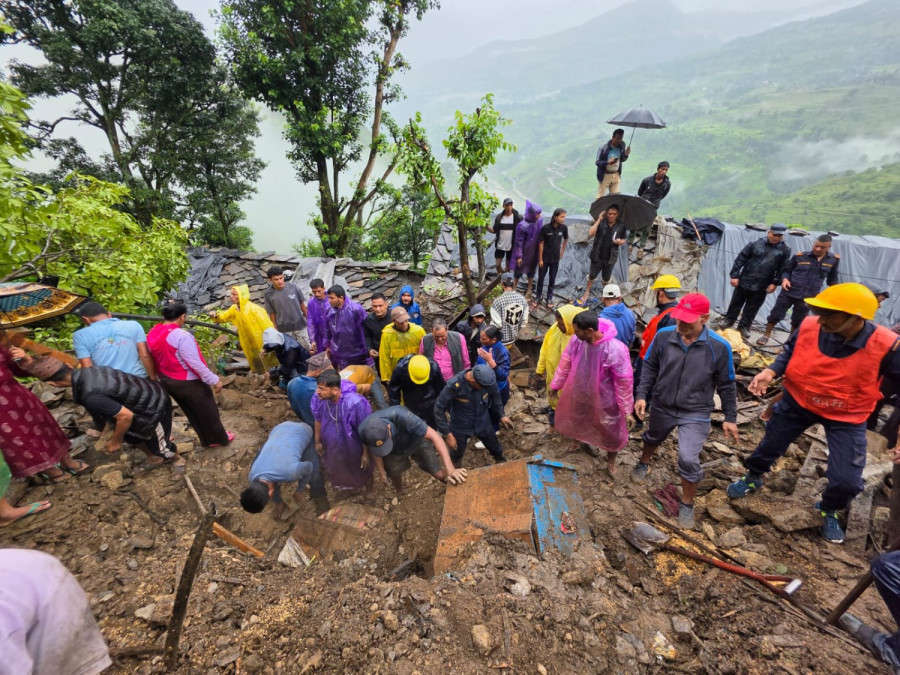
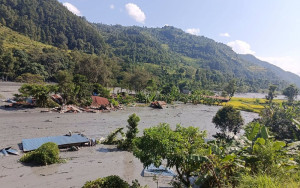
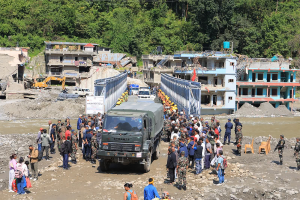
Nepal’s monsoon disasters are becoming a grim annual occurrence. Over the past four months, more than 80 people have died in monsoon-related disasters; nine are missing, and 196 have been injured. On Saturday, three people lost their lives in separate landslides in Jajarkot and Rolpa districts, and last week, a mudslide buried a settlement in Rolpa, leaving 10 dead and three missing. Unfortunately, as we are only halfway through the monsoon season, there is a high risk that the death toll will continue to mount. This alarming situation warrants greater seriousness from the government.
Successive governments have consistently failed to prevent the high number of deaths and destruction caused by the monsoon-related disasters. Their aversion to preventing haphazard road construction in different parts of the country has only increased the vulnerability of Nepal’s precarious hill landscape. In many rural hill districts, roads are still built without proper surveys. Local authorities, to meet targets and avoid a budget freeze, often resort to asare bikas, without regard for the dangers of landslides, deaths and displacement. Once constructed, roads are left without proper maintenance and upgrades.
The absence of guidelines about where people can safely build houses in remote hilly areas has also put many lives at risk. At the same time, unregulated riverbed and hill mining has intensified the impact of monsoon-related disasters. For example, in 2024, the Roshi river flood in Kavrepalanchok district killed 78 people, partly due to illegal mining and unregulated crusher industries. Often, these activities occur because of political backing and contract manipulation, yet they operate freely.
In April, Home Minister Sudan Gurung ordered the immediate shutdown of illegal crusher plants after visiting a flood-affected area in Kavrepalanchok district. The Balendra Shah-led government also decided to manage the resources needed to prevent and respond to monsoon-related disasters. Following monsoon disasters, hundreds of rescuers have also been deployed in the affected areas. These steps are welcome but far from enough. Nepal cannot stop the monsoon, nor can it prevent every landslide and flood. But it can mitigate the human costs of predictable disasters.
Shifting the focus from how quickly rescuers reach disaster-affected areas to whether people receive early warnings and whether they trust and act on them is necessary. Equally vital is holding people accountable for haphazard road construction and illegal mining. The public, too, must follow disaster-related early warnings and avoid building homes in risky zones. In Rolpa alone, over 100 households need immediate relocation. Local governments must immediately transfer such vulnerable settlements to safe places and coordinate with the provincial and federal government if necessary. Urgent action is also needed in 134 settlements across all nine local units of Bajura district. In Jajarkot, 200 people who were at risk have been relocated, which is a much-needed step.
The government aimed for zero deaths in monsoon-related disasters this year. Instead, authorities have recorded 85 deaths so far. These deaths must only push the government to acknowledge the fact that it fell short in adequately focusing on prevention before disasters struck. Rather than treating monsoon-related destruction and deaths as an annual ritual like past governments did, it should treat them as a year-round governance challenge and prioritise prevention, early action and preparedness. The government must identify where the risks lie before more disasters and deaths expose them.




 15.34°C Kathmandu