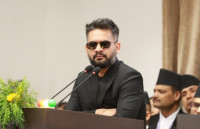
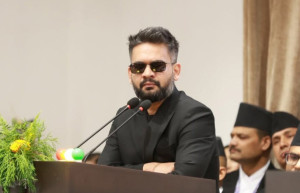
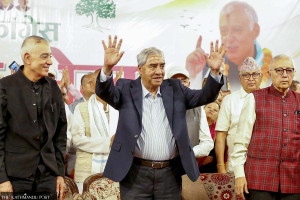
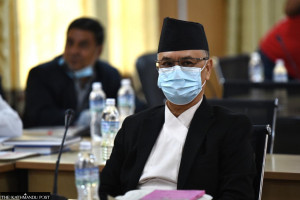
It’s happening all over, again. Early signs from the Parliament are worrying. The House of Representatives has seen repeated obstructions in just two months of the commencement of its current session. It all started when Prime Minister Balendra Shah left the House while President Ramchandra Paudel was still presenting the government’s policies and programmes. Breaking away from the established practice of the prime minister responding to lawmakers’ questions on the policies and programmes, Shah abstained from the Parliament and delegated the task to the finance minister. The opposition resorted to obstructing the House, demanding that the prime minister appear to answer questions. For days, Shah remained defiant and ignored the pressure.
When he finally attended the lower house meeting on Sunday for a question-answer session, controversy followed. Responding to a question regarding India’s encroachment in the Lipulekh area, Shah said, “It’s not just India; Nepal too has encroached upon Indian land in many places.” This statement drew widespread criticism and handed the opposition an opportunity to unite against the government. On the same day, Speaker Dol Prasad Aryal decided to deploy marshals to contain the opposition and secure endorsement for the lower house regulations. Since then, the opposition has intensified its protests in the House, demanding that the prime minister’s statement be expunged from the parliamentary record. The ruling party, however, continues to defend the remarks.
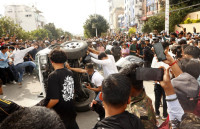
It is unfortunate that the House, which should be focused on discussing the national budget, addressing public concerns, and introducing new bills, is instead consumed by controversies. History seems to be repeating in Parliament. The internal tussle within the then Nepal Communist Party hampered the business of the lower house elected in 2015. Then Prime Minister KP Sharma Oli dissolved the House twice, effectively shortening its working period by around a year. The House elected in 2022 also fell into the trap of obstruction. The Nepali Congress resorted to obstruction for weeks, demanding an investigation into Rastriya Swatantra Party (RSP) Chair Rabi Lamichhane’s alleged involvement in cooperative fraud. Meanwhile, the RSP obstructed proceedings, seeking a probe into the visit visa scam, and CPN-UML did the same, demanding an investigation into gold smuggling. That House was eventually dissolved following the Gen Z protests in September. Both Houses ended up failing to promulgate crucial laws necessary for the full-fledged implementation of the Constitution.
It would be even more unfortunate if the current House elected after the Gen Z uprising follows the same pattern. The House is adjourned for a week at a time when it should be engaged in extensive discussions on the budget. After the budget is endorsed, it must deliberate on and pass several important bills that have been pending for years. For this to happen, the RSP must move beyond the euphoria of its near two-thirds majority, while the opposition parties must also recognise the consequences of their actions.
The Speaker needs to play a more neutral and proactive presiding role in trying to bridge the differences between the two sides. Holding dialogue, both inside and outside the House, to find an amicable solution to the deadlock is crucial. As Education Minister Sasmit Pokharel, who also serves as the government’s spokesperson, hinted, the prime minister should appear in Parliament and clarify his actual intent. At the same time, the opposition should reconsider its demand for an apology. It is the responsibility of both sides, the ruling party and the opposition, to make the House functional and complete the unfinished tasks left over from previous sessions.




 15.26°C Kathmandu