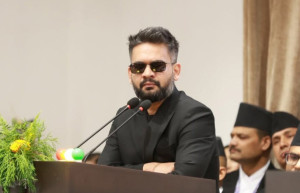
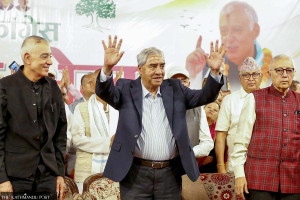
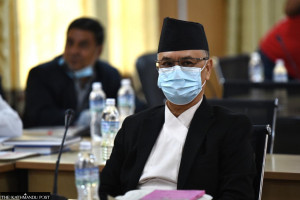
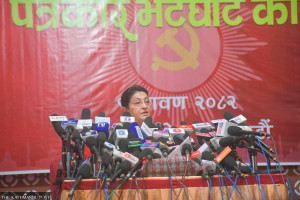
Whether it is in the way his ministers threaten physical violence against rule-breakers, or the way the prime minister himself dismisses critics, there is a hard edge to the Balendra Shah government. Many Nepalis are happy with the faster and improved service-delivery under Shah—for instance the swift delivery of millions of pending driving licences or greater availability of staff at vital state institutions. They also see that after years of misrule under the old political parties and their ageing leaders, there has been a much-needed generational change in government. Yet all is not well with the functioning of the Shah government. For one, while its plans and programmes seem to have something to offer for the middle and upper classes, people in the lowest strata of the economic ladder who need state protection the most have been left to fend for themselves. This is evident both in the continuing plight of those forcibly displaced from Kathmandu’s squatter settlements as it is in the death through self-immolation of Ganesh Nepali.
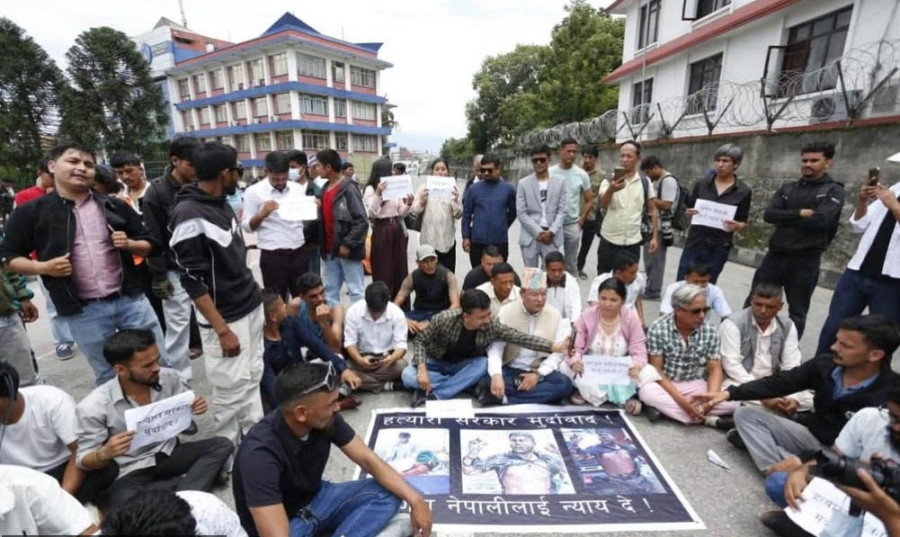
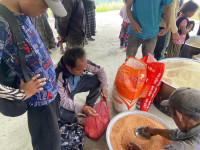
Thousands of squatters were removed from their homes with the promise of swift resettlement. Yet they have instead been languishing in temporary, poorly-equipped shelters for months. Now, monsoon rains have entered their temporary settlement. The government’s use of force to remove squatters without any plans for their settlement was a travesty. In a bid to appeal to the aesthetic sensibilities of urbanites, the lives of squatters who had nowhere else to go were upended overnight. Two such displaced squatters even took their own lives. Now, a daily-wage earner who was looking after his family with what little he made through ride-hailing on his motorcycle has died by suicide. His family say Nepali was fed up with the way metropolitan and traffic police forces routinely fined him for minor traffic violations. When he was once more harassed by the metropolitan police, the already indebted Nepali chose to set himself on fire rather than pay the Rs1,000 in fines. Under the new government, the traffic police have become increasingly aggressive, threatening to slap fines of up to Rs100,000 for some traffic violations. But steep fines alone do not make roads safer; good roads and traffic infrastructure are as vital.
This is an unjust arrangement. While those who make several lakhs a month may not be much bothered by having to fork out Rs1,000 in fines once every few months, the same is not true for those who make, say, Rs20,000 a month and who, like Nepali, are in debt and have to count every rupee they make. In the case of squatters, too, thousands of them have nowhere else to go, nor do they have stable jobs. Yet instead of trying to work out a humane and equitable way to resettle these families, the government chose the easiest way out and sent bulldozers into their settlements. It is not enough for a democratic government to be clean and efficient. It must also ensure that the pursuit of order and efficiency does not impose disproportionate suffering on those least able to bear it.




 24.79°C Kathmandu