Sunsari incident exposes high-handedness in mob control
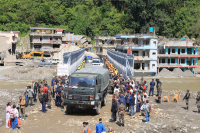
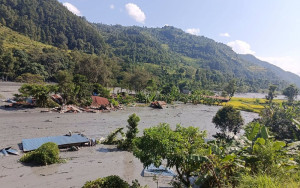
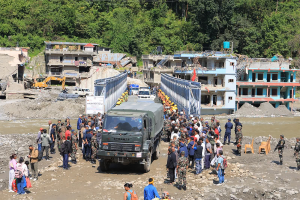
Repeated use of lethal force in crowd control reflects gaps in training, equipment and accountability. Photos: Left, via Facebook; right, courtesy of Jugesh Das, an eyewitness
Sunday’s incident in Dewangunj, Sunsari, has once again exposed the high-handedness of Nepali security forces in crowd management. A young man was killed in police firing, and nine others have sustained bullet injuries. Most of them, including the deceased, Om Prakash Mehta, were shot above the waist. As per the accounts of eyewitnesses, the security personnel opened fire indiscriminately.
This is not the first instance of the police’s excessive use of force in crowd control. Sunsari’s incident is the third in less than a year and a half. Security forces used indiscriminate force against pro-monarchy protesters in March last year in Kathmandu’s Tinkune. It was the disproportionate use of lethal force during the first day of the Gen Z movement on September 8 that led to the deaths of 19 youths, which then instigated unprecedented nationwide violent protests on the following day, resulting in a loss of life three times higher than on the first day, along with huge losses of property, including vital installations.
There are established principles governing the use of force and firearms. A United Nations principle states that lethal weapons must not be used unless there is an imminent threat of death or serious injury. Law enforcement agencies are required to use less-lethal weapons—such as tear gas, water cannons and rubber bullets—safely and proportionately. Nepal’s Local Administration Act 1971 and its regulations have also incorporated these principles. Domestic laws state that firearms may be used only as a last resort, after other crowd-control measures fail and adequate warnings are issued.
However, Nepal has neither followed international standards nor domestic legal provisions. As a result, incidents like the one in Sunsari continue to recur.
Nepal’s security agencies are unprepared for modern crowd management. Many personnel lack specialised training in crowd psychology, negotiation, de-escalation and graduated use of force. Unlike many countries, Nepal does not have dedicated public-order units with advanced training and equipment for handling large and potentially volatile gatherings.
The shortage of less-lethal crowd-control equipment is equally concerning. Years of procurement failures have left the police ill-equipped to respond proportionately. There have even been reports of police using expired tear gas canisters. Likewise, water cannons are available only in Kathmandu and a few major cities, while other essential crowd-control equipment remains scarce. The failure to procure less-lethal options such as rubber or sponge rounds, conducted electrical weapons and other modern restraint equipment has left security personnel with limited alternatives when situations escalate. To make matters worse, Nepal Police continues to rely on ageing firearms, including Second World War-era hunting rifles, that are ill-suited to contemporary public-order policing.
These are long-standing problems that have been discussed for years, yet successive governments have done little to address them. As a result, the human cost continues to stack up. Worse, every death caused by the excessive use of force deepens public anger and often escalates tensions, as the Sunsari incident has already shown by spilling over into other districts.
If the incumbent government’s assurances are to be believed, preparations have begun to procure modern less-lethal crowd-control equipment. That is a welcome step, but it must be accompanied by specialised training for the security personnel. There can be no repetition of such police high-handedness. And there can be no excuse for the loss of human life.




 14.69°C Kathmandu