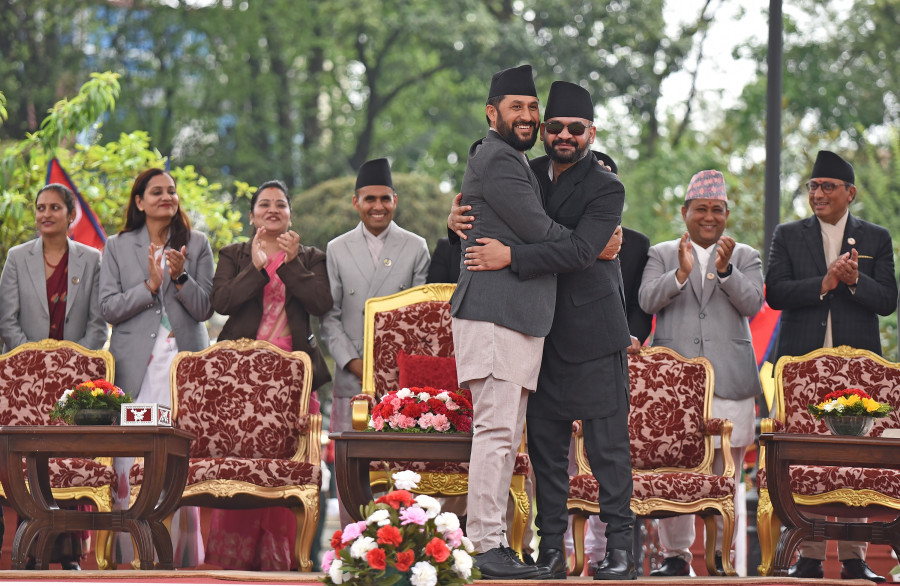
The Rastriya Swatantra Party (RSP) has swiftly climbed up the political ladder with the promise of dismantling the old, stagnant order. Yet the recently approved party statute suggests a retreat into the past. Section 68(1)e of the new document approved by the ruling party’s first general convention is being seen as an instrument of control. It grants the party chair a high level of authority to render the parliamentary party leader’s position ‘automatically vacant’ for failing to follow policy directives.
The new statute also gives the chair the right to nominate 51 members to the 158-member Central Committee. This represents nearly one-third of the committee. Such a large nominated bloc ensures a phalanx of loyalists who owe their positions to a single individual. When combined with the power to remove the parliamentary leader, these measures seem aimed at creating an all-powerful chairmanship.
Nepal’s political landscape is a graveyard of movements ruined by the whims of supreme leaders. Traditionally, in the off-case that the party chair and the parliamentary party leader are different individuals, the chair has acted as the ultimate helm of power. The party chairs have dictated cabinet formations and controlled the allocation of state resources. The rifts in the Nepali Congress during the late nineties serve as a warning. The more recent fractures within the CPN-UML demonstrate how personal power struggles between top bosses lead to national instability. The Rastriya Swatantra Party was supposed to be the antidote to this chronic malaise.
The RSP’s statute also sets the party chair on a collision course with the prime minister. A seven-point pact signed in December established a sophisticated division of labour between the two. One leader was to manage the party while the other managed the government. This balance is now in danger, with the prime minister subordinate to the chair’s mandatory policy guidance. If the government pursues a path that diverges from the chair’s vision, the parliamentary party’s leadership could be forfeited. This suspensive veto risks creating a pliant government and undermines the constitutional spirit of a parliamentary democracy where the executive must be accountable to the people rather than a party boss.
The mandate the party received in March’s snap polls is rooted in September’s Gen Z uprising. The young electorate did not vote for a new version of the old autocracy but for a transparent alternative. They demanded good governance and practices that foster it. If the party permits the chair to hold unchecked powers, it loses its moral high ground. It then becomes indistinguishable from the decaying establishment it seeks to replace. The party must remember that its strength lies not in the shadow of a singular ‘supreme leader’.
Devolution of power is now an urgent necessity. There must be a clear legal and political separation between party management and state governance. The party should also return the power of the veto over the parliamentary party leader to the general membership. Good governance is the outcome of judicious distribution of authority. The RSP must choose between the comfort of old habits and the courage displayed in its original convictions.




 14.69°C Kathmandu