By axing every single political appointment made before March 26, the Balendra Shah administration cleared the decks of roughly 1,600 officials across dozens of public entities. The fallout immediately manifested as an administrative paralysis. Today, vital state agencies are running on fumes, lacking the authorised decision-makers or signatories needed just to keep themselves functional. Holding a near two-thirds majority in the House of Representatives, the ruling coalition has the power to fix this—yet it sits on its hands, leaving the very seats it emptied cold. This is a recipe for systemic dysfunction.
The ultimate bottleneck in this self-inflicted stagnation is the Constitutional Council. On paper, the council regained full muscle on May 19 with Manoj Kumar Sharma stepping in as Chief Justice. But even with a full roster, the council hasn’t bothered to meet once, despite a mountain of vacancies. At least nineteen crucial seats across key constitutional commissions sit empty. Ironically, a new ordinance was fast-tracked specifically to lower quorum rules in the council and bypass political hurdles. Yet, the delay in filling the vacancies proves a point: For the Shah government, the constitutional bodies are simply not a priority.
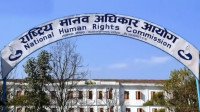
Currently, the state’s institutional organs are flatlining or hobbling along under weak, placeholder leadership. The Election Commission is leaderless. The National Natural Resources and Fiscal Commission has been a ghost town since mid-April, operating with a solitary member. Without a full bench, it can’t mathematically calculate expenditure splits or cap borrowing limits for local governments. Meanwhile, the commissions for the Muslim, Tharu, and Madhesi communities are missing two members each, including their chairs. Across the bodies, the gaps are gaping.
While this appears to be an institutional crisis, it manifests into a human one, playing out bitterly in classrooms and hospitals. The sudden ouster of vice-chancellors and registrars has hobbled Nepal’s universities. At Tribhuvan University, the executive council has been completely hollowed out. Students are trapped in bureaucratic purgatory, unable to graduate or get their certificates because there isn’t a single authorised hand available to sign the paper. In healthcare, the leadership vacuum at institutions like the BP Koirala Institute and NAMS is nothing short of reckless. The government prioritised a political purge over public welfare, chasing the theory of reform while abandoning the practical reality of governance. It utilised the constitutional appointment ordinance to seat the Chief Justice, then threw it in the trash. This selective use of executive power undermines the spirit of the constitution and creates a perception that appointments only matter when they serve the immediate interests of the ruling coalition.
When voters marched to the polls in March, they demanded a shift in how the country was run. They didn’t vote for a government that tears down structures without knowing how to rebuild them. Leaving public offices vacant disrupts the lives of the people. Citizens are paying taxes for services that are currently frozen by a total lack of urgency. This stagnation is a direct betrayal of the March mandate.
The Constitutional Council needs to meet continuously until all nineteen vacancies are filled. Similar urgency must also be shown to fill the vacant positions at other non-constitutional bodies. A transparent timeline for new appointments will be vital to win back broken public trust. These seats belong to competent professionals, not political cronies. Finally, the Parliament needs to step up, codify these rules, and end this lazy era of ruling by emergency decree. Only by restoring teeth to these stalled institutions can the state finally deliver the tangible results the public was promised.




 15.26°C Kathmandu