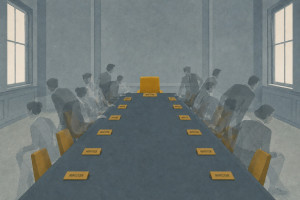
That the Balendra Shah-led Constitutional Council would break with the traditional seniority rule in the selection of the chief justice was not an entirely expected development. The six-member council, through a majority vote, picked Justice Manoj Kumar Sharma, fourth in seniority, over acting Chief Justice Sapana Pradhan Malla, the senior-most justice at the top court. National Assembly Chair Narayan Dahal, who has a background in the then CPN (Maoist Centre), and opposition leader Bhisma Raj Angdembe, the Nepali Congress parliamentary party leader, objected, but they were in the minority.
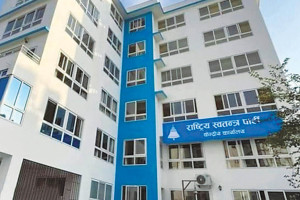
There are no constitutional or legal barriers to choosing Sharma over Malla and other senior justices—Kumar Regmi and Hari Prasad Phuyal. However, the decision-makers have offered no convincing justification for doing so. The main reason cited is that Sharma heard more cases than the others, a claim undermined by the fact that Justice Til Prasad Shrestha stands ahead of him in that regard. Another justification offered by the government and leaders of the Rastriya Swatantra Party is Malla’s alleged association with the CPN-UML: She was a member of the first Constituent Assembly under the UML quota. But the narrative of depoliticisation and judicial integrity only selectively applies in Sharma’s case. He was among a dozen appellate court judges who visited the UML headquarters in 2013 to express their gratitude for being recommended to the position. He also shared the bench with Malla in several controversial decisions. It was the division bench of Malla and Sharma that, in 2020, released Prithvi Malla, an accused in a fatal drunk-driving case, on bail. By any yardstick, Sharma does not stand ahead of Malla in terms of merit.
The developments after the council’s decision are not encouraging either. Malla, who still leads the judiciary as acting chief justice, without directly mentioning the council’s decision, has questioned whether attempts were being made to apply the rule of law unequally. She also made politically charged remarks, suggesting that there were attempts underway to weaken the foundations of constitutional supremacy, judicial independence, and the sovereignty of justice. It is understandable for her to feel hurt by the decision, but publicly venting frustration in the manner she did was uncalled for. She has failed to maintain the decorum required of her position.
More worrying signals are now emerging from the bench. If the recent pair of decisions is any indication, the issue has already created divisions among the justices. In the five-member bench, Justices Malla, Regmi and Phuyal, all senior to Sharma in rank, shared one opinion, while Justice Sharanga Subedi expressed a dissenting view. By a majority decision, the three senior-most justices halted the Shah administration’s ambitious plan to ban trade unions. Although the court is yet to deliver a final verdict on the matter, the interim order has clearly not pleased the government.
In fact, Rabi Lamichhane, president of the Rastriya Swatantra Party, and the party’s deputy parliamentary leader Ganesh Parajuli have publicly objected to Malla’s statement. Karki has even gone on to accuse her of breaching judicial norms, saying the acting chief justice has challenged the ‘two-thirds government from the streets’. This face-off between the judiciary and the executive is doing no good to the country. If it continues, it will further erode public trust in state institutions and in the rule of law.




 14.67°C Kathmandu