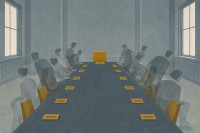
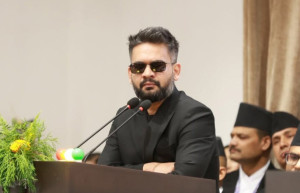
Prime Minister Balendra Shah’s prolonged absence from parliament continues to rile the opposition parties. It is increasingly being seen as problematic even within the ruling Rastriya Swatantra Party (RSP). Its lawmakers, such as Ashika Tamang and Amresh Kumar Singh, have publicly asked for Shah’s presence in parliament, with Singh even warning that Nepali democracy is embracing the ‘Pakistan model’—in terms of the executive’s lack of accountability to the legislative. In the kind of parliamentary democracy Nepal has embraced, the prime minister is always answerable to parliament. This is because rather than being directly elected, they are chosen by parliament. Thus, when the prime minister refuses to be a part of vital parliamentary exercises, the in-built system of accountability and checks and balances suffers. Prime Minister Shah has given clear indications that he is not answerable to parliament: This is evident in a host of his actions, whether in his desire to rule by ordinances or in his utter disregard for parliamentary norms.
Speaker of the House, DP Aryal, appears helpless. His repeated requests that the prime minister appear before the House have been ignored. It might not be an exaggeration to say that the prime minister has held parliament hostage to his whims. This undermining of the legislative branch of the government will have insalubrious consequences, for the RSP and for Nepali democracy. Shah was elected prime minister as the parliamentary party leader of the biggest party in the federal lower House. As such, he is the de facto leader of the RSP parliamentarians. As PM Shah largely confines himself to a small circle of trusted advisors, parliament is often the only venue where the RSP lawmakers can get their voice across to the prime minister. Yet when they cannot do so, they naturally feel thwarted in their effort to adequately represent their constituencies. In time, this is bound to create more tensions between Shah and the RSP. In the larger picture, too, Shah is trying to set a dangerous precedent whereby a prime minister is not answerable to the House. Practically, if the prime minister is not answerable to the people’s representatives, he is not answerable to anyone.
PM Shah and his boosters argue that the prime minister is being adequately represented in the House by his proxy. Yet that is not how parliamentary democracy functions anywhere in the world. Having been elected under the parliamentary system, he cannot now try to tweak the rules of the game as he sees fit. If he is uncomfortable with the parliamentary system, he and his party can seek to amend the constitution towards that end—if and when the RSP has enough strength to do so in both Houses. (Whether a directly elected executive head is in the country’s interest is a separate topic of discussion.) As Shah’s government takes troubling shortcuts, the importance of due process for a democracy cannot be exaggerated. Shah is setting a dangerous precedent by repeatedly undermining the legislative and the country’s existing political system. If this trend continues, Nepal’s democratic process might itself come into question.




 23.63°C Kathmandu