A case for better regulation of parliamentary reporting
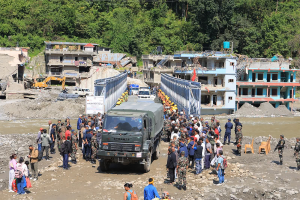
News reporting must be protected from those who would turn it into a circus, but it must never be silenced. Photo: Screenshot from a video posted on Facebook by Keshav Raj Joshi.
The premises of Nepal’s parliament are increasingly being transformed into a theatre of the absurd. The recent surge of unregulated content creators—armed with boom mics and mobile phones, in the Singha Durbar premises—has blurred the distinction between news reporting and targeted provocation. While the pursuit of accountability and well-functioning news outlets remains the cornerstone of a functioning democracy, the current descent into viral journalism threatens to undermine the very ethos of accountability, often backsliding into ad hominem to extract a reaction. In separate instances last week, Finance Minister Swarnim Wagle and former Deputy Speaker Indira Ranamagar found themselves physically cornered and bombarded with questions designed not to elicit information but to generate controversy for social media consumption. In one particular instance, Ranamagar was hounded despite being visibly ill, illustrating a total abandonment of basic empathy in the race for digital engagement.
The core of the crisis lies in the dilution (and in some cases, an utter lack) of editorial judgment. Traditional journalism, which prioritises nuanced critique of policies and national issues, is increasingly being eclipsed by a blind race for views on social media platforms. The absence of editorial oversight has led to a flood of unverified, often trivial, content. It goes without saying that not every individual with a microphone is a journalist. Meanwhile, the influx of content creators who ignore established principles has placed genuine parliamentary reporters in a precarious position, risking a blanket crackdown that could eventually restrict all media access.
A decisive intervention is required to restore decorum essential to reporting parliamentary affairs. The solution, however, must not be the curtailment of reporting. The right to ask questions and hold power to account is non-negotiable. Any move to shut out the media entirely would be a regression into opacity. Instead, the Parliament Secretariat needs to implement a segregation of journalists and content creators. This need not be an act of censorship, but a necessary measure to ensure that those reporting parliamentary affairs are at the very least equipped with the understanding of its history and procedures, and most importantly, the bare minimum empathy. To achieve this, the Secretariat could move away from the current system of permanent accreditation for all ‘journalists’.
Instead, implementation of temporary, trial passes for those working primarily for social media or YouTube is a practical starting point for reform. These trial periods would allow the Secretariat to monitor the conduct of the creators, ensuring they adhere to the rules of parliamentary affairs reporting before granting them more stable access. Such access needs to be contingent upon mandatory training sessions covering journalism ethics and parliamentary conduct. A critical structural change should involve the designation of specific press zones, mirroring the model employed in the British parliament. By restricting interviews and camera setups to these zones, the current practice of encircling and harassing lawmakers as they walk between meetings can be eliminated. This ensures that while lawmakers remain accessible for questioning, they are not obstructed or intimidated in their movements.
Responsibility, however, does not rest solely with the media. A significant portion of the blame lies with lawmakers themselves. Some MPs have been known to bypass media scrutiny by favouring YouTubers who provide one-sided messaging or focus on trivialities. When leaders revel in cheap content for popularity, they incentivise the very behaviour they later decry as harassment. A culture of mutual respect must be fostered where lawmakers prioritise substance over virality, and journalists prioritise truth over provocation. The reporting of parliamentary affairs is a solemn duty. It must be protected from those who would turn it into a circus, but it must never be silenced. Only through rigorous, structured reform can the integrity of parliamentary reporting be salvaged in the digital age.




 18.11°C Kathmandu