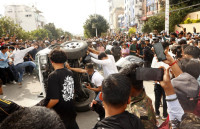
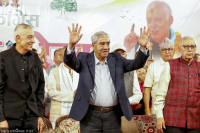
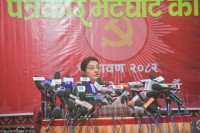
Former lawmakers of the Nepali Congress and the CPN-UML, the first and second biggest parties in the dissolved House of Representatives, are lobbying for the House restoration. In this connection, they have also lodged multiple petitions at the Supreme Court. But then the Congress has formally declared that it will take part in the March 5 elections. Even the UML, despite the outward posturing of its chair KP Sharma Oli, is busy preparing for the polls. Separately, a group of leading Gen Z activists are planning to take to the street in order to press the interim government to take action against those involved in suppressing the September Gen Z movement. They say they will otherwise obstruct the electoral process. Because of all these reasons, there continues to be doubt over the feasibility of timely elections. For the established parties and their aging leaders, the fear might be that they could be sidelined if they immediately go into elections. On the other hand, for the Gen Z activists, they might both be trying to stake a claim in the country’s political process and to establish themselves as credible electoral actors. Of course, they also fear that if those who suppressed the September protests are not brought to book now, they might never be punished for their grave crimes.
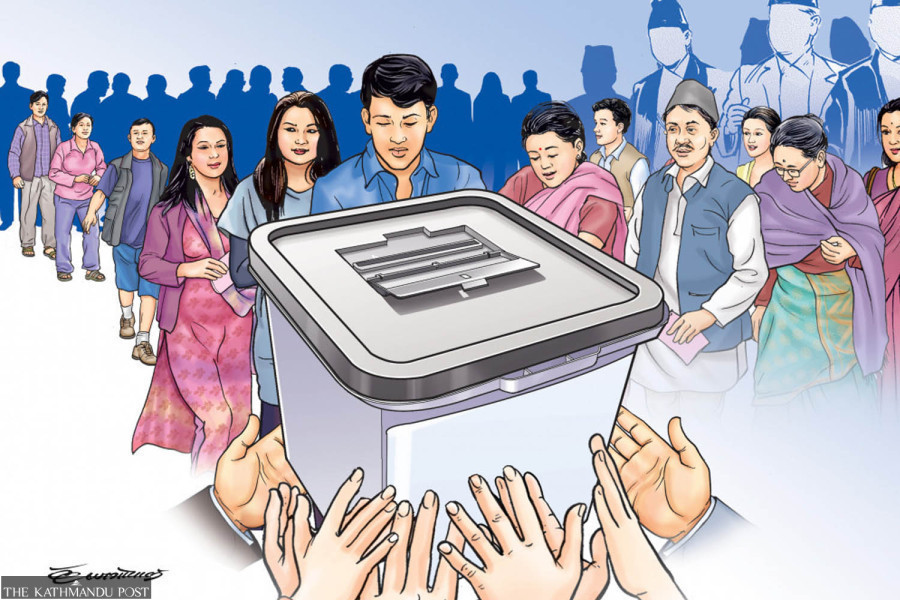
All these factors add uncertainty over timely elections. Yet elections represent the only credible way out of the current political transition and state of uncertainty: the longer they are delayed, the greater will be the uncertainty. As Prime Minister Sushila Karki rightly put it in an address to the nation marking 100 days of her government, “the House of Representatives election scheduled for March 5 is no longer just a date on the calendar. It is the only viable path to provide stability to the country.” Yes, postponing the polls might give the political actors, both old and new, time to prepare their electoral grounds. Yet if the legitimacy of the Karki government comes under question—and it surely will if there are no elections in March—there could be a grave political and constitutional vacuum.
There is no way to predict who will try to step into this vacuum, including former royalists, various criminal groups that want to establish a political foothold, and even international actors, particularly India and China, who fear continued instability in Nepal will be inimical to their interests. This is why it would be wise for all the political actors who believe in democratic values to work to build the climate for March polls. This is not a time for petty personal calculations. In any case, given the fluidity of Nepali politics right now, all these calculations might go out of the window. It is hard to tell who will benefit electorally in the upcoming elections: the old forces that are unpopular but have solid grassroots-level organisations; the newer parties that are more popular but electoral novices; or the more conservative forces who might benefit in times of uncertainty. As democratic actors, the political parties should not be afraid to let people decide whom to support. On the other hand, without timely elections, the country might be headed down a dark and dangerous road. We only need to look as far as Bangladesh, now aboil again, for what could go wrong.




 15.26°C Kathmandu