They sang on Kathmandu’s streets to survive. The city silenced the music
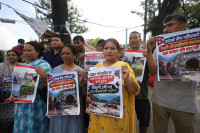
A municipal crackdown on sidewalk performers has left a community of visually impaired people without a livelihood, sparking protests. Visually impaired protesters stage a sit-in at Maitighar Mandala in Kathmandu on the fifth day of their demonstration. Noah Epps/TKP
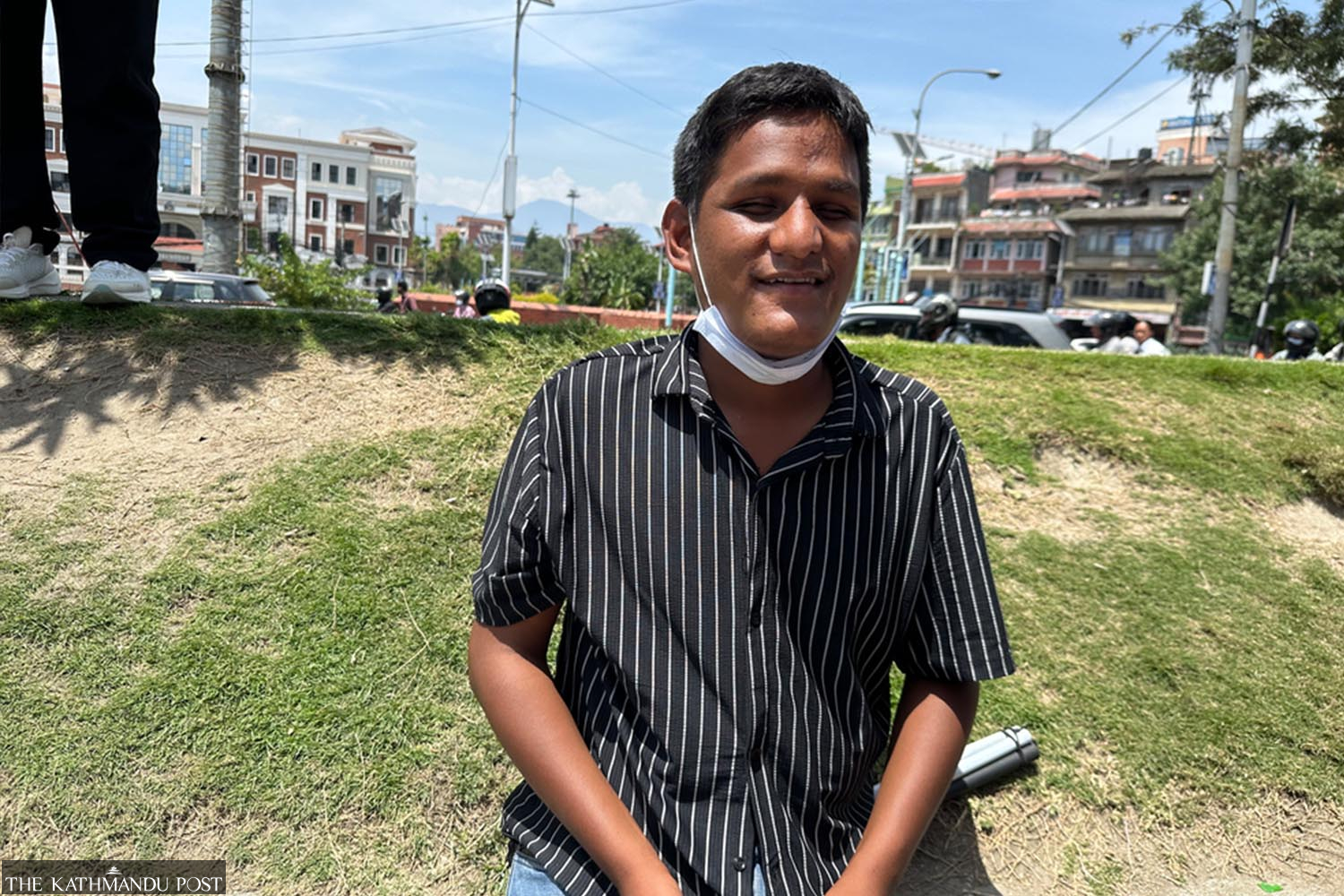
Born visually impaired, Shivaraj BK from ward 11 of Bangad Kupinde Municipality in Salyan came to Kathmandu two years ago in search of work while studying the first year of a Bachelor of Education degree.
With a weak financial background at home, he had planned to work in his village while continuing his studies. But he said his disability closed most doors. Unable to find work locally, he moved to the capital.
For around a year and a half, Shivaraj survived by singing on the streets of Kathmandu. He said the income, around Rs8,000 to 10,000 a month, helped him cover tuition fees, rent and food.
But after authorities began restricting street performances in recent months, he said his situation has worsened.
“The police and municipal officers chase us away wherever we sit,” he said. “I started singing on the streets because I could not find any other job. Now, even that has been stopped. I don’t know how I will manage my expenses.”
He said he had also tried to find work singing in restaurants and hotels, but was rejected due to his visual impairment.
Shivaraj BK
“I sing well. I approached several hotels and restaurants to perform live music, but I was not hired,” he said. “I had no choice but to sing on the street.”
He said a monthly allowance of Rs2,100 was insufficient even to cover rent.
In protest, visually impaired street performers and informal workers have been staging a sit-in at Maitighar Mandala for five days, from 9am to 1pm daily, demanding livelihood guarantees.
They say they were forced off the streets without alternative arrangements for housing, food and income.
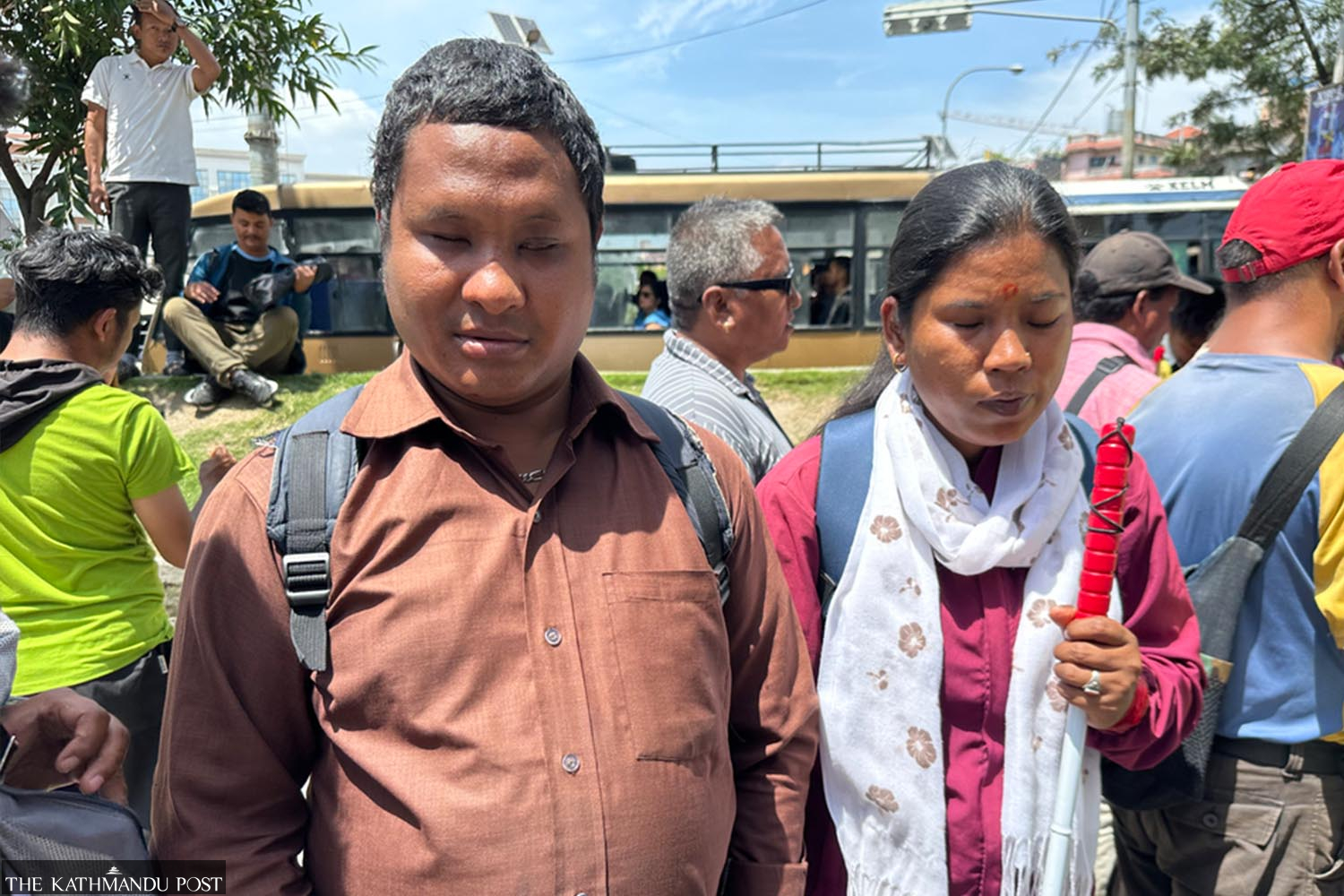
Among those protesting are a blind couple from ward 4 of Chandrakot Rural Municipality in Gulmi— 35-year-old Man Bahadur Thapa and 30-year-old Sarita Chaudhary.
Living in a rented room in Kirtipur, the couple said they earned their livelihood through singing and selling incense sticks.
They had been in Kathmandu for seven years, performing in areas such as Swayambhu, Sundhara and Lagankhel.
Man Bahadur said they were repeatedly detained and removed by municipal police and Nepal Police.
Man Bahadur Thapa Sarita Chaudhary
“We were told we are not allowed to earn by singing on the street, selling incense or begging,” he said. “We were taken away in vans five times, held for two to four hours and then released.”
He said the treatment had been deeply painful.
“Since we cannot see, our only means of income was singing and selling incense sticks,” he said. “We were driven out without any alternative.”
The couple said their daily income ranged from Rs500 to 700.
“It was not always the same,” he said. “When we had money, there was no worry about household expenses. Sometimes we even sent money to my mother in the village. Now we have to borrow even to pay rent.”
Man Bahadur has completed a Bachelor’s degree, while Sarita has completed higher secondary education.
They said the state should ensure proper arrangements for persons with disabilities, including livelihood support.
“We want the UN Convention on the Rights of Persons with Disabilities to be implemented,” he said. “The state must ensure food, shelter, clothing and employment for visually impaired people.”
Sarita said daily life has become extremely difficult.
“Public transport does not help us. Roads we walked yesterday are dug up the next day and left unsafe,” she said. “We managed somehow by working, but even that has been taken away. What are we supposed to do now?”
She urged the government to provide alternatives.
“If I could see, I could do other jobs,” she said. “We are doing this because we have no options. The government should listen to our voices.”
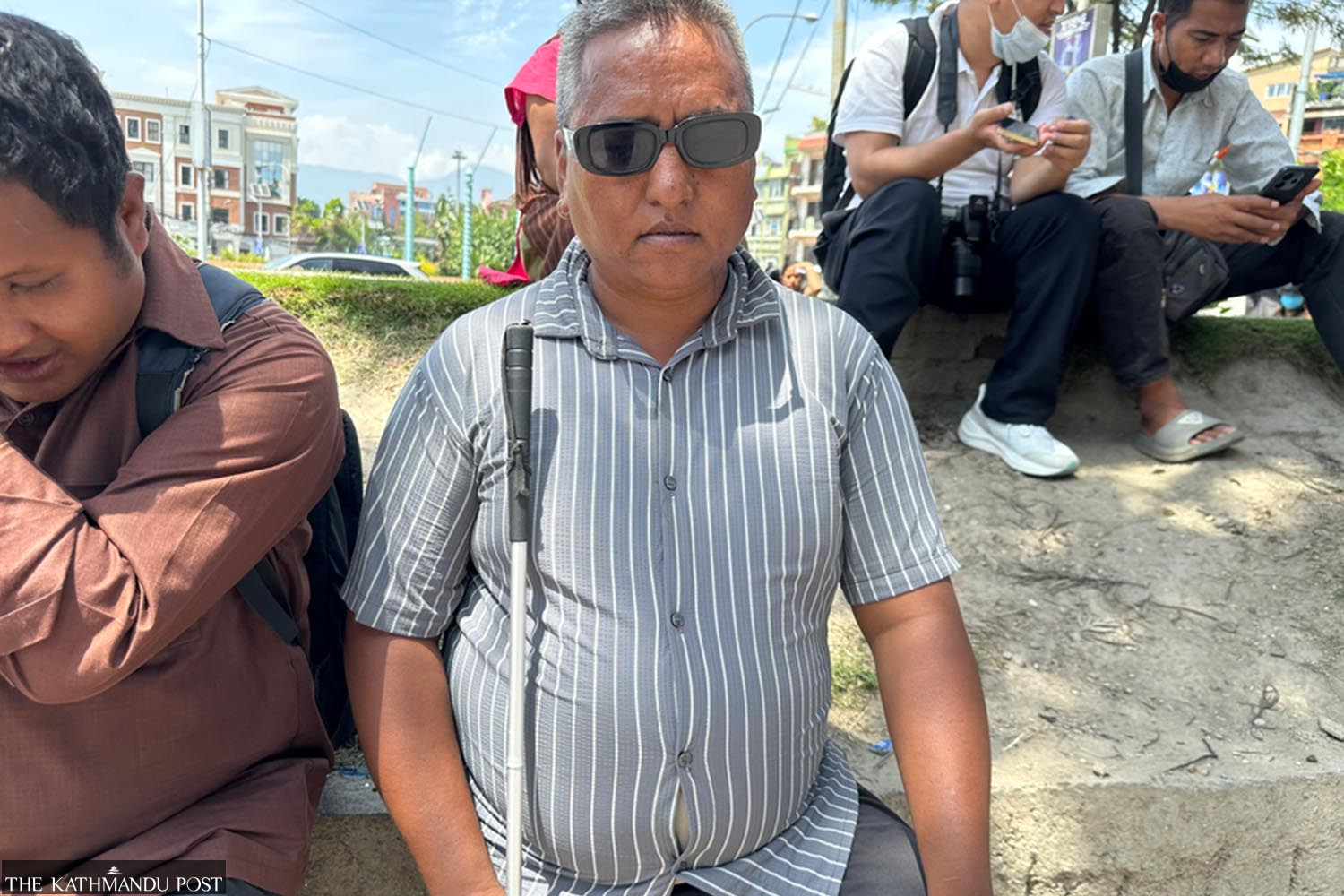
Another protester, 42-year-old Hem Thapa Magar from ward 3 of Sunkoshi Rural Municipality in Sindhupalchok, said he has been living in Kirtipur with his family for ten years.
Hem Thapa Magar
Magar said he is now worried about how to support his family after being unable to work on the streets.
“I used to run my household by selling incense sticks”, he said. “I paid for my children’s education and rent alone. How do I survive now?”
He added that his wife is also visually impaired and the couple has two school-going children.
“I cannot go alone to sell incense sticks,” he said. “I need a sighted companion.”
Basudev Lugenli Magar, 27, from ward 7 of Tinpatan Rural Municipality in Sindhuli, said he came to Kathmandu eight months ago with hopes for work and stability.
He said he holds a lower secondary teaching licence and is preparing for public service exams, but needs income while studying.
“I used to sing on the street to support myself instead of asking my elderly parents for money,” he said. “Now I cannot do that either. I am stressed about how to pay rent, prepare for exams and support my parents.”
He said the government should provide employment based on capacity.
“Those who are educated should get jobs. Others should also be supported according to their skills,” he said. “It is wrong to remove people from everywhere without alternatives.”
Gaurav Bohara Chettri, 22, from Kailali, said he had been earning through street singing until he was removed.
He said visually impaired people should either be provided jobs or given adequate monthly support.
“This is our compulsion,” he said. “If I could see, I would not be on the street selling incense or singing. I would do any kind of work to survive.”
Struggle Committee Coordinator Sudeep Oli said visually impaired workers have been pushed into hardship after being stopped from their street-based livelihoods.
“Some used to sell incense sticks, some used to sing. That is how we survived,” he said. “The state has stopped that. So we are protesting, demanding guarantees for food, shelter, clothing, education, health and employment.”
He said visually impaired workers have been removed from multiple public areas, including Pashupati, Jamal, Swayambhu and Boudha.
“We were removed from everywhere without alternatives,” he said. “If alternatives were provided, we would have accepted them. But we were simply driven away.”
He said the protest would continue until demands are met.
“If the state ignores us, we will be forced to starve,” he said. “If any of us die of hunger, the government will be responsible.”
Oli said he previously earned Rs8,000 to 14,000 per month from selling incense sticks and was the sole breadwinner of his family. He said he now struggles even to buy basic necessities.
“I cannot even afford diapers for my child,” he said. “I only have rice for three days at home.”
Responding to the protest, Superintendent of Police Bishnu Prasad Joshi, chief of Kathmandu Metropolitan City Police, said arrangements had been made for shelter, but protesters were refusing to use them.
“Sitting on the street for begging is meant for food, shelter and clothing,” he said. “The metropolitan city, in coordination with Manav Sewa Ashram, has arranged full support for food, shelter and clothing for visually impaired people.”
He said authorities cannot allow obstruction of public spaces.
“Footpaths are for pedestrians and roads are for vehicles,” he said. “No one can occupy or obstruct those spaces.”
Joshi said some individuals had been sent to shelters but later returned to the streets.
“We have arranged accommodation and food, and only then said street occupation is not allowed,” he said. “We took some people to shelters. Some returned, and some refused to go.”
He added that the arrangements are aimed at reducing hardship caused by pollution and street conditions.
“They are exposed to dust and pollution, which affects health and also obstructs the public,” he said.
Visually impaired protesters, however, said they cannot be separated from their families and communities and are demanding broader livelihood guarantees.




 15.78°C Kathmandu