Opposition parties question RSP’s commitment to federalism, demand clarity
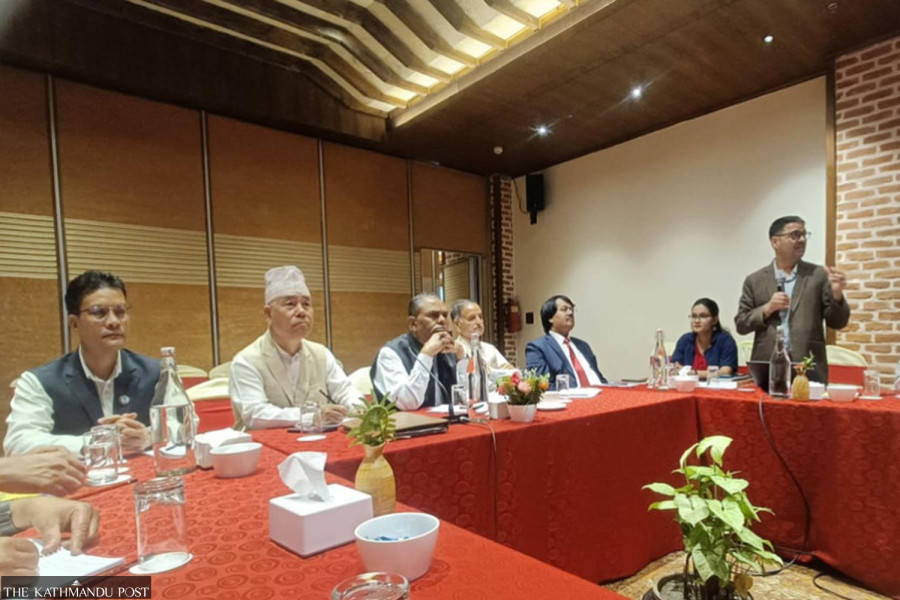
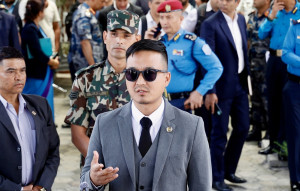
Parties have become suspicious after the RSP convention floated proposals ranging from restructuring provinces to scrapping provincial assemblies. Post Photo
Opposition political parties have questioned the ruling Rastriya Swatantra Party (RSP)’s commitment to federalism. They have demanded a clear stance from the ruling party regarding its commitment to federalism.
Concern has grown among federalist parties after the RSP’s official political documents proposed measures ranging from the restructuring of provincial governments to a complete dissolution of provincial assemblies.
Opposition leaders noted that the ruling party has maintained two different positions, outlining one stance in its official party documents and another in public speeches. They say the RSP must make its position clear.
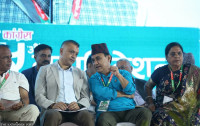
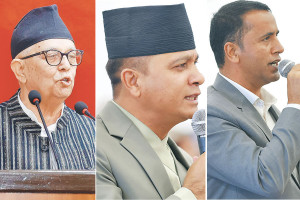
Speaking at an interaction on provincial structures organised by the Federalism and Localisation Centre in Kathmandu on Tuesday, Nepali Communist Party leader Dev Gurung said the ruling party’s conduct has fuelled suspicions.
"At present, concerns and worries regarding the future of federalism are being expressed everywhere. Since the Gen Z movement [last September], a negative narrative about federalism has been systematically constructed,” said Gurung, adding that the government and the ruling party must come forward with an unambiguous position on the issue. He alleged that the government-formed task force on constitutional amendment has failed to provide clear terms.
"We have asked them repeatedly, but the only response we receive is a vague invitation to keep discussing. They cannot tamper with the foundational features of the constitution, such as the republican system, federalism, and proportional inclusive representation. They must be explicit on these matters,” he said.
Echoing these concerns, Upendra Yadav, chairman of the Janata Samajbadi Party Nepal, argued that federalism cannot exist in the absence of provincial assemblies.
"The provincial structure was adopted complete with an executive, a legislature, and a judiciary. Just as a parliamentary system cannot function without a parliament, federalism cannot exist without provincial assemblies. This line of thinking is fundamentally flawed,” said Yadav. He demanded that the RSP clarify what kind of restructuring it intends to introduce.
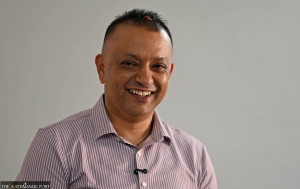
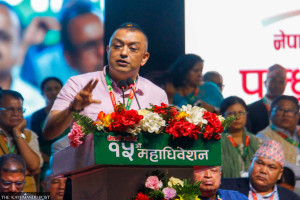
The controversy stems from the RSP’s maiden national convention held in Bharatpur, Chitwan, last week. Party chair Rabi Lamichhane presented a political report proposing the restructuring of provincial assemblies and governments. At the same convention, party vice-chair Swarnim Wagle tabled an economic-political proposal that explicitly advocated for the dissolution of provincial assemblies.
Wagle’s proposal also called for a directly elected prime minister, a system barring lawmakers from becoming ministers, non-partisan local elections, a one-third reduction in the number of local units, and radical reforms in the Judicial Council and other constitutional bodies. "The day we secure the required numbers and strength, we will revise the current constitution," stated Wagle's paper.
The proposal to dissolve provincial assemblies has rattled federalist parties. Yadav said that the federal structure, for the first time, gave a diverse society access to state power and resources. Warning against downplaying achievements secured through immense public sacrifice, he asked: "Where do they intend to take this country by reversing these achievements?" He expressed fear that democracy itself would perish without federalism.
Nepali Congress leader Krishna Prasad Sitaula said that the parliament, the streets, and public opinion must be internalised to keep the government from losing its way.
"The country has arrived at this point through immense sacrifices and rigorous processes. It is inappropriate to hold the view that everything done in the past was a mistake," said Sitaula. "While modifications and corrections of errors are natural during constitutional evolution, the core structure and substance of the constitution cannot be altered,” he added, emphasising that federal structures remain the primary vehicle for delivering the state to the people.
Janamat Party Chairman CK Raut claimed that federalism and its advocates are facing co-ordinated attacks. He remarked that since the RSP lacks a two-thirds majority in the federal parliament, it cannot amend the constitution unilaterally.
"I don’t see a possibility of scrapping provinces through amendment to the constitution," said Raut. "However, I fear that the negative narrative being manufactured around federalism indicates an attempt to take an alternative, non-parliamentary route."
Raut further alleged that permanent state structures, including the Nepali Army and the bureaucracy, stand opposed to federalism. "Certain political parties and external forces have not accepted federalism. Even among the new generation, there is a visible lack of knowledge and political awareness regarding this system," said Raut.
In response, lawmaker and RSP Chief Whip Prakash Chandra Pariyar maintained that his party seeks to strengthen and restructure federalism to make it cost-effective and result-oriented. "We will not regress. We remain fully committed to the federal democratic republic," claimed Pariyar.
Legal experts and youth representatives also weighed in, calling for a data-driven debate rather than selective narratives to bridge generational gaps regarding federal achievements.
Speaking at the event, federalism expert and former National Assembly member Khimlal Devkota said conflicting views from the RSP’s chairman and vice-chairman have heightened confusion. He argued that a false narrative has been created branding federalism as overly expensive, and stressed the need to raise awareness among the youth about the benefits of federalism.
Similarly, Gen Z representative Binod Deuba clarified that their movement aims to strengthen the current system rather than replace it. Youth leaders Jasmine Ojha and Majid Ansari expressed their views, emphasising that achievements at the provincial level must be better communicated to the younger generation.




 24.67°C Kathmandu