PM aide pins stalled Karki report release on RSP leaders
Adviser cites top Rastriya Swatantra Party leaders’ communication to the interim government that it should not take decisions of long-term consequences. Party-aligned student unions collect signatures at Tri-Chandra College in Kathmandu asking the government to make the report public, Tuesday Deepak KC/TKP
As pressure mounts from all sides on the interim government to make public the report on the judicial inquiry into the state crackdown on September’s Gen Z uprising, officials say consultations with various stakeholders are still ongoing.
Since a new prime minister is set to take the oath of office and secrecy this Friday, the Prime Minister's Office said the interim government is still in discussions over the release of the report.
The interim government had formed a three-member commission on September 21 under the leadership of former judge of Special Court Gauri Bahadur Karki to investigate the crackdown. Although the commission was given a three-month deadline, it submitted its report to the government only on March 8, three days after the snap elections.
Upon receiving the report, Prime Minister Sushila Karki had stated that while the full text might not be made public immediately, at least a synopsis would be released. However, even after three weeks, the government has yet to publish even a summary.
Various Gen Z groups have been staging sit-ins in Kathmandu and Chitwan pressing the government to make the report public.
On Tuesday, Nepali Congress President Gagan Kumar Thapa, speaking at the party’s central committee meeting in Sanepa, Lalitpur, also demanded the immediate release of the Karki commission’s report.
He said the report must be made public and its recommendations fully implemented.
“The report should have been released even before the elections. We also seek the government’s position on this matter,” Thapa said. “It must be made public without delay. Not only should it be published, but it must also be properly implemented.”
Following the Gen Z movement—which called for good governance, an end to corruption, and improved service delivery—the then Parliament was dissolved, leading to the formation of the Karki-led interim government.
The interim administration was essentially entrusted with two key responsibilities: holding the House of Representatives elections and to investigate the Gen Z uprising and ensure the implementation of its findings, says an officer at the Prime Minister’s office.
However, an official at the Prime Minister’s Office claims that although the Prime Minister had earlier indicated that parts of the report would be made public, the post-election environment did not allow it.
According to the official, after the elections, in which the Rastriya Swatantra Party (RSP) secured nearly a two-thirds majority, some senior leaders of the party conveyed through the government’s chief secretary and secretaries that the administration should refrain from taking any decisions with long-term implications. As a result, the government has found it difficult to move forward with implementing the report, the official told the Post.
“Although the prime minister had indicated that parts of the report would be made public, this has not happened. For now, the government remains engaged in consultations with various stakeholders on whether and how to release the report,” the officer said.
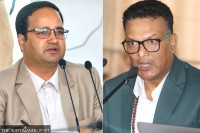
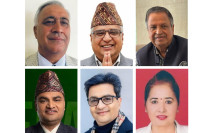
A person close to Prime Minister Karki added: “RSP vice-chairs duo Dol Prasad Aryal and Swarnim Wagle individually had sent messages to the government’s chief secretary and other secretaries instructing that no decisions of long-term significance be taken by the election government.”
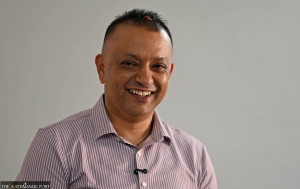
However, Wagle denied the claim and termed it a fabrication. “I challenge the Prime Minister’s Office to come up with the evidence. Where and when did I say government officials should not take decisions of long-term implications?” Wagle told the Post on Tuesday evening. “I was in my constituency in Tanahun when such allegations emerged. I have had no communications with bureaucrats.”
Multiple attempts to reach Aryal, however, failed.
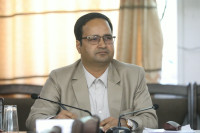
Meanwhile, Prime Minister Karki’s press adviser, Ram Bahadur Rawal, acknowledges that it has been difficult for the interim government to take concrete steps on the report, given that a government with a strong mandate is set to take office.
“With a new government enjoying a strong popular mandate set to assume power, it has been difficult for the interim administration to decide what policy to adopt regarding the report,” he said. “As a result, consultations are still ongoing.”
The three-member commission—chaired by Karki, and including former Nepal Police AIG Bigyan Raj Sharma, and legal expert Bishweshwar Prasad Bhandari—interviewed around 200 individuals in connection with the government’s handling of the Gen Z protests. These included then prime minister KP Sharma Oli; then home minister Ramesh Lekhak; Nepali Army chief Ashok Sigdel; then Inspector General of Nepal Police Chandra Kuber Khapung; Nepali Congress President Sher Bahadur Deuba; leader of the then main opposition, Pushpa Kamal Dahal; RSP chair Rabi Lamichhane; and the then mayor of Kathmandu Metropolitan City—and upcoming prime minister—Balendra Shah, among others.
A member of the Karki Commission claims that, whether it is the interim government or the incoming elected one, the likelihood of the report being fully implemented remains low.
He argues that enforcing the report’s recommendations could provoke upheaval within the security forces. Speaking to the Post about a week ago, the commission member also suggested that while some Gen Z activists are demanding the report’s publication, full implementation could raise serious questions about certain individuals within the movement itself.
The commission's report reportedly recommends criminal investigations against then prime minister Oli, then home minister Lekhak, and then police chief Khapung, among others.
While the report may recommend further criminal investigations into certain individuals, legal experts doubt any action could actually be taken.
Meanwhile, another member of the commission clarified that rather than recommending punitive action against senior officials, the report mainly suggests “investigations into them for failing to pay sufficient attention to security sensitivities during the events at the time.”




 14.4°C Kathmandu