The Nepali Congress, which had managed to stay united on ideological grounds during the March 5 parliamentary elections despite being on the verge of a split following the January special general convention, has once again been hit by internal turmoil.
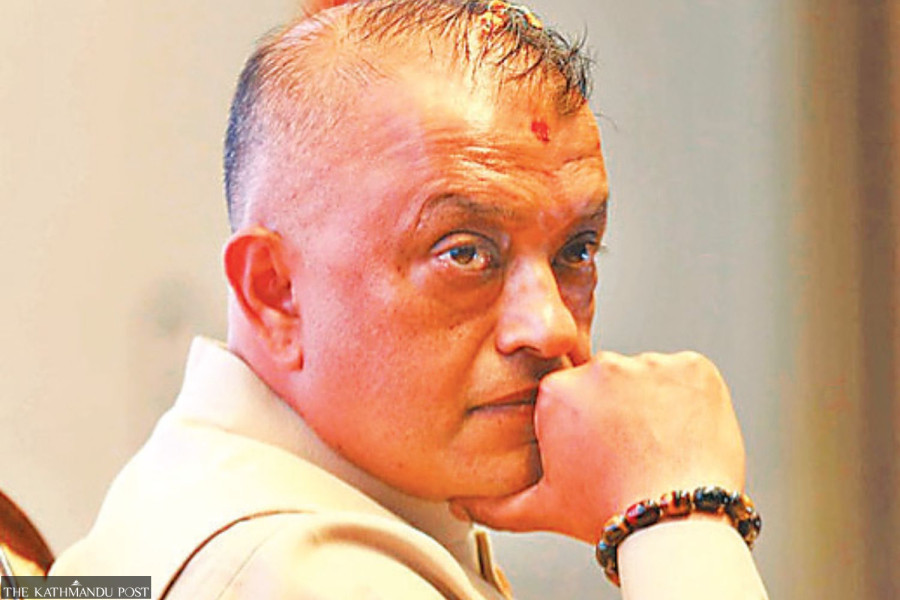
In the snap elections in the wake of the September Gen Z uprising, the party emerged as the second largest with 38 seats in the 275-member lower house. However, this marked one of the weakest performances in the party’s history, where its chief, Gagan Kumar Thapa, himself lost the election in Sarlahi constituency 4.
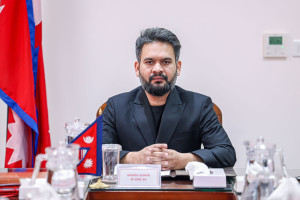
Following the disappointing result, Thapa—who was elected party president by the special convention in January—stepped down from his position on Thursday, taking moral responsibility. However, a central committee meeting of the party on Sunday unanimously rejected his resignation.
Members argued that the responsibility for the loss should be borne by the entire organisation, not just the leadership, and that changing leadership during a time of crisis would further weaken the party.
The central committee meeting, which concluded on Sunday, also endorsed the 15th general convention as its next major organisational agenda, although no date has yet been set for the convention.
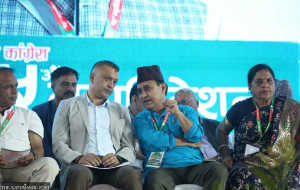
Meanwhile, the dissident faction opposed to the special convention—led by former president Sher Bahadur Deuba, and leader Shekhar Koirala—has decided to pursue parallel activities within the party.
The central committee formed through the January special convention does not include representatives from the dissident faction.
Alleging that the central committee unfairly blamed the former leadership for the party’s electoral defeat, the Deuba faction—along with the Koirala camp—has decided to carry out parallel activities.
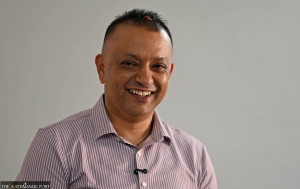
At the meeting of the central working committee on Friday, Congress Vice-President and coordinator of the party’s central election mobilisation committee, Bishwa Prakash Sharma, presented a preliminary review of the House of Representatives elections.
With party president Thapa having resigned, the meeting was chaired by Sharma. In his review report, he pointed to the role of Deuba loyalists as one reason for the party’s poor electoral performance, among other things.
In his 27-point review of the party’s defeat, Sharma noted in the final point that opposing the special convention was a matter of individual freedom. However, he stressed that Congress leaders and members should have supported candidates contesting under the party’s “tree” symbol, even if they disagreed with the special convention.
He further stated that some Congress members remained silent and did not campaign for the party or candidates, a role he described as “silent killing,” while others even tried to undermine the party.
“This not only had a general impact on the party but also caused the greatest damage to the future political prospects of those individuals themselves. Questions of morality have been raised over such silence and inaction, and instances of non-cooperation are now under scrutiny within the party’s disciplinary framework,” reads the review document of Sharma.
After being denied a ticket, Deuba remained largely inactive in the run-up to the polls and left for Singapore for medical treatment a week before the election.
Although party president Thapa had decided on first-past-the-post (FPTP) tickets, it was Deuba who managed proportional representation (PR) tickets, according to leaders. In the March 5 elections, 18 lawmakers were elected through FPTP and 20 through the PR system.
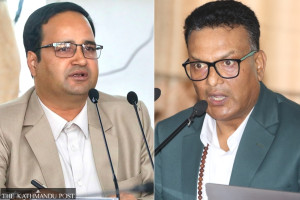
Meanwhile, a meeting of the Deuba-Koirala faction on Sunday decided to field its own candidate in the race for parliamentary party leader, although it has yet to finalise who that will be. Bhishmaraj Angdembe could be put forward as their candidate, a leader of the faction who participated in the meeting told the Post.
“We will not allow the Thapa-Sharma leadership to unilaterally pick the parliamentary party leader. We will nominate our own candidate,” the leader said.
The Election Commission Nepal had on January 18 recognised the new central working committee elected through the special convention.
Challenging this decision, the Deuba faction filed a writ petition at the Supreme Court and a hearing has been scheduled for April 5.
According to Min Bishwakarma, a Deuba loyalist, the faction’s meetings that had been postponed in the party’s interest during the election period will now resume. He said that a “central committee meeting” of the Deuba faction will be convened in the coming days.
Bishwakarma said that since the question of legitimacy remains pending in the court, it is natural for both factions to continue their respective activities until the final verdict.




 14.81°C Kathmandu