Gen Z activists optimistic but not satisfied with parties’ poll agendas
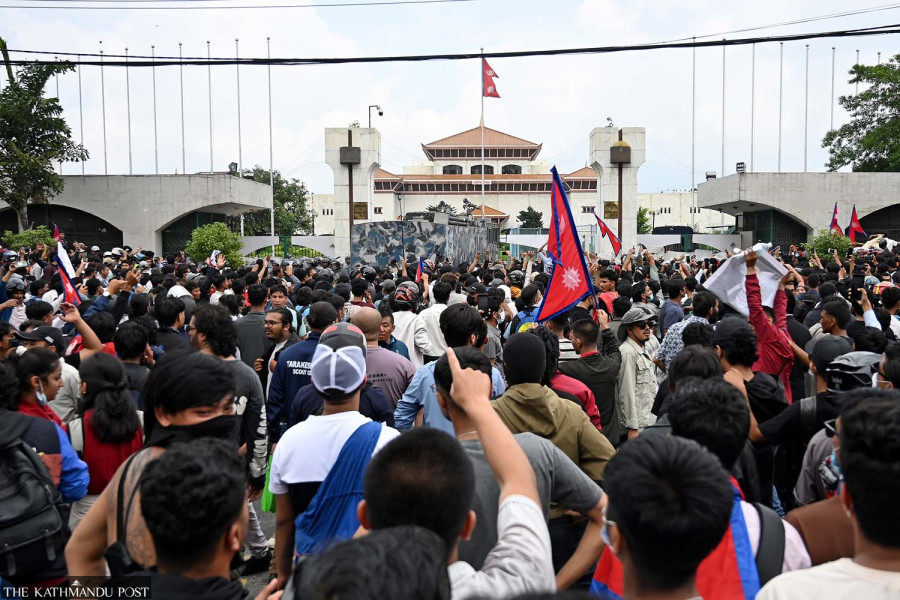
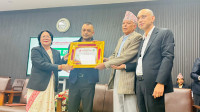
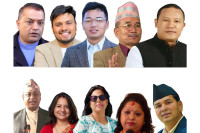
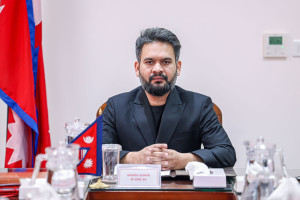
Leaders of the September revolt say their commitments have not been framed in ways that directly respond to the movement’s calls. The March 5 vote was triggered by the Gen Z revolt of September 8 and 9. Post file photo
As Nepal approaches the March 5 election, Gen Z representatives say political parties have only partially reflected the demands of the youth-led uprising in their manifestos and election agendas.
While most parties have included reform-oriented issues such as institutional restructuring, corruption control, and good governance, leaders of the movement argue that these commitments are not framed in a way that truly acknowledges the Gen Z agenda. Only the Nepali Congress and the Rastriya Swatantra Party have explicitly pledged to implement the 10-point agreement reached between the interim government and Gen Z representatives in December.
The snap election was called in the wake of the September youth-led revolt, which forcefully raised demands for good governance, corruption control, improved public service delivery, and meaningful generational change within political parties. The Gen Z movement challenged entrenched political practices and pressed for a more accountable, transparent, and responsive state, setting the stage for the March polls.
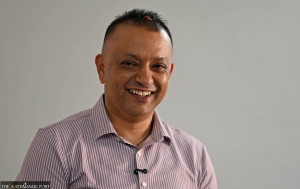
Most parties, in their election-focused manifestos, appear to have incorporated issues reflecting the spirit of the Gen Z movement. However, one of the movement’s leading voices, Raksha Bam, argues that it would be inaccurate to claim these agendas are a direct outcome of the uprising.
“Apparently, the political parties have addressed some of the concerns raised by our movement,” Bam said. “But many of the issues they are now presenting as election agendas were also raised in previous elections. So it would be incorrect to say that these purely resulted from the movement.”
She explains that the Gen Z movement called for multi-sectoral reforms in the country. While it is true that almost all political parties have now prioritised reform in their manifestos, she argues that these commitments have not been framed in ways that directly respond to the movement’s calls.
From institutional restructuring to corruption control and the promotion of good governance, political parties have placed reform-oriented issues high on their agendas. “Restructuring institutions, reducing corruption and good governance have been given priority by some parties, so we are positive to some extent,” she said.
According to Bam, the inclusion of the December agreement’s commitments is crucial to formally recognising the Gen Z movement and ensuring that the understandings reached with the interim government are not merely symbolic but carried through in practice.
“Though we tried to reach out to all the parties' manifesto drafting committees to internalise the agreement in their manifestoes, only two parties have acknowledged their agreement with the government.”
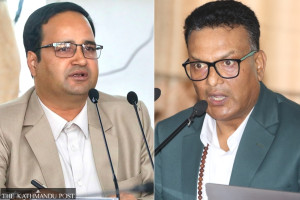
Political analyst Indra Adhikari observes that almost all political parties have incorporated the movement's issues into their election agendas.
Adhikari also notes that the movement, which erupted after restrictions on social media sites in Nepal, was a wave of debates on free speech, anti-nepotism trends, and demands for good governance and corruption control, among other issues. Today, she points out, issues such as ensuring accountable governance and controlling corruption have been taken up as key election issues by nearly all parties.
However, Adhikari stresses that raising these issues is only the first step; what matters most is how parties plan to implement them. She notes that, given the current structural limitations, it will be difficult for political parties to effectively address these concerns, despite their inclusion in manifestos.
“While parties have acknowledged the issues, they appear largely unprepared to make the structural reforms necessary for their proper implementation of those issues,” Adhikari said.
Amit Khanal, aka Urja, argues that political parties are attempting to use an election made possible by their movement as a stepping stone to power.
Khanal says that while some parties may appear to have addressed some of their demands through their political agendas, no party, in his view, has truly internalised the spirit of the Gen Z movement as a whole. Overall, he believes that the deeper values and aspirations behind the uprising have yet to be genuinely embraced by the political parties.
He further points out that even when the high-level investigation commission formed by the interim government to probe issues related to the Gen Z movement had prepared its report, the government refused to receive it, citing the elections as a reason. Instead, the government extended the commission’s term for a third time, ensuring that it would expire only after the election.
“Neither the traditional parties nor those branding themselves as 'new' political forces felt it necessary to raise their voices on this matter,” Khanal said. “In his view, this silence provides ample ground for doubt as to whether any of the parties can genuinely be said to have embraced the agenda and principles carried by the Gen Z movement.”
In the Gen Z-led protests of September 8 and 9, 2,213 people were injured while a total of 77 people lost their lives. The government has officially recognised 45 of them as martyrs.
On Thursday, Gen Z representatives submitted a memorandum to the government, urging it to publish the Karki Commission’s report on March 6, immediately after the March 5 election.




 14.82°C Kathmandu