Kailali-5 candidates’ promises focus on infrastructure, ignore climate crisis
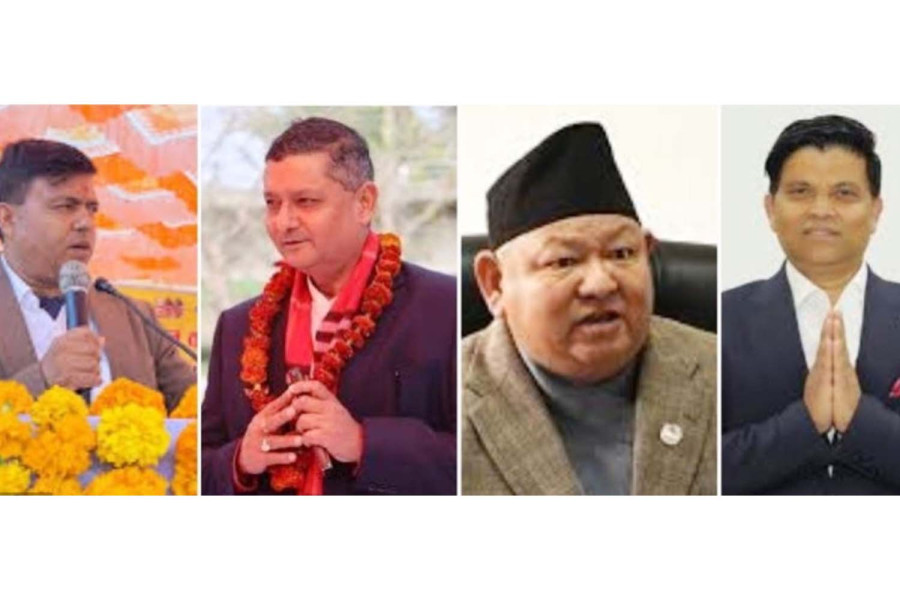
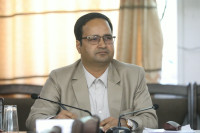
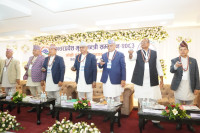
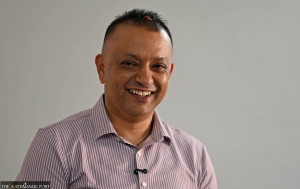
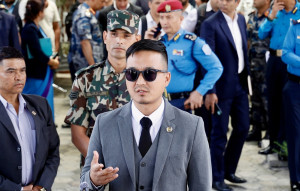
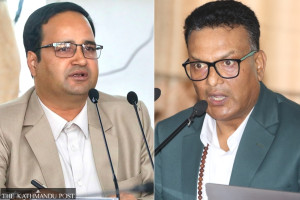
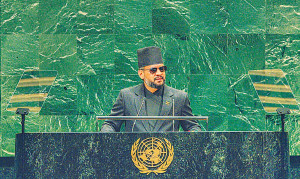
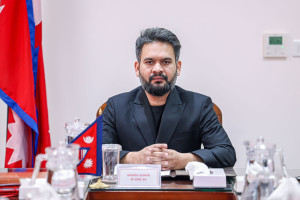
Funding, timelines, and key details are missing for Fapla Cricket Stadium and Dhangadhi’s upgrade to metropolitan city. (From left) Candidates for the March 5 House of Representatives elections, Naranarayan Shah of the Nepali Congress, Yagyaraj Dhungana of the CPN-UML, Anand Bahadur Chand of the Rastriya Swatantra Party, and Prem Ale of the Nepali Communist Party. Post file photos
As election campaigns heat up in Kailali Constituency 5, the political and economic hub of Sudurpaschim province, candidates are competing with ambitious pledges on health, education, sports and urban infrastructures. Amid promises to upgrade hospitals, build an international cricket stadium, and turn Dhangadhi into a metropolitan city, one issue is conspicuously absent—the climate crisis.
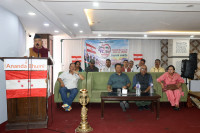
Centred in Dhangadhi Sub-Metropolitan City—Sudurpaschim’s only sub-metropolis and provincial headquarters—Kailali-5 has long attracted political attention. For the House of Representatives elections scheduled on March 5, fifteen candidates are in the fray, including Nepali Congress provincial general secretary Naranarayan Shah, CPN-UML Kailali chairman Yagyaraj Dhungana, three-time Doti lawmaker Prem Bahadur Ale of the Nepali Communist Party, public health campaigner Dr Anand Bahadur Chand of the Rastriya Swatantra Party (RSP), Rastriya Prajatantra Party’s Roshan Shahi, and Pyaralal Rana, who is an independent candidate and former member of the constituent assembly.
From bustling crossroads to tea shops across Dhangadhi, debates over development dominate. Most candidates have unveiled commitment papers, but their agendas show striking similarities. Nearly all have pledged the upgrade of Seti Provincial Hospital, the full operation of Shahid Dashrath Chand Health Sciences University and the construction of the long-promised Fapla International Cricket Stadium.
Congress candidate Shah has pledged to develop Seti Provincial Hospital into a specialised central-level health facility. UML’s Dhungana says he will lobby to bring the hospital under the federal government to ensure its upgrade. Ale has promised to initiate specialised services and establish a separate ward for sickle cell anaemia patients—an illness prevalent mostly in the Tharu community in western Tarai districts. Chand has proposed integrating the hospital and the university into a unified “health-education ecosystem”.
Health infrastructure has repeatedly featured in Sudurpaschim’s electoral discourse. Chronic staff shortages, inadequate equipment and delayed upgrades have paralysed Seti Hospital, which serves patients from remote hill districts as well as the plains. Voters complain that they have heard similar pledges for years.
“Since my childhood, we have been told that Fapla would become an international cricket ground. We are still waiting. Every election, it returns as a promise but remains unfulfilled,” said 32-year-old Khadak Raika of Dhangadhi.
The proposed Fapla International Cricket Stadium—often framed as a catalyst to brand Dhangadhi a “city of cricket”— has resurfaced as a flagship commitment. Ale has placed it at the top of his priorities, while candidates from the Congress, UML and RSP have also endorsed it prominently. Yet funding modalities and timelines remain unclear, fuelling scepticism among voters.
Another competitive pledge is to upgrade Dhangadhi into a metropolitan city. Shah and Dhungana have both vowed to pursue metropolitan status, arguing that it would unlock greater federal resources. Others speak of transforming Dhangadhi into a “smart city”. However, commitment papers are vague on meeting statutory criteria—population thresholds, revenue generation, infrastructure benchmarks—required for such an upgrade.
Candidates do differ in style and emphasis. Shah has promised to maintain a constituency secretariat in Dhangadhi to hear people’s grievances directly, claiming he will end the need for residents to travel to Kathmandu to resolve local issues. He has also pledged to press for the upgrade of Trinagar customs and to advance national pride projects such as West Seti Hydropower.
Dhungana highlights digital infrastructure—expanding internet access in schools and health facilities—and extending health insurance coverage to private hospitals. Ale’s campaign appears project-driven: extending Dhangadhi Airport’s runway to 2,500 metres from existing 1,800 metres, building sports infrastructure, and strengthening specialised health services.
Drawing on his public health background, Chand advocates introducing AI, robotics, and data science into education and linking the Geta-based university with Seti Hospital. He has also proposed integrating the Tharu community’s traditional ‘Bhalmansa’ [traditional village leader] governance system into local administration and promoting Tharu cultural branding.
Kailali-5 comprises a mixed population of Tharu, Rana Tharu and hill-origin communities and electoral campaigns reflect these social dynamics. Some candidates appear to target urban, hill-origin voters concentrated in market areas, while others foreground indigenous and marginalised issues.
Climate change issue overlooked
As all the candidates focus on development, climate change—a pressing concern in Sudurpaschim—has received little or no attention at all. Situated in Tarai plain, Dhangadhi is prone to flooding; even moderate rainfall inundates large swathes of the city. Thousands of families are displaced annually by floods and waterlogging.
Although candidates have spoken about improving drainage systems and constructing embankments, none have addressed the deeper structural issues such as the exploitation of the Chure hills, soil erosion and the need for long-term climate adaptation strategies. Similarly, while mechanisation in agriculture and the supply of fertilisers feature in their agendas, there is little clarity on how they plan to tackle declining agricultural productivity, the impact of climate change on crops and the alarming drop in groundwater levels.
Another pressing concern is that Dhangadhi has, in recent years, ranked among Nepal’s hottest cities during summer. Yet the candidates’ commitment papers offer no concrete plans to mitigate rising temperatures through urban forestry, preservation of open spaces, promotion of green transport, or investment in renewable energy.
Asked why climate issues were marginal in his party’s commitments, Dr Chand acknowledged the gap. “The climate crisis is indeed one of the biggest challenges of our time,” he said at a manifesto event. “We had considered including it more explicitly. But due to the lack of research and clear data specific to Sudurpaschim, it did not receive the attention it deserves.”




 17.48°C Kathmandu