Upendra Yadav faces fresh test of strength in Saptari
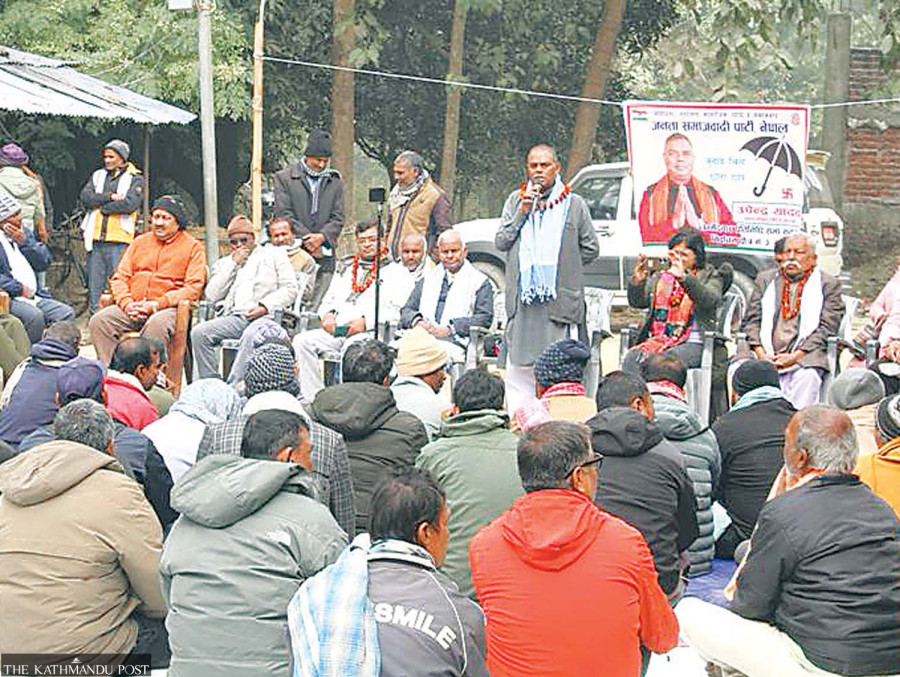
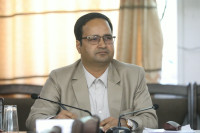
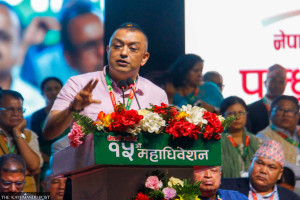
This election is widely viewed as a decisive test of Yadav’s influence in Madheshi politics. JSP-N chair Upendra Yadav delivers a speech during his party’s campaign event, Wednesday. Post Photo
Upendra Yadav, chairman of Janata Samajbadi Party Nepal (JSP-N), is once again seeking to prove his political relevance in Saptari, returning to the district where his electoral fortunes have fluctuated over the past two parliamentary polls.
Yadav, who was elected from Saptari constituency 2 in the 2017 House of Representatives election with 21,620 votes under the banner of the then Sanghiya Samajbadi Forum Nepal, had back then contested in alliance with the Rastriya Janata Party Nepal. However, in the 2022 general election, he lost the same constituency to Janamat Party’s CK Raut, who secured 35,042 votes. Yadav, contesting with the support of the CPN-UML, garnered 16,979 votes.
After that defeat, Yadav entered the parliament through a by-election held in Bara constituency 2 in 2023. The by-election was conducted after Ram Sahaya Prasad Yadav, who was elected from the constituency, was elected vice-president. Backed by the then ruling coalition comprising the Nepali Congress, CPN (Maoist Centre), CPN (Unified Socialist) and Loktantrik Samambadi Party, Yadav returned to the federal legislature with a thumping margin.
Now, Yadav has shifted to Saptari-3, setting up a high-stakes contest in a constituency with 111,871 registered voters spread across Shambhunath and Dakneshwari municipalities and Rupani and Bishnupur rural municipalities.
In the 2022 election, Dinesh Kumar Yadav of the Nepali Congress was elected from Saptari-3 with 26,166 votes, defeating UML candidate Tarakant Chaudhary, who secured 22,300 votes. Anish Ansari of the Janamat Party received 15,114 votes.
Under the proportional representation system, Janamat Party emerged as the largest party in Saptari-3 with 18,340 votes, followed closely by the Nepali Congress with 18,249. The Janata Samajbadi Party Nepal received 10,153 votes; when combined with votes secured by the then Loktantrik Samajbadi Party, now united with JSP-N, the total reached 11,799.
Local political observers say these figures indicate a fragmented electorate. “No single party can claim dominance here,” said a political science lecturer in Rajbiraj, requesting anonymity. “Yadav’s entry has made the race triangular, if not quadrangular.”
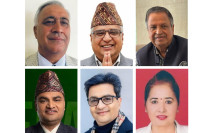
In 2017, Chandrakant Chaudhary of the then Rastriya Janata Party won the seat in Saptari-3 with 22,484 votes under a Madheshi alliance that included Yadav’s party. This time, his son Amarkant Chaudhary is contesting from the Rastriya Swatantra Party, while Tarakant Chaudhary, his brother, is also in the fray. Dinesh Kumar Yadav is seeking re-election, and Surendra Prasad Sharma represents the Janamat Party among 22 candidates.
Despite JSP-N winning 14 wards of total 41 across the constituency—more than any other party—local voters say electoral arithmetic may not translate into automatic support. Residents cite stalled infrastructure projects, including the Kathona-Pato-Phattepur–Kataiya and Gaighat-Shambhunath-Banainiya road sections, along with concerns over healthcare, education and employment. “We want roads completed and jobs for our youth, not just speeches,” said a farmer in Bishnupur.
For Upendra Yadav, this election is widely viewed as a decisive test of his influence in Madheshi politics. Whether his organisational base and past alliances can outweigh anti-incumbency sentiment and demands for generational renewal will become clear when Saptari’s voters cast their ballots.




 14.21°C Kathmandu