Salyan, long dominated by the Nepali Congress, CPN-UML and the Maoists from 1991 to 2022, is witnessing a more crowded contest this time, with candidates from newer parties adding fresh competition.
Fourteen candidates are contesting the House of Representatives election scheduled for March 5. They include Keshab Bahadur Bista of the Nepali Congress, Gulab Jang Shah of the CPN-UML, Ramesh Kumar Malla of the Nepali Communist Party, Lalit Kumar Chanda of the Rastriya Swatantra Party, Anisha Nepali of the Rastriya Prajatantra Party, Chandra Bahadur Khadga of the Biplav-led CPN (Maoist), Kamala Dangi of Rastriya Janamorcha, independent candidate Dhruva Raj Oli, and Dilli Bahadur Gharti of National Republic Nepal.
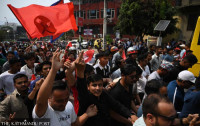
The RSP, independent, Maoist and RPP candidates are expected to split votes traditionally secured by the three major parties, adding pressure to established contenders. Party leaders, cadres and candidates have intensified campaigning, forming election mobilisation committees and conducting door-to-door outreach with a range of promises.
Major parties are also trying to induct leaders and cadres who have defected in recent years. Candidates from the Congress, UML and Nepali Communist Party claim organisational strength and vote counts from the 2022 proportional and first-past-the-post elections put them in a strong position.
However, the changed political mood following the Gen Z movement has raised concerns about eroding political legacies. To counter this, parties have increased their use of social media and set up digital information desks.
Nepali Communist Party candidate Ramesh Kumar Malla said dissatisfaction with previously elected leaders and the presence of new candidates have made the race tougher. He said campaigners have stepped up accordingly.
Chandra Bahadur Khadga, once in the same party as Malla and now a Maoist candidate, said despite multiple challenges, he was confident of victory as the CPN (Maoist Centre) and the CPN (Unified Socialist) have merged into a party, while the Congress and UML are competing separately.
CPN-UML Salyan district chair Bhim Bahadur Sen said the political atmosphere has changed compared to past elections, increasing competition. He said the party remains active and confident, citing the UML’s lead of over 22,000 votes in the proportional category in the 2022 election.
Nepali Congress candidate Kesh Bahadur Bista said party leaders and cadres remain united to protect their political legacy. He acknowledged that RSP, independent and RPP candidates may draw some votes but insisted the overall environment is more favourable than in 2022.
Prakash Jwala of then CPN (Unified Socialist) won with 35,707 votes in the 2022 general elections, defeating Rajendra Bahadur Shah, an independent candidate, who secured 19,792 votes. UML and Rastriya Swatantra Party came third and fourth, respectively. Congress and then CPN (Maoist Centre) supported Jwala, who is not in the race this time.




 24.12°C Kathmandu