Tanahun-1 heads to polls with a history of changing choices
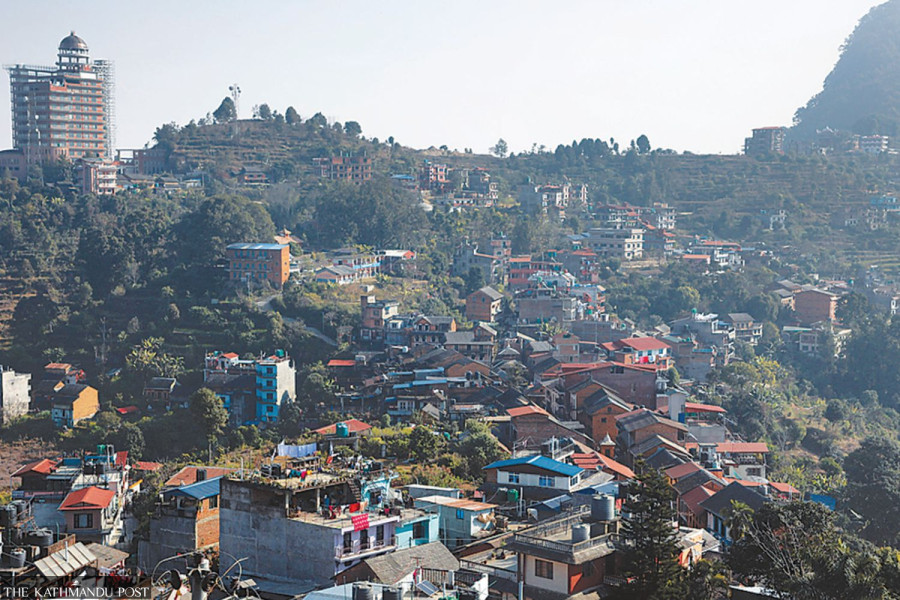
Sixteen candidates, including last-elected Swarnim Wagle of the RSP, are contesting the seat as voters weigh performance and local issues. An overview of the Bandipur area and its surroundings in Tanahun, in this recent photo. POST PHOTO
A look back at the electoral history of Tanahun constituency 1 shows a striking pattern—voters here rarely repeat their choices. Since the 1991 general elections, eight parliamentary elections have been held in the constituency and the voters have consistently elected new faces from different parties except in the mid-term poll in 1994 and general election in 1999.
That reputation for unpredictability is looming as Tanahun-1 gears up for another election, with residents weighing frustration with old parties against disappointment with newer political forces.
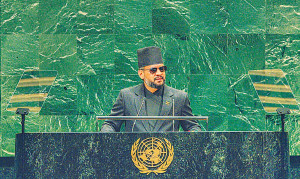
In the 2022 general election, people elected Nepali Congress candidate Ramchandra Paudel, the current President of the country, from Tanahun-1. Paudel, a native of Byas Municipality-33 in the same constituency, vacated the seat after assuming the presidency. In the April 2023 by-election the voters overwhelmingly backed Swarnim Wagle of the Rastriya Swatantra Party (RSP), sending him to the House of Representatives with a landslide margin that stunned the traditional parties.
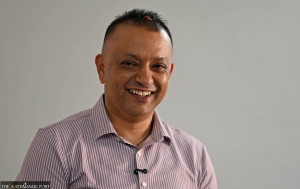
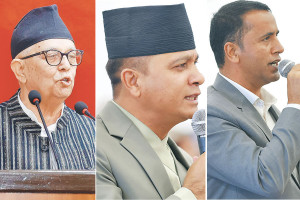
Now, less than three years on, Wagle, 51, is again contesting from Tanahun-1 in the upcoming election scheduled for March 5. Sixteen candidates are in the fray, including Nepali Congress’ Govinda Bhattarai, aged 62; CPN-UML candidate Bhagwati Neupane, 49; Nepali Communist Party candidate Bidyanath Dhakal, 65; and independent contender Dipak Raj Joshi, 56. Locals say the established parties are struggling to defend their legacies, while Wagle faces the challenge of retaining the credibility he built during the by-election.
Constituency 1 of Tanahun, a hill district of Gandaki province, has not produced the same parliamentarian twice since 1991, except during the 1994 and 1999 elections when Nepali Congress leader Govinda Raj Joshi won three consecutive parliamentary elections. Then CPN (Maoist) leader Suresh Ale Magar emerged victorious in 2008 Constituent Assembly (CA) elections while Congress’s Shankar Bhandari won in the second CA elections held in 2013. In 2017, UML candidate Krishna Kumar Shrestha defeated Paudel under the then left alliance.
Paudel’s political stature looms large over the constituency. A six-time lawmaker, five-time minister and former Speaker, he became Congress parliamentary party leader in 2008 and the country’s President in February 2023. His long career, marked by repeated arrests during the democratic movement and years in prison, has given the Congress a deep emotional connection in Tanahun. Yet locals say that legacy alone no longer guarantees votes. “Congress once dominated here, but since 2008 it has alternated between victory and defeat,” said a local party worker in Byas.
In the 2022 elections, Paudel obtained 25,361 votes, defeating UML’s Ek Bahadur Rana Magar, who polled 19,981. Independent Govinda Raj Joshi, rebelling against the Congress, received 6,886 votes, while RSP’s Bikash Sigdel garnered 6,044. The April 2023 by-election, however, completely overturned the picture. Wagle won with 34,919 votes, defeating Congress candidate Bhattarai by nearly 15,000 votes. UML-backed former police chief Sarbendra Khanal finished a distant third.
Many locals attribute Wagle’s victory to widespread voter disillusionment with the Congress, UML and the Maoists, as well as quiet support from the Joshi faction. Yet disappointment has grown since then. “People voted for change, but after winning, Wagle did not return enough,” said Ram Krishna Bishwakarma, who runs an eatery in Bandipur. “Now there is a feeling that he too turned out like the others.”
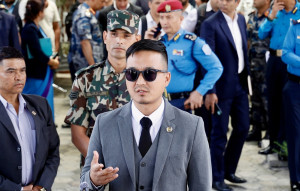
The political equation has shifted again. The former Maoists who are now under the Nepali Communist Party, are contesting independently, fielding Dhakal, a leftist leader from Bhanu Municipality. UML has nominated Neupane, a former federal affairs minister who is also from Bhanu Municipality, while Congress has again picked Bhattarai, considered well-connected at the local level. Joshi’s son Dipak Raj is running as an independent, drawing on an estimated 5,000 votes loyal to the Joshi camp.
RSP leader Wagle, a former vice-chairman of the National Planning Commission and foreign-educated economist, insists that national momentum is on the RSP’s side. “I have just begun meeting voters. There is a positive atmosphere for the RSP at the national level, and the people of Tanahun are also very hopeful about us,” he said. “I am enthusiastic. The number of votes may vary slightly compared to last time, but the situation is not challenging.” He added that he plans to carry out election campaigning in all 42 wards of the constituency.
Acknowledging complaints about his failure to visit his constituencies, he promised to visit all 42 wards during the election campaign. “People want good governance, roads, drinking water, education and health services. We can deliver,” he said, pledging to focus on domestic employment so youths are not forced abroad.
Voters in the constituency appear largely dissatisfied with their elected representatives, from President Paudel to Wagle. Local residents say their frustration with leaders elected from the Congress, the UML and the Maoists pushed them to vote for the RSP candidate, but they now complain that Wagle did not return to the constituency after winning and failed to adequately address local concerns.
Supporters of Wagle, however, argue that he has been a member of Parliament for barely two years and therefore did not have sufficient time to deliver tangible results. They claim that if re-elected, Wagle would serve as finance minister in a future government led by RSP leader Balen Shah and contribute significantly to the district’s development.
At the grassroots, uncertainty dominates. Chandrika BK, a women’s group leader from Dharapani in Bandipur, said she remains undecided. “We voted for the Congress, UML, Maoists and even the RSP. Nothing really changed,” she said. “There is no work in the village, prices are rising, youths are going abroad. Leaders talk big, but no one delivers.”
Similar sentiments were echoed by Bhunti Maya Magar, 72, who complained that beyond old-age allowances, elected leaders had done little. “They promised drinking water, but taps were built without water. I don’t know whom to trust anymore,” she said.
Opposition candidates label Wagle a “tourist candidate” from neighbouring Gorkha who failed to address local concerns. But RSP supporters counter that the party has rapidly expanded its organisation, unsettling older parties. “Earlier only Congress, UML and Maoists were active here. Now the RSP has a strong presence,” said Khadga Bahadur Thapa, a homestay operator in Ramkot.
Tanahun-1 includes Devghat, Anbukhaireni and Bandipur rural municipalities, Bhanu Municipality and wards 1, 2, 3, 4, 7, 8, 9, 10, 11, 12, 13 and 14 of Byas Municipality, with 136,882 registered voters. Traditional parties still maintain networks in all wards, but RSP claims organisational reach across the constituency.
For many voters, basic services matter more than party labels. Binod Gandharva, a 30-year-old sarangi maker from Bhanu, said people want hospitals, affordable education, jobs and drinking water. “There is no good hospital. We have to go to Pokhara or Kathmandu for treatment,” he said. “We need leaders who understand this urgency.”
Congress candidate Bhattarai believes voter sentiment has swung back. “Many now feel the experiment failed,” he said, claiming alliances would help Congress reclaim the constituency. UML’s Neupane, meanwhile, said her roots in Tanahun and experience in lawmaking would win voters’ trust.
As campaigning intensifies, Tanahun-1 once again reflects Nepal’s wider political churn. From Paudel to Wagle, voters here have repeatedly signalled impatience with unmet promises.




 24.79°C Kathmandu