Gagan Thapa takes on Madhesh gamble in Sarlahi-4 as old rivalries resurface
By choosing a constituency Congress lost in 2022, party president Thapa has stepped into a politically charged terrain shaped by factional feuds, identity politics and a history of electoral violence.
During the 2022 House of Representatives election, Sher Bahadur Deuba was leading the Nepali Congress. At the time, general secretary Gagan Thapa pushed to field economist and former National Planning Commission vice-chair Swarnim Wagle as the party’s candidate. Thapa was ready to vacate his long-held Kathmandu-4 seat to make room for Wagle and planned to contest from Sarlahi-4 instead.
Deuba rejected the proposal. He awarded the Kathmandu-4 ticket to former Nepal Students’ Union president Nain Singh Mahar. When Thapa’s supporters learnt that Mahar had collected the ticket from the Prime Minister’s official residence in Baluwatar, they stepped in, blocking him from filing his nomination papers. Thapa eventually stayed in Kathmandu-4. The date was October 9, 2022.
Nearly three years and four months later, the positions have flipped.
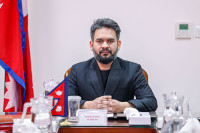
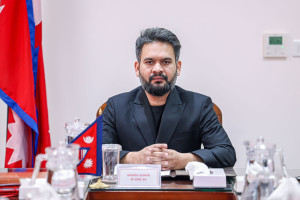
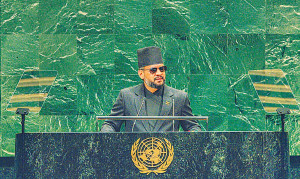
Thapa is now the Nepali Congress president. Mahar has been given the Congress ticket from Dadeldhura, Deuba’s long-held constituency. Thapa, now free to decide his own electoral ground, has moved to Sarlahi-4.
The episode underlines how power shifts within the party have quietly redrawn political equations.
Before the special general convention, recommendations from all constituencies had already arrived in Congress. Thapa received recommendations from six: Terhathum, Dhankuta, Sarlahi-4, Kathmandu-4, Kapilvastu-1 and Rolpa. After the party’s central working committee projected him as a future prime ministerial candidate, the election atmosphere intensified, particularly in Sarlahi-4.
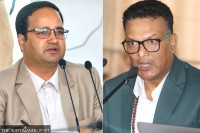
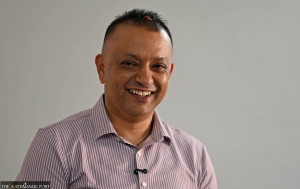
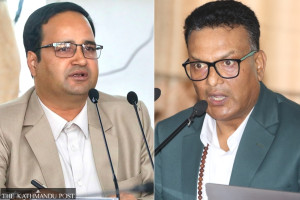
First elected under proportional representation in 2008, Thapa has since won three consecutive elections from Kathmandu-4. In Sarlahi-4, he faces Amresh Kumar Singh, a three-time winner from the same constituency. Amresh lost in 2008 but won in 2013 and 2017 as a Congress candidate. In 2022, despite being an aspirant, he was denied a ticket by both the district and the centre. He contested as an independent and defeated the Congress–Maoist alliance. This time, he is contesting from the Rastriya Swatantra Party.
Thapa’s decision to contest from a constituency Congress failed to win in 2022 has drawn attention beyond Sarlahi. Born in Solukhumbu and raised in Kathmandu, his choice of what is often described as ‘core Madhesh’ is politically risky. No candidate of hill origin has previously emerged as a prime contender from this constituency.
In the 2022 election, Congress failed to win any of the four constituencies in Sarlahi. Amresh won Sarlahi-4 with 20,017 votes, while Congress candidate Nagendra Kumar received 18,253. Congress had the backing of the Maoist Centre and the CPN (Unified Socialist) at the time. In 2017 as well, the margin was narrow. Amresh won with 29,675 votes, while Rastriya Janata Party candidate Rakesh Kumar Mishra secured 28,136.
Thapa says he chose Sarlahi to develop a national outlook. “As party president, I must think nationally. I am from the hills and grew up in Kathmandu. Without immersing myself in Madhesh and understanding its realities, I cannot grasp the country as a whole,” he told the Post. Acknowledging the risk, he said the decision was taken with full awareness of the challenge.
He says party colleagues had been urging him since the previous election to contest from Sarlahi. Some observers, however, point to internal rivalries involving Congress leaders Surendra Singh, Birendra Singh and Amresh, then Congress leader. Birendra Singh is the vice-president of Congress Madhesh Province. Even when Amresh won as a rebel candidate in 2022, Birendra was elected to the provincial assembly from Sarlahi-4 (1) and later became a provincial minister. His elder brother, Surendra, the district president since 2021, resigned last September after being convicted in a corruption case by the Supreme Court. When constituency committees submitted recommendations this time, both Gagan Thapa and Birendra Singh were proposed.
Amresh rose to prominence after the 2006 People’s Movement. He said he entered politics inspired by BP Koirala and Girija Prasad Koirala. While pursuing a PhD at Jawaharlal Nehru University in India, he built links with the Indian establishment and later grew close to the Koirala family. He was active as a backchannel negotiator during the peace process and was considered close to Mahanta Thakur and Krishna Sitaula. He was among the 10 Congress members nominated to the interim parliament in 2007. He contested the 2008 Constituent Assembly election but finished third.
Sarlahi-4 has also been home to veteran leader Thakur. He won elections in 1991, 1994 and 1999 from the then Sarlahi-5. By 2008, he had left Congress and formed the Tarai–Madhesh Democratic Party. After constituency restructuring, he contested from Sarlahi-6 and lost, later shifting his political base to Mahottari.
The 2008 election was particularly violent. Both Thakur and Amresh were defeated byShiva Pujan Raya Yadav of the Madheshi Janadhikar Forum. Yadav secured 15,688 votes, while Thakur received 15,416 and Amresh 11,971. Booth-capturing attempts and explosions marked the poll. An explosion outside the Gadhaiya polling station killed Amresh’s brother, Shambhu Singh. Amresh accuses Shiva Pujan of orchestrating the killing, while Shiva Pujan claims Shambhu died when a bomb he was carrying exploded.
Shiva Pujan was later suspended over misuse of a diplomatic passport and has not returned to parliament since, though he remains politically active. In 2022, his daughter Madhumala Kumari Yadav contested as an independent and finished third with 14,622 votes. This time, she is again an independent candidate, while his 27-year-old son Amnish Kumar is contesting from the UML. Shiva Pujan says fielding both children provides tactical flexibility during the campaign.
Shiva Pujan’s father, Amiri Raya Yadav, was the pradhanpancha of the then Gadhaiya village panchayat during the Panchayat era. He later won the 1992 local elections as a Congress-backed VDC chair. Shiva Pujan’s youngest son, Rajababu Yadav, is currently the chair of Ramnagar Rural Municipality. Shiva Pujan claims his other son, Amnish Kumar, a House of Representatives candidate, has an edge among voters because he represents Gen Z.
Initially, the UML had awarded the ticket to Rabi Shankar Kushwaha. On the day of nomination, however, the party replaced him with Amnish Kumar, a move that has left some UML leaders and cadres disgruntled. In the previous election, the UML had supported the Janata Samajbadi Party in the direct contest. JSP candidate Rakesh Kumar Mishra secured only 5,813 votes, while the UML received 9,471 votes under the proportional representation system.
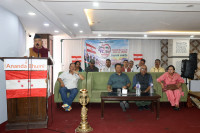
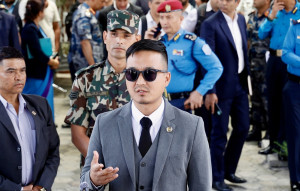
Amid the power struggle between Amresh and Shiva Pujan, the entry of Congress president Thapa has further complicated the contest in Sarlahi-4. Thapa filed his nomination through a representative and began his campaign in Sarlahi on Monday. Launching his campaign from ward 2 of Dhankaul Rural Municipality, he said he was there as a son of the soil, not as a leader.
Thapa says he chose Sarlahi-4 with a focus on improving education in Madhesh, developing an information technology–based education system and creating opportunities within the country. He says he has come with the confidence that the language and culture of the region will inspire him and that he can win with the trust of Madhesh.
On the same day Thapa arrived in Sarlahi, Amresh was campaigning in Manpur village. A day before filing his nomination, Amresh joined the RSP. He also courted controversy after saying he would self-immolate if senior leader Balendra Shah did not become prime minister.
Amresh has frequently drawn attention for controversial statements and actions. On April 28, 2023, he protested by removing his shirt after the Speaker didn’t allow him to speak in the lower house. He is known for speaking openly on Madhesh rights, farmers’ issues and corruption.
Elected as an independent in the previous election, Amresh is contesting this time under the RSP banner. In the 2022 election that Amresh won as an independent from Sarlahi-4, the RSP candidate lost his deposit amount. RSP’s Dhiraj Thakur received only 306 votes, while the party secured 1,199 votes under proportional representation.
Several long-time aides who once formed the backbone of Amresh’s political organisation—Ramesh Singh, Manoj Mohan Prasad Singh, Kamleshwar Sinha, Dinesh Kushwaha, Shyam Sah and Sitaram Singh—are no longer with him. Kamleshwar Sinha, once a key supporter of Amresh, has now openly aligned with Gagan Thapa. “We were the ones who worked day and night to make Amresh win in the past,” Sinha said. “Now he has no one with him. He has weakened.”
For this reason, Shiva Pujan believes Amresh is weaker this time. “If his aides return to Amresh, the result could again tilt in his favour,” he said. “But times have changed. Had he not joined the Rastriya Swatantra Party, he would have been politically wiped out.”
Sarlahi-4 includes 11 wards of Balara Municipality, 12 of Godaita Municipality, four of Bishnu Rural Municipality, three of Basbariya Rural Municipality, seven of Ramnagar Rural Municipality, seven of Dhankaul Rural Municipality and seven of Barahathawa Municipality. Bishnu Rural Municipality is led by Congress chair Jawaharlal Yadav. Godaita Municipality was won by Devendra Kumar Yadav of the Loktantrik Samajwadi Party, who has since joined JSP-Nepal. Balara Municipality is led by Ram Shankar Prasad Kushwaha, elected from the then Maoist Centre.
Ramnagar Rural Municipality is chaired by Rajababu Yadav, Shiva Pujan’s youngest son. Dhankaul Rural Municipality chair Ramashray Sah was elected from Congress. Basbariya Rural Municipality chair Ramsinghasan Raya is affiliated with JSP. Barahathwa Municipality mayor Kalpana Kumari Katuwal was elected from the UML.
Congress Madhesh Province vice-president Birendra Singh claims victory is assured, citing the return of nearly 2,000 party cadres who had previously left Congress. “The chair of Dhankaul Rural Municipality is from Congress. In Balara Municipality, ward chairs in wards 1, 3, 4, 5, 7 and 8 are all from Congress,” he says. “That gives us a strong base.”
Located in the south-western part of the district, Sarlahi-4 has a majority Madheshi-origin electorate. Of the 121,012 registered voters, ethnic composition plays a decisive role. The Yadav and Dalit communities form the largest groups, followed by Rajput (Singh), Brahmin, Kushwaha and Muslim communities. In every election, there is intense competition to consolidate caste-based votes.
Several national leaders have suffered defeats in Sarlahi. Former UML chair and prime minister Jhalanath Khanal lost from Sarlahi-1 in the 2013 Constituent Assembly election. Former Rastriya Prajatantra Party chair and prime minister Surya Bahadur Thapa lost from Sarlahi-2 in 1994. Sadbhawana Party founder Gajendra Narayan Singh, born in Saptari, also lost from Sarlahi-5 in the 1999 HoR elections. Even Thakur was defeated in Sarlahi after becoming chair of the Tarai–Madhesh Loktantrik Party.
Local youth Jagdish Singh says Amresh’s entry into the RSP and the appeal of Balen Shah have tilted youth support towards the bell symbol. “I think Amresh will still secure a respectable vote share,” he says. “Congress president Thapa is also popular among both young and older voters. Since he has been projected as a future prime minister, there is strong public sentiment to ensure he wins from this constituency.”
Sarlahi has long been considered highly sensitive from a security perspective. Earlier elections were marked by bomb explosions aimed at intimidating voters and attempts at booth capturing. However, resident Raj Kishor Yadav says no violent incidents have been reported since 2013. “Don’t even talk about the old elections,” he says. “There was nothing but bombs and fear. Times have changed. People are more aware now, and recent elections have seen voters cast ballots without fear.”
District Police Chief Superintendent of Police Yogendra Kumar Khadka says security arrangements will be robust. “We will not allow any untoward incidents under any circumstances. There will be no compromise on security,” he says.
According to the National Statistics Office, Sarlahi has the lowest overall literacy rate among the 21 Tarai–Madhesh districts, at 39.5 percent. While the Hulaki Highway has provided some relief, internal roads remain in poor condition.
Sarlahi-4 begins about 14 kilometres south of the East–West Highway. The Bagmati River separates the constituency from Rautahat district. During the monsoon, flooding and river erosion often cut off villages from transport links.
Resident Sukaiya Devi Paswan says the Bagmati River is both a blessing and a curse. “The river helps with irrigation, but every year erosion and flooding cause massive damage,” she says. In every election, candidates campaign on promises to address flooding, inundation and erosion. This time is no different.
Until the 1990s, most villages in the area depended heavily on India, as access to the district headquarters was difficult. Over the past decade, roads and electricity have improved, but challenges remain acute in education, healthcare, agriculture, poverty and unemployment.
A large proportion of young people have migrated to third countries for work. Government schools and health posts are poorly equipped, and residents still have to travel to Janakpur or Birgunj for quality medical treatment.




 18.13°C Kathmandu