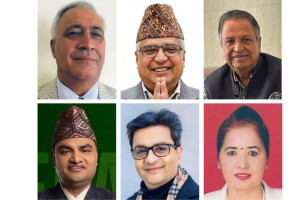
The alliance of Nepali Congress and CPN-UML swept the National Assembly elections held for a third of its total seats on Sunday.
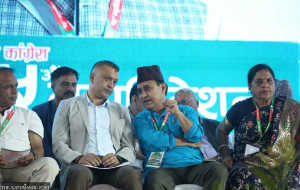
In the predictable poll, the Congress won all nine seats it contested, while the UML registered victory in eight. One seat went to the Loktantrik Samajbadi Party Nepal (LSP-N). The Congress and UML had supported LSP-N chair Mahantha Thakur, who contested from the Madhesh province.
Among the 19 seats that are becoming vacant on March 4, the Election Commission conducted elections for 18. Voting was held for 17 positions as Sunil Bahadur Thapa, a Congress candidate from Koshi, was elected unopposed. President Ramchandra Paudel, on the recommendation of the government, will nominate one member.
According to records at the parliament secretariat, the highest number of retiring lawmakers (eight each) are from the UML and the Nepali Communist Party (NCP). One member each from the Janata Samajbadi Party and LSP-N are also retiring in March after completing their six years of tenure. Bamdev Gautam, who was appointed by the President, is also retiring two months later. The Congress, which is the second-largest party in the upper house, however, has no lawmakers retiring.
As many as 44 candidates from different parties had contested the elections, which had become a formality following the alliance between the two prominent parties that command a comfortable majority across provinces. Upper house members are elected by an electoral college of provincial assembly members and the chief and their deputies from local units.
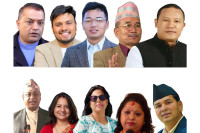
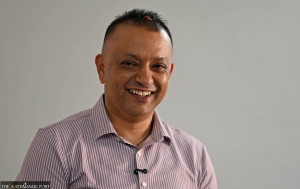
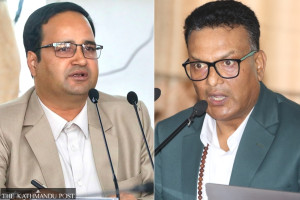
As per results published by the commission, along with Thapa, Dharmendra Paswan, Ranjit Karna, Gita Devkota, Jagat Timilsina, Basudev Jangali, Chandra Bahadur KC, Lalit Jung Shahi and Khamma Bahadur Khati have been elected from the Nepali Congress.
Likewise, Roshni Meche, Somnath Portel, Rekha Kumari Jha, Samjhana Devkota, Ram Kumari Jhankri, Meena Singh Rakhal, Leela Kumari Bhandari and Prem Dangal have been elected from the UML. Thakur made it to the House at the age of 83.
The Congress snatched the top spot from the Nepali Communist Party (NCP), which failed to win a single seat. The grand old party now holds 25 seats, up from 16. The NCP, despite losing eight seats, remains ahead of the UML to stay in the position with 16 seats. With 10, the UML remains in third.
With Sunday’s result, the Congress and UML jointly command close to two-thirds majority in the upper house. The two parties jointly have 35 seats. As Anjan Shakya, who made it to the upper chamber through presidential nomination, is considered close to the UML, the two-party alliance will command 36 seats—three short of the two-thirds majority of 39.
The pre-poll alliance between the two old parties was forged before the Congress special general convention when Sher Bahadur Deuba was the party president. Even though the Congress, the UML and the NCP were in intense negotiations over seat-sharing, it couldn’t materialise after the Congress and UML refused to allocate four seats to the NCP.
The UML and Congress, however, are contesting the March 5 elections against each other as newly appointed party president Gagan Thapa has been vocal against electoral alliance.
The Rastriya Swatantra Party, the fourth largest party in the dissolved House of Representative, did not contest the upper house election in the absence of voters. Also, the party had not contested previous provincial and local elections leaving it with no voters in the electoral college.
Not having representation in the upper house means the party will have a tough time getting bills endorsed even if it wins majority seats and forms the government—or leads the government as the largest party—after the March 5 polls.
Every bill needs to be endorsed by a majority vote from both the Houses of the federal parliament to become a law. The RSP, which says it will form the government after the upcoming elections, will have to take old parties into confidence to have the law it wants.
“Even though the new parties are reluctant to acknowledge the so-called old parties, they have little choice but to collaborate and cooperate with them, even when they are in a position to form the government,” said Sanjeev Humagain, who teaches PhD students at Tribhuvan University and Nepal Open University. “The composition of the National Assembly clearly reflects this.”
Binod Ghimire covers parliamentary affairs and human rights for The Kathmandu Post. Since joining the Post in 2010, he has reported primarily on social issues, focusing on education and transitional justice.




 14.81°C Kathmandu