Four ex-prime ministers trying their luck in March election
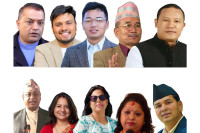
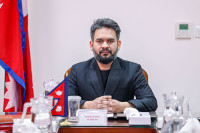
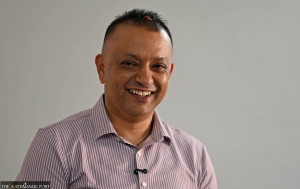
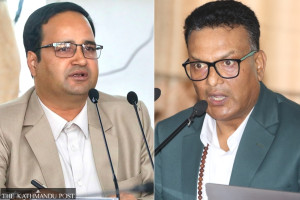
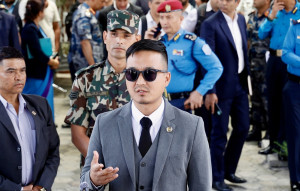
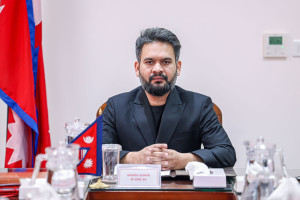
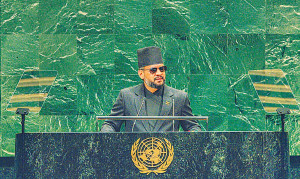
Baburam Bhattarai, KP Sharma Oli, Pushpa Kamal Dahal and Madhav Kumar Nepal contest from Gorkha, Jhapa, Rukum East and Rautahat, respectively. From left, Baburam Bhattarai, KP Sharma Oli, Madhav Kumar Nepal and Pushpa Kamal Dahal.
Nepal’s election arena has become markedly crowded with ‘experience’- though widely criticised- as four former prime ministers have stepped into direct electoral contests from different parts of the country—Jhapa, Rautahat, Rukum East and Gorkha—adding weight and complexity to the upcoming polls.
Former prime minister Baburam Bhattarai, who publicly announced his retirement from active politics last September, has returned to the electoral battlefield from Gorkha–2.
After handing over leadership of the then Nepal Samajwadi Party (Naya Shakti) to Durga Sob and declaring his intention to focus on policy research and intellectual engagement for the national interest, Bhattarai soon found himself drawn back into political manoeuvring. He played a role in efforts to build a progressive democratic party by bringing together figures such as former Maoist deputy general secretary Janardan Sharma and Rastriya Swatantra Party’s former chief whip Santosh Pariyar.
As elections approached, Bhattarai appeared to set aside his earlier pledge and re-entered electoral politics, citing 'public demand' from voters in Gorkha–2. Contesting on behalf of the Progressive Democratic Party, he faces stiff competition from the Nepali Congress, CPN-UML, Nepali Communist Party and the Rastriya Swatantra Party. A three-time election winner—from the first and second Constituent Assemblies and the 2017 general election—this marks his fourth direct contest.
Explaining his candidacy, Bhattarai has outlined five key reasons, including the need to safeguard national independence, sovereignty and territorial integrity amid shifting geopolitics; to play a conciliatory and guardian-like role as internal party conflicts threaten the federal democratic republic; and to contribute to necessary constitutional amendments as one of the principal architects of the constitution, particularly in the context of a rising “Gen-Z” dissent and a decade since the constitution’s promulgation. He has already launched door-to-door campaigning, beginning his bid after receiving tika and prasad from the chief priest of the Gorakhnath temple in Gorkha.
Bhattarai is not alone. Former prime minister and UML chair KP Sharma Oli is once again contesting from Jhapa, a constituency he has represented since 1991, suffering defeat only once—in the 2008 Constituent Assembly election to Maoist candidate Bishwadeep Lingden. This time, Oli faces a high-profile challenge from Rastriya Swatantra Party senior leader and former Kathmandu mayor Balen Shah. A three-time prime minister, Oli has been projected by the UML as a future prime minister once again, but the contest is expected to be fiercely competitive, particularly amid lingering criticism following his resignation under pressure from youth-led movements.
Another experienced man in constant electoral motion is former prime minister Pushpa Kamal Dahal, coordinator of the Nepali Communist Party. Having won four elections since 2008 and served three terms as prime minister, Dahal has contested from constituencies including Kathmandu–10, Rolpa–2, Siraha–5, Chitwan–3 and Gorkha–2. This time, he has chosen Rukum East, a former stronghold of the Maoist armed struggle, considering it comparatively less challenging. Contesting with a new party name and election symbol after uniting with around 20 parties and groups, Dahal has suggested that this could be his final direct election.
Describing his candidature as historic, Dahal said his electoral journey—from Rolpa to Rukum—symbolised pride, recalling the revolutionary meetings held in Rukum East that paved the way for the end of Nepal’s centuries-old monarchy and the establishment of a federal democratic republic. He has pledged to make Rukum East his political headquarters and has already begun campaigning, visiting sites of past conflict, meeting families of martyrs, and engaging with locals in informal interactions.
The fourth former prime minister in the race is Madhav Kumar Nepal, coordinator of the Nepali Communist Party (NCP), who is contesting for the sixth time to the House of Representatives. After splitting from the UML in September 2021 to form the CPN-Unified Socialist, Nepal has now entered the election under the NCP banner following unity with Maoists and other forces. He is contesting from Rautahat–1, a constituency he also won in the 2022 election.
Nepal’s electoral history spans decades. He has been a candidate in every election since 1996, winning from both Rautahat and Kathmandu in different cycles. After resigning as UML general secretary following defeats in the 2008 Constituent Assembly election, he was later nominated as a Constituent Assembly member by then Maoist Centre chair Dahal and went on to become prime minister in 2009.
With four former prime ministers battling it out across diverse constituencies, the election has taken on an added dimension—one that blends political legacy, personal credibility and shifting voter aspirations in a rapidly changing democratic landscape.




 14.72°C Kathmandu