Pokhara metropolis begins demolition on Saturday following PM Shah’s directive. The apex court ruled on lake conservation seven years ago. Post file photo
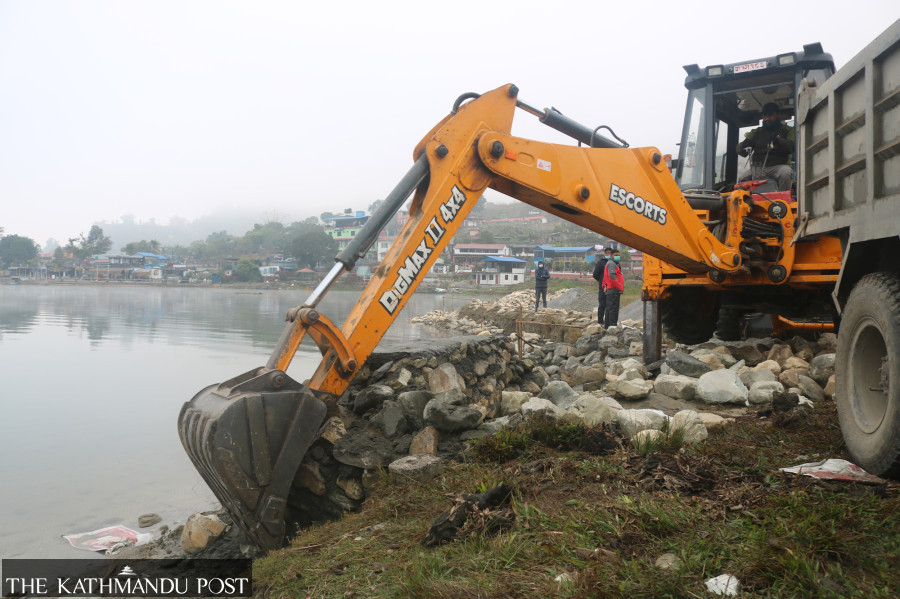
The Pokhara Metropolitan City has started demolishing illegal structures along the lakeside of Phewa Lake on Saturday morning.
The metropolis acted on the directive of Prime Minister Balendra Shah following the Supreme Court ruling on the conservation of the lake seven years ago.
Structures, including the swimming pool, gate, and walls of the Waterfront Resort owned by tourism entrepreneur Karna Shakya, have been pulled down.
Mayor Dhanraj Acharya said the demolition began early in the morning, with the help of the police.
A few days ago, Prime Minister Shah had called Acharya and asked him to submit a report on the implementation of the court verdict. Following the submission of the report by the metropolitan city, the federal government instructed that illegal structures along the lakeside be demolished.
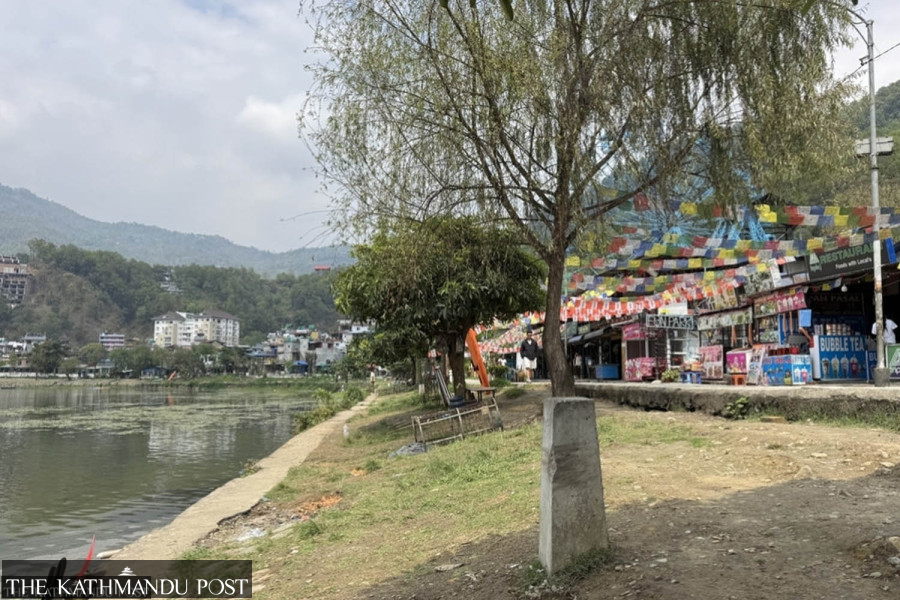
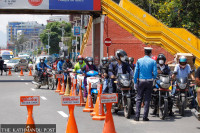
Authorities aim to clear a 65-meter zone around the perimeter of the Phewa Lake. Studies suggest removing structures could cost up to Rs40 billion. Post file photo
The conservation of the lake is listed among the government’s 100-point governance reform agenda.
Around 150 security personnel, including those from the District Police Office, Baidam Police, municipal police, and the Armed Police Force, were deployed for the demolition.
Acharya told the Post that dozers were used on around 30 structures from early morning.
The apex court had issued two landmark verdicts regarding the conservation of the lake.
On April 29, 2018, a bench of Om Prakash Mishra and Sapana Pradhan Malla directed the federal, provincial, and local governments to remove illegal structures and conserve the lake within a specified timeframe.
Similarly, in the case related to Shakya’s Waterfront Hotel, a bench of Justices Kumar Regmi and Hari Prasad Phuyal, on June 19, 2023, ordered that illegal structures be demolished within 65 days.
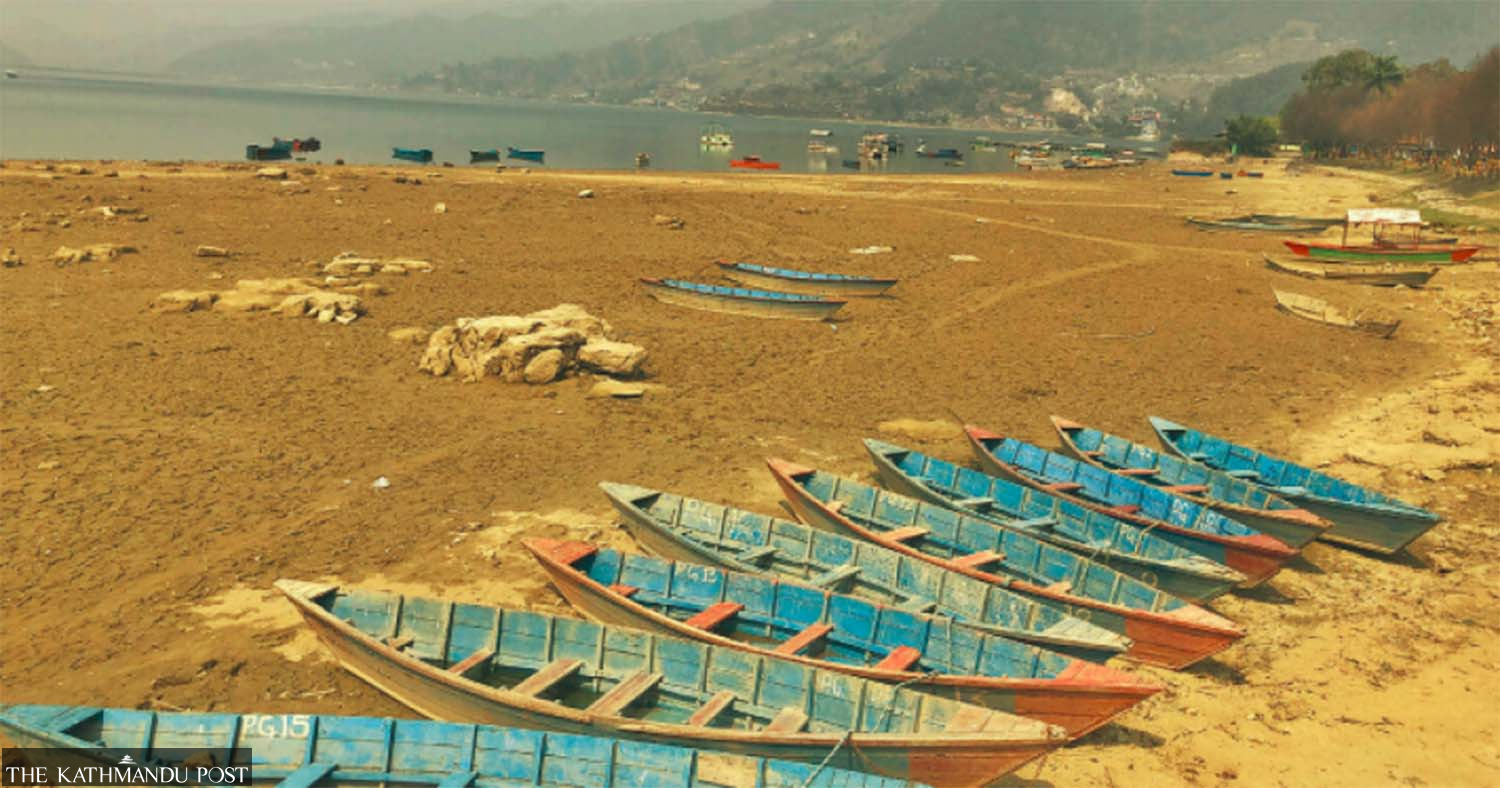
Various reports state that the area of Phewa Lake has been shrinking mainly due to human encroachment Post file photo
A study conducted by a government probe committee formed following the first Supreme Court verdict found that Shakya’s Waterfront Resort was built on Phewa Lake land. The study conducted over about 15 days found that Shakya constructed permanent and temporary structures within 65 metres of the lake, within which the resort’s main gate fell.
The report stated that only two of Shakya’s structures were built on his own land, while all other structures were located on Phewa Lake land.
The committee had also tested water samples used and discharged by the resort.
Although there was a system to treat the water before releasing it into the lake, laboratory tests found the water to be unfit for consumption.
A six-member committee headed by Chief Survey Officer Narayan Regmi of the Ministry of Agriculture, Land Management and Cooperatives conducted a field survey to investigate whether the lake land had been encroached upon.
The committee included Prashant Ghimire from the Department of Survey, Bishnu Gharti, a legal officer at the Land Revenue Office, Kalpana Shrestha, senior divisional chemist at the Ministry of Education, Science and Technology, and Humnath Pandey from the Ministry of Culture, Tourism and Civil Aviation.
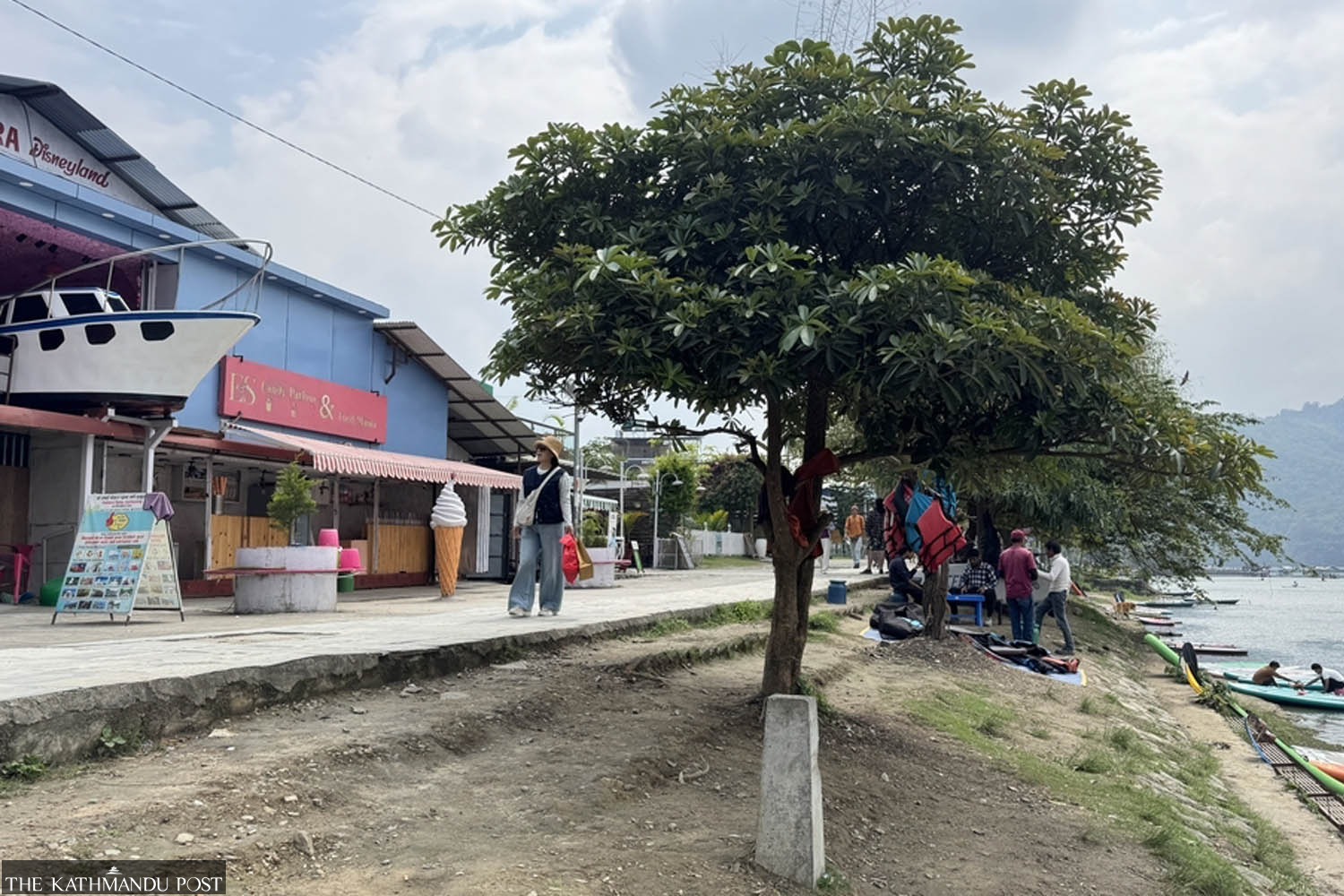
Post file photo
What did the Supreme Court verdict say?
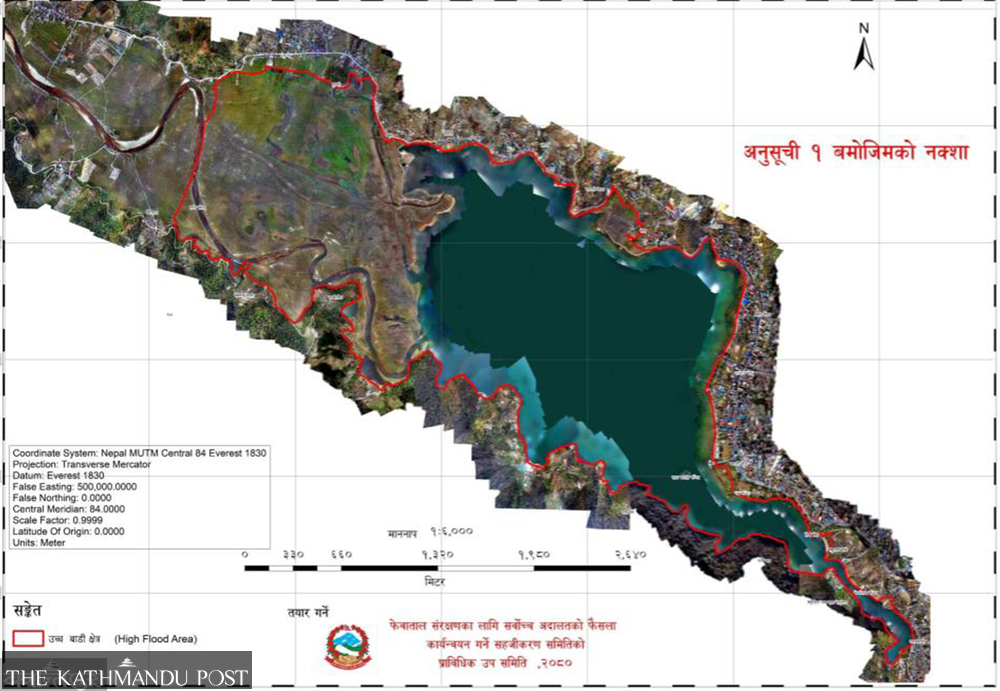
The Supreme Court had ordered the government to declare the lakeside a protected area by maintaining the boundary specified in the report of a committee led by Bishwo Prakash Lamichhane and prohibit the construction of any physical structures, including buildings, within 65 metres that could affect the conservation of the lake.
The court had also directed that land registered in the name of individuals within the lake area be annulled within one year and brought under the name of the lake.
The verdict responded to a writ petition filed by advocate Khagendra Subedi on January 24, 2011, seeking the conservation of the lake.
The Supreme Court had also directed the Office of the Prime Minister and Council of Ministers, the Ministry of Land Reform and Management, the National Lakes Conservation Development Committee (NLCDC), the Land Revenue Office Kaski, and the Pokhara Town Development Committee (PTDC) to coordinate and take necessary decisions to ensure a long-term conservation of the lake, including acquiring private land around the lake if required, in accordance with the Land Acquisition Act, 2034, and other relevant laws.
The court had further directed the NLCDC, the PTDC, and the Pokhara metropolis to coordinate and set standards, and implement them, to prevent any activity that pollutes the lake water, threatens its biodiversity and aquatic life, encroaches on its natural area, or negatively impacts its environment, including the construction of houses and hotels around the lake.
Area of Phewa Lake as determined by the facilitation committee tasked with implementing the Supreme Court of Nepal verdict on its conservation. The revised boundary is based on the lake’s highest recorded water level, in line with the court’s mandamus. Post file photo




 24.95°C Kathmandu
.jpg)