Nepal hosts first-ever flight data monitoring workshop to boost aviation safety
The event marked a milestone for the country, as it is the first programme of its kind aimed at institutionalising the use of FDM systems to improve flight safety.
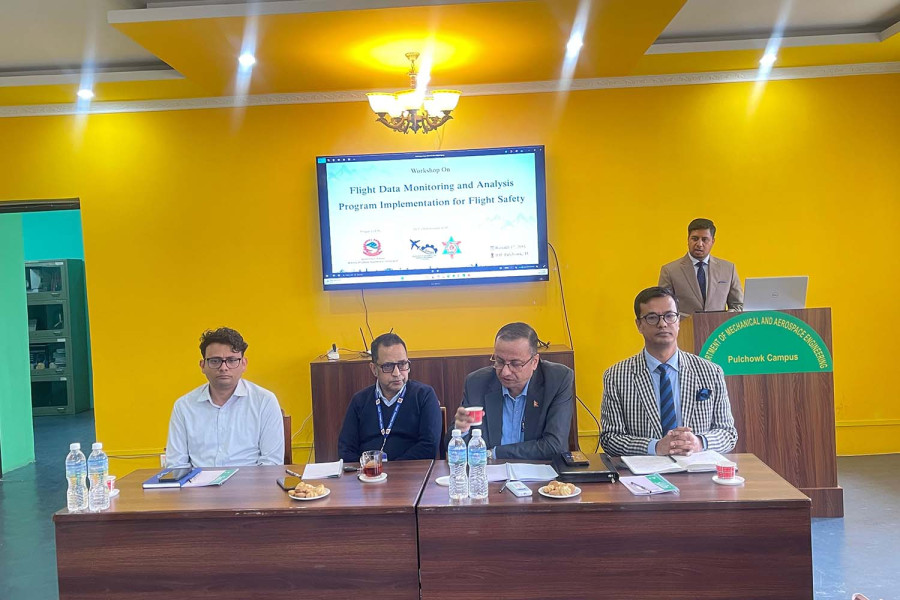
Nepal hosted its first-ever induction workshop on Flight Data Monitoring (FDM) at the Institute of Engineering Pulchowk Campus on Thursday.
Organised by the Ministry of Culture, Tourism and Civil Aviation (MoCTCA), Civil Aviation Division, the intensive technical workshop—titled “Flight Data Monitoring and Analysis Programme Implementation for Flight Safety”—brought together senior government officials, academic leaders and aviation industry experts to advance data-driven safety practices in Nepal’s aviation sector.
The event marked a milestone for the country, as it is the first programme of its kind aimed at institutionalising the use of FDM systems to improve flight safety. The initiative focuses on using insights from recorded flight data to identify risks early, prevent accidents, and enhance operational standards across airlines and regulatory bodies.
The workshop was inaugurated by Mukesh Dangol, Joint Secretary at MoCTCA, followed by remarks from Secretary Mukunda Prasad Niraula, who highlighted the ministry’s commitment to adopting modern, data-based safety protocols in line with international standards.
Technical sessions were led by Sudip Bhattarai, Head of the Department of Mechanical and Aerospace Engineering at IOE Pulchowk.
He provided a detailed overview of FDM fundamentals, regulatory requirements, and the system architecture needed for effective implementation. The collaboration with IOE Pulchowk reflects the government’s broader strategy to bridge academic expertise with real-world aviation safety applications.
A key highlight of the workshop was an industry case study presented by Sangam Adhikari and Satish Bikram Shahi of Himalaya Airlines.
The presenters outlined the airline’s “HIM FDM Framework,” offering insights into practical applications of flight data analysis, including trend monitoring, hazard identification and risk assessment.
The presentation also showcased global benchmarking practices, including participation in the International Air Transport Association Flight Data Exchange (FDX) programme, and the use of specialised FDM software to improve operational awareness and safety performance.
The programme concluded with a strategic roadmap session that outlined phased implementation steps for both operators and regulators. Officials said the roadmap is expected to guide the adoption of FDM systems across Nepal’s aviation industry, ensuring alignment with international safety standards and strengthening oversight mechanisms.
Authorities believe the initiative will play a crucial role in enhancing Nepal’s aviation safety framework by shifting from reactive measures to proactive risk management, ultimately helping to reduce incidents and improve overall flight safety in the country.




 25.92°C Kathmandu